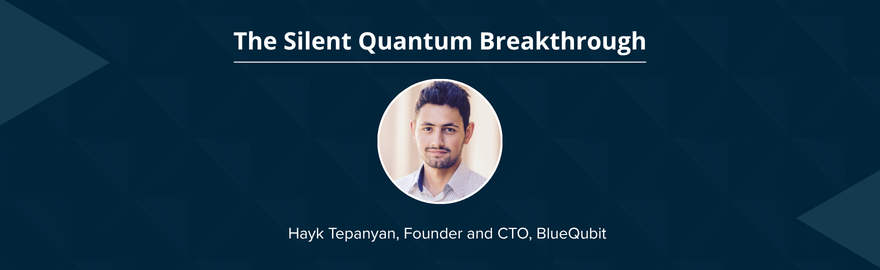
In this Influencer Series conversation, Ravi Belani speaks with Hayk Tepanyan, co-founder of BlueQubit, about why quantum computing is on the verge of real-world impact. Hayk explains what scientific quantum advantage actually means, why the field's benchmarks have often been misleading, and how BlueQubit's recent breakthrough differs from the quantum hype that came before it. The conversation also covers what a "ChatGPT moment" for quantum might look like, how AI fits into the picture, and what it takes to stay laser focused while building a company at the frontier of science.
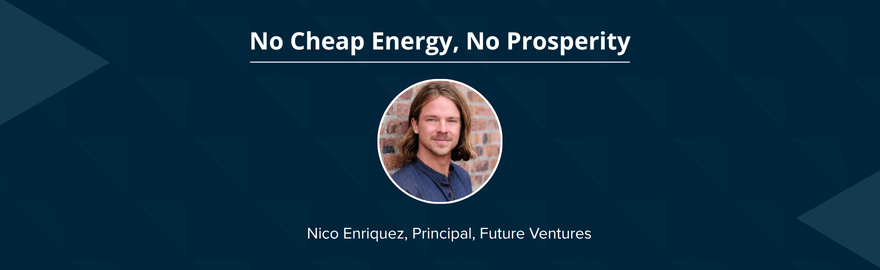
In this Influencer Series conversation, Ravi Belani speaks with Nico Enriquez, Principal at Future Ventures, about why cheap energy is central to human prosperity. Nico explains how reliable electricity can unlock extraordinary economic returns, why falling generation costs have not translated into lower household bills, and how utility incentives, transmission bottlenecks, deregulation, and China’s clean energy dominance are reshaping the future of energy. The conversation also touches on what deep tech founders need to understand when building companies in energy, climate, and other civilization-scale markets.
From breakthroughs in error correction to emerging opportunities across the quantum stack, this conversation unpacks how quantum is evolving from research labs into commercial reality.
What if consciousness isn’t as complex—or as far away—as we think? Joscha Bach challenges how we define intelligence, and what that means for founders building in the age of AI.

In this conversation, Andrew Haughian explains how corporate venture capital provides a different pathway. Ravi and Andrew examine how CVCs deliver both funding and strategic partnerships that accelerate commercialization through manufacturing expertise, supply chain access, and established customer relationships.
In this conversation, Angelo Del Priore explores how corporate venture capital has evolved into a strategic advantage for founders, offering practical guidance on when to engage CVCs, how to structure these relationships, and how to navigate today’s shifting venture landscape.
In this conversation, Jay Eum shares his insights into the transformation of CVCs over two decades, offering guidance for founders engaging with corporate investors and navigating today's unprecedented market conditions.
Patents are often misunderstood in the startup world. In this practical guide, Alchemist mentor Will Allen breaks down how founders should think about patents—as strategic assets with defined roles, real costs, and market-tested value. Patents as Business Tools: Property, Roles, and Market-Tested Value
In this episode of the Alchemist Influencer Series, Ravi sits down with Gnani Palanikumar, who shares insights into why AI projects stall and practical strategies for overcoming enterprise adoption barriers, drawing on 30 years of deployment experience.
The latest Alchemist Accelerator influencer series features Vibhor Rastogi from Citi Ventures, who discusses enterprise pricing challenges for agentic AI startups. As autonomous AI agents increasingly handle business processes from IT to customer service, traditional SaaS pricing models no longer suffice.
.png)
In this Influencer Series episode, Sidney Rabsatt, Chief Product Officer at MindsDB, explores why enterprise AI’s biggest opportunity lies in bridging structured and unstructured data to unlock faster insights without years-long data migrations.

Alchemist Chicago — the deep tech accelerator partnership between the University of Chicago’s Polsky Center for Entrepreneurship and Innovation and Alchemist — today announced the startups selected for Phase 2 of its inaugural cohort.
Salesforce AI leader Manjeet Singh breaks down where enterprise AI is delivering real ROI, where it fails, and how founders can build defensible AI startups.
.png)
In this episode of the Alchemist Influencer Series, Ravi sits down with veteran technologist Marcelo Calbucci, drawing on three decades of experience at Microsoft and Amazon to cut through the AI hype.
.png)
In this episode of the Alchemist Influencer Series, Ravi sits down with Silicon Valley legend Amr Awadallah, co-founder and former CTO of Cloudera, to unpack why 95% of enterprise AI initiatives fail and what it really takes to build AI that survives beyond the demo stage.
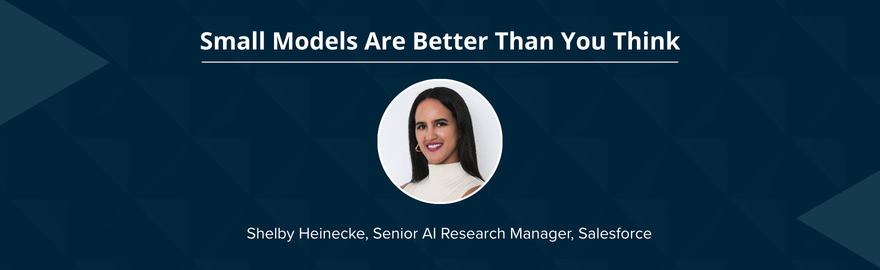
In this episode of the Alchemist Influencer Series, Ravi sits down with Dr. Shelby Heinecke, Senior AI Researcher at Salesforce, to explore why small language models are poised to reshape the future of AI. Shelby breaks down how compact models unlock breakthroughs in privacy, speed, and on-device intelligence—often outperforming larger models on specialized enterprise tasks. She shares where the biggest opportunities lie for founders, how high-quality training data becomes a true moat, and why the next wave of AI innovation will come from systems where big and small models work together.

In this episode of the Alchemist Influencer Series, Ravi sits down with Arjun Prakash, Co-Founder and CEO of DistylAI, to break down how artificial intelligence is reshaping competition across the business landscape. Arjun explains why AI is dramatically strengthening both large enterprises and nimble startups—while leaving mid-size companies dangerously exposed. He explores how reasoning-based AI assistants will transform operations, why cost structures are collapsing across industries, and what leaders must do to stay competitive in an era where AI widens the gap between the giants and the scrappy newcomers.
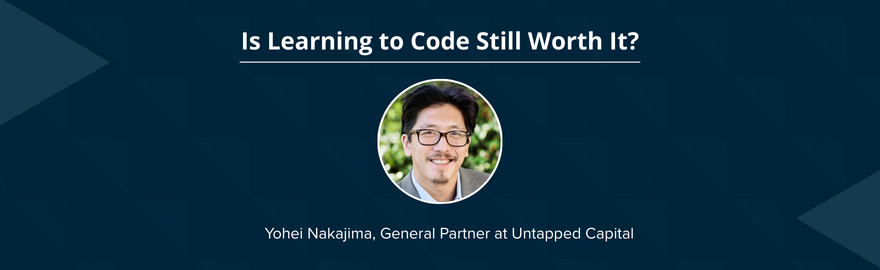
In this episode of the Alchemist Influencer Series, Ravi sits down with Yohei Nakajima, General Partner at Untapped Capital and creator of BabyAGI, the first open-source autonomous agent framework. Together, they explore how hands-on experimentation and curiosity fuel innovation in AI. Yohei reflects on what he’s learned building at night and investing by day, the unexpected challenges of bringing AI agents into enterprises, and why his advice for leaders is simple: have fun, experiment, and make friends.
In this episode of the Alchemist Influencer Series, Ravi sits down with Roger Luo, Founding Partner at Embedding VC, to explore how AI agents are transforming the craft of software engineering. Drawing from his dual lens as a builder and investor, Roger unpacks why AI isn’t replacing developers—but amplifying them. Together, they discuss productivity gains from emerging AI tools, the rise of agent networks, and how human creativity and system-level judgment remain the ultimate differentiators in an AI-driven future.
Alchemist Chicago will support early-stage ventures across quantum, AI, cleantech, robotics, and other deep tech industries, transforming discovery into impact.
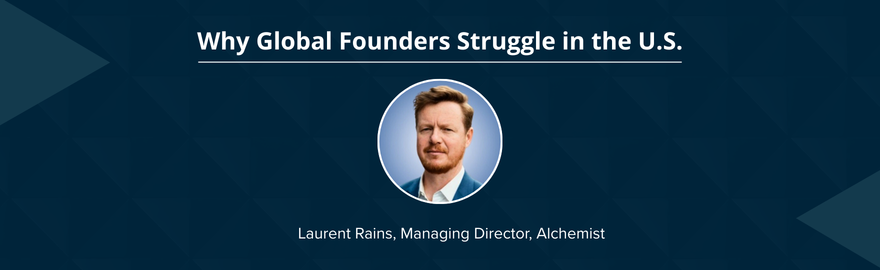
In this episode of the Alchemist Influencer Series, Ravi sits down with Laurent Rains, Managing Director at Alchemist, to unpack why so many international founders stumble when entering the US market. Drawing from years of accelerator experience, Laurent reveals how misplaced confidence in product-market fit, cultural discomfort, and rigid business models derail promising startups—and how founders can rebuild trust, adapt quickly, and use modern AI tools to thrive in the American landscape.
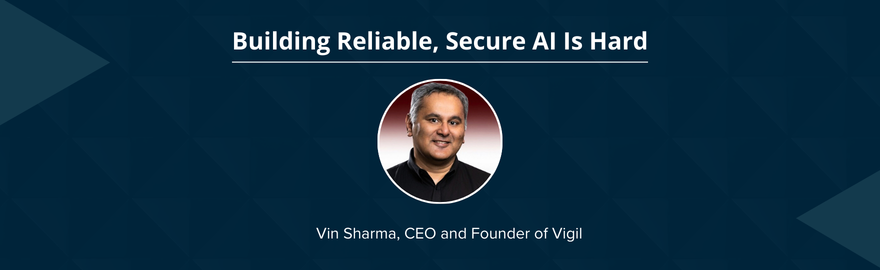
In this episode of the Alchemist Influencer Series, Ravi sits down with Vin Sharma, CEO and Founder of Vigil and former engineering leader at AWS, Intel, and HP. Together, they explore why enterprises in regulated industries remain wary of AI despite rapid advances. Drawing on decades of experience across deep learning, autonomous systems, and enterprise infrastructure, Vin explains the trust paradox, the three pillars of reliable AI, and the practical frameworks organizations can use to deploy AI responsibly while meeting regulatory demands.
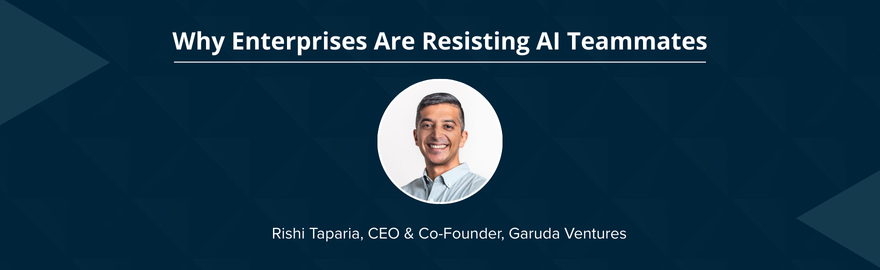
In this episode of the Alchemist Influencer Series, Ravi sits down with Rishi Taparia, CEO, Co-Founder, and General Partner of Garuda Ventures. Together, they unpack why enterprises remain hesitant to adopt AI teammates despite the hype. Drawing on research, case studies, and Rishi’s deep venture experience, he shares how misaligned expectations, cultural resistance, and trust deficits slow adoption—and what leaders can do to build trust and integrate AI successfully.
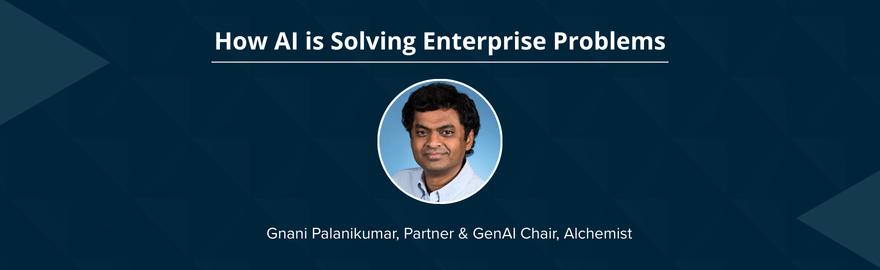
In this episode of the Alchemist Influencer Series, we sit down with Gnani Palanikumar, one of Silicon Valley’s most respected startup coaches and a partner at Alchemist Accelerator. Drawing on decades of experience—including leading APIGee’s product team through a $625M acquisition—Gnani reveals practical, battle-tested advice for AI founders.

In this episode, Not Diamond co-founder and former VC Jeffrey Akiki joins Alchemist Accelerator CEO Ravi Belani to share why the smartest AI systems don’t depend on just one model or agent. They use a network of specialized agents, routed in real time for speed, cost, and performance.

Discover how Mammoth Biosciences is transforming the biotech landscape with a platform approach to CRISPR, combining diagnostics, therapeutics, and ethical leadership. Ravi Belani sat down with Trevor Martin and Ursheet Parikh to discuss how they are building a company designed for long-term impact. Here are the takeaways from that conversation.
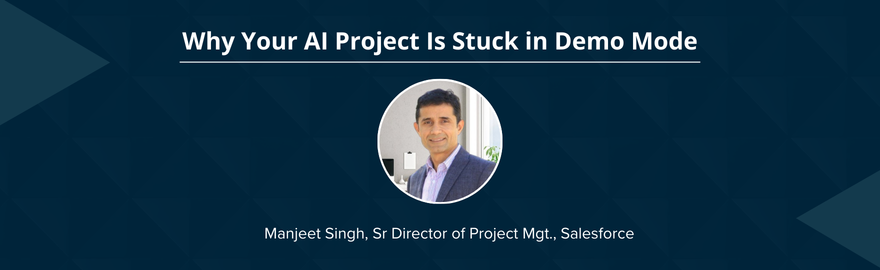
In this episode of the Influencer Series, Ravi sits down with Manjeet Singh, Head of Enterprise AI at Salesforce (and formerly ServiceNow), to explore why so many enterprise AI initiatives fail to make it past flashy demos—and how AI agents may transform the future of AI adoption in the enterprise.
Discover how Bridgefy scaled to over 12 million downloads with zero marketing by turning mesh networking into a global lifeline. From earthquakes to protests, this offline messaging app keeps people connected when traditional networks fail—and enterprises are taking notice.
Alchemist Chicago will support early-stage ventures across quantum, AI, cleantech, robotics, and other deep tech industries, transforming discovery into impact.

In this thought-provoking Fireside Chat, Ben Parr, Co-Founder of OctaneAI and Partner at TheoryForge Ventures, joins Ravi Belani to explore how automation is already reshaping hiring, productivity, and opportunity—and why the real tipping point is closer than we think.
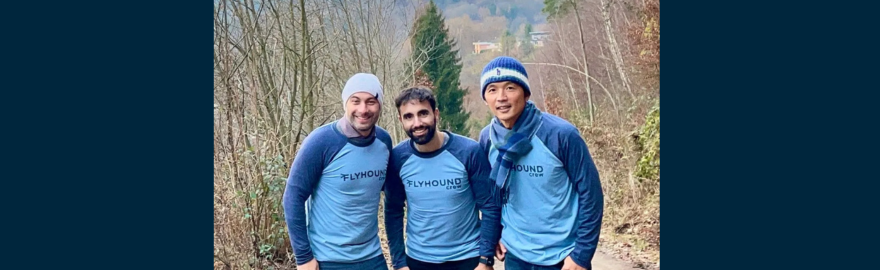
Discover how Flyhound evolved from a telecom background into a public safety tech leader. Learn how Alchemist’s accelerator programs helped them turn drone-mounted phone detection into a life-saving solution embraced by over 100 agencies.
In this Fireside Chat with Alchemist Accelerator, Jason Sydow of Next47 reveals the hard-won lessons of evolving from a traditional CVC into a financial-first venture powerhouse, with insights on strategy alignment, go-to-market execution, and winning deals.
Explore how corporate venture capital and strategic partnerships are unlocking the potential of deep tech by bridging the Series B/C funding gap.

This article explores how startups are being reshaped by a world where capital is no longer abundant, and easy money is no longer the norm. What happens when growth must be earned, not subsidized, and how can constraint become a competitive advantage?
On April 10, we hosted an inspiring roundtable session of our Future of Venture Capital Influencer Series, where thought leaders, founders, and investors gathered to explore the next frontier of innovation in venture capital.

Explore the critical differences between Founder Mode and Manager Mode leadership styles. Learn why some CEOs thrive while others falter, with real-world examples from Amazon, Uber, and Microsoft—and discover strategies to lead effectively through growth transitions.
Cultural engagement is and always has been the one true advantage in business. Today, several things influence that dynamic...

Startups often fall into the trap of running aimless POCs that go nowhere. Learn how to take control of the process, ask sharper questions, and set clear expectations that turn proof of concept into proof of value.
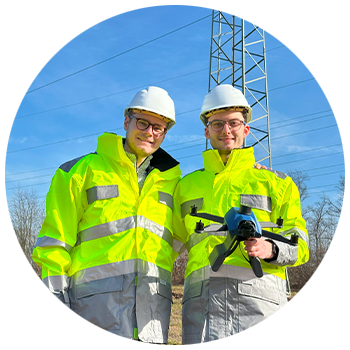
Discover how Nomadic Drones leveraged Alchemist programming to refine their AI-powered drone technology, secure funding, and scale across global utility markets.
This article examines how startups can survive and win in a world where AI and software tools have significantly lowered the barriers to product development, software, and design. How does a business get past the question, “Why should we use your product when AI can build this overnight?”

Early-stage founders must move beyond selling products and instead focus on solving customer problems by asking the right questions, refining their sales approach, and prioritizing real revenue over vanity pipeline metrics.
Discover how Bitcoin’s ecosystem is unlocking trillions in idle liquidity and reshaping traditional finance through decentralized Bitcoin innovation.

Learn how Zignyl evolved from an internal solution to a venture-backed platform, the key challenges it addresses for multi-unit businesses, and how strategic partnerships and team-building accelerated its growth trajectory.

This article explores how startups can thrive by embedding a balanced culture of hard and soft accountability—driving performance while building trust.
This article redefines GTM strategy with an AI-driven approach, helping startups cut through the noise and scale smarter. It breaks down key steps like ICP segmentation, AI optimization, and strategic expansion for sustainable growth.
This report shares insights from 41 Founding Account Executives on hiring, compensating, and setting up the first sales hire for success in B2B startups.

Discover how Bitgrit leveraged three Alchemist programs to refine its strategy, accelerate US market entry, and scale its AI-powered enterprise solutions.

Startups need strong HR practices, especially as they grow and face compliance issues. Many founders overlook the importance of establishing solid HR systems early on, risking potential pitfalls.

Once upon a time, CRM technology was little more than a glorified address book, helping businesses send routine emails to customers. But those days are long gone.

I’ve taken a lot of products to market, and I’ve worked with hundreds of startups. I’ve seen countless failures, numerous pivots, and several successes. In my experience, the failures and pivots have one thing in common: they get Go-to-Market (GTM) wrong.
Discover how startup marketing drives awareness, shapes perception, and builds lasting engagement. Learn actionable strategies, including personal branding, Easter eggs, thought leadership, humor, and managing controversy. Explore the Perception Formula—heuristics, hormones, and history—to create a memorable impression and drive success.
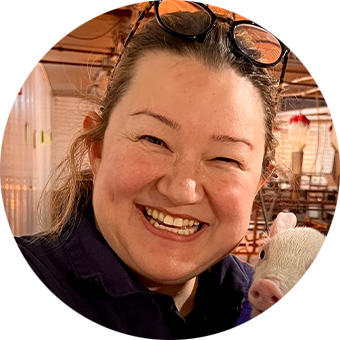
With a background as a cancer researcher and a lifelong dedication to science, Leta has transitioned into entrepreneurship, aiming to revolutionize animal welfare in livestock. Her story showcases how a willingness to learn, added to the mix of science, innovation, and customer discovery, can bring a great idea to fruition.

Smartphones, streaming services, and fast food. What do they all have in common? These are just a few of the many sectors that are nearing saturation. These insights from a recent fireside chat will help you leverage customer insights to gain a foothold in these saturated markets.

Only 7.4% of seed-stage companies successfully transition to the early-stage phase. This sobering statistic serves not as a harbinger of doom but as a powerful reminder of the importance of securing a solid customer base and demonstrating the viability of your business. Here, we've compiled insights from a recent panel discussion, breaking down everything you need to know to build a scalable sales framework so that you’ll be equipped with a deeper understanding of how to position your startup for success.

With millions of startups competing for attention in the US, securing that all-important funding has never been more challenging. Investors are inundated with options, so your pitch needs to do more than just inform; it needs to inspire confidence and clearly showcase what makes your startup unique. If you’re unsure how to start crafting your pitch, you’ve come to the right place. This guide walks through the strategies one of our top coaches discussed during our most recent Market Entry Accelerator program.

Many startups fall into the trap of recycling strategies that were successful in one market and assume they'll be equally effective in another. Unfortunately, this often leads to the harsh realities of startup failure: products no one needs, financial exhaustion, ineffective teams — the list goes on.

The balance between metrics and intuition becomes more critical in a world increasingly driven by data. Businesses that excel integrate the power of quantitative insights with a qualitative understanding of their customers—an understanding that powers intuition and ensures that decisions are not only data-driven but also customer-centric.

Without the right data, many businesses find themselves flying blind, unsure whether their strategies are pushing them forward or holding them back. This is why understanding your startup data is paramount. From managing customer acquisition costs to tracking revenue, the metrics you monitor can be the difference between your business merely surviving or thriving. Let’s explore the metrics and KPIs that will drive your startup forward.

For early-stage startups, gaining customer trust and proving product value are critical steps on the journey toward growth. This process often starts with securing small wins—whether that means running a pilot, testing through a proof of concept (POC), or gaining commitment with a letter of intent (LOI). We've captured insights and expertise from one of our recent market entry workshops to share them with you here. Each of these tools can bridge a startup’s vision with its long-term viability in the market. This year, our market entry startups had immense success establishing pilots and POCs with customers, and we hope you did, too.

Understanding customer behaviors is crucial for building better products. But how do corporate leaders get to the bottom of what matters? By asking the right questions.

Success in today’s competitive landscape requires more than innovative ideas—it demands a global perspective, a commitment to market validation, continuous learning, and robust community support.

The AlchemistX Memphis Crucible program, in partnership with Epicenter Memphis, is a no-fee pre-accelerator program for Memphis-based companies aspiring to join top-tier accelerator programs.

Entrepreneurship can be a lonely journey. Luckily, there are people willing to help. The Alchemist community of mentors, advisors, and, most importantly, entrepreneurs share their advice for navigating the hardship and loneliness of the founder's journey.
Challenges corporations need to address head-on to remain resilient in an ever-changing environment.
.png)
Why rapid iteration cycles require corporations to stay connected to the innovation economy, and how they can keep pace with innovation in the face of exponential advancement.
Mayfield has continued its long-standing partnership with Alchemist with a recent investment
Join us on January 17, 2024, as the Japanese External Trade Organization (JETRO) and AlchemistX unveil a lineup of exceptional Japanese startups graduating from the Global Startup Acceleration Program (GSAP).

Learn how accelerator programs serve as a catalyst for corporate innovation, enabling large companies to tap into the vibrant startup community and partner with entrepreneurs to solve pressing challenges.
The healthcare industry is facing a range of challenges that require innovative solutions, especially when it comes to the healthcare workforce. The AWS Healthcare Accelerator: Global Cohort for Workforce has taken a step towards addressing this issue by providing new tools and capabilities for innovation.

The Alchemist Accelerator announced on January 25, 2023 its launch of the Memphis Hub Accelerator Program, its first US location outside of Silicon Valley, in partnership with Epicenter.
With the JETRO - Japan External Trade Organization Startup City B2B Cohort's Demo Day coming up on January 16, 2023, on the AlchemistX side, and Alchemist Accelerator’s Class XXXII Demo Day on January 31, 2023 we thought we would highlight some of the best practices highlighted by our mentors and coaches when helping startups prepare their Demo Day presentations.

Mitchell is the founder of VentureRoof, and CGO at Speechki, backed by Tier 1 VC GreyCroft. He is a mentor, judge, and speaker at Alchemist Accelerator, an advisor to 9 startups, and is currently helping startups from Alchemist and YCombinator to raise rounds and find clients. He dreams of one day being a guest lecturer at Stanford University.
Ian Bergman is a Partner at Alchemist Accelerator and Head of AlchemistX, the company’s corporate and government services division. As a self-described general-purpose nerd and corporate innovation agitator, Ian loves working at the intersection of emerging tech startups and the innovation needs of established organizations.

Alchemist Accelerator was delighted to welcome Finmark's, Rami Essaid. A successful serial entrepreneur, Rami shared his hard-won experience on how investors think, and how to build a business model that supports your efforts to raise funds. These are my personal notes, and as ever, any errors are mine, not Rami’s!

Alchemist Accelerator was delighted to welcome Jeff Erickson for a primer on equity. Jeff is a startup founder, angel investor and Carta veteran, now at Forecastr. These are my personal notes from the session, and any errors are mine and not Jeff’s!

Jacobo Ortega, Co-Founder and CEO ofEverscale Group Why Tech Companies Need to Master Cross-border Operations - with Jacobo Ortega
When you hear the name NachoNacho, what do you think it is? Well, that’s the young startup that offers businesses the ability to consolidate and manage all their subscriptions in one account, right? Yes, but that’s not even half of it. And while NachoNacho may mean business, founder and CEO Sanjay Goel had something else in mind for the scrappy company’s title. In Hindi, NachoNacho translates to dance dance. That’s the whole point to NachoNacho. To make its users happy and to bring them such joy that they just want to get up and dance. With a fun and clever name like that, you may not be surprised to hear the exciting origin of how Sanjay himself got to where he is today. And how NachoNacho will soon be the Amazon of B2B SaaS. Sanjay received his Bachelors in Electrical Engineering from the Indian Institute of Technology, Delhi. From there, a fellowship from UCLA brought him to Los Angeles to receive his MS in Electrical Engineering and Computer Science. Ever the busy-body, Sanjay then went to Japan to work for SECOM as a robotics research engineer. Sanjay Goel, CEO NachoNacho He returned to America to leave engineering behind and chase a career in finance. He landed himself a job at BARRA (Berkeley), the portfolio modeling company revered by asset managers. He then moved to New York City and found critical success working his way up the ladder and eventually becoming a Managing Director at Citigroup. After achieving what he wanted in the world of finance, he eventually moved back to Silicon Valley to found his first startup, Ideas.com. It was even featured in a live CNN interview. But after the tech crash of the early 2000s, Sanjay eventually returned to finance and moved to London, landing many high-level jobs at several banks throughout the rest of the aughts. His second startup eventually came to fruition in Berlin, where he founded Oximity. A couple of years on, he moved back to Silicon Valley to grow the startup further in the US. In 2016, Oximity was acquired by Scribd, a subscription service. In many ways, this would lay the foundation for his third startup. If you’re starting to get the impression that Sanjay moves around a lot, you would be right. Over his extensive and ever-changing career, he’s lived in six countries: India, Mexico, Japan, UK, Berlin, and the U.S. Not impressed yet? Consider the languages he is proficient or conversant in, including Spanish, Hindi, English, Japanese, French & German. This kind of movement and ever-changing interest in learning new things led him to become somewhat of an amateur athlete and adrenaline junkie. To this day he enjoys sailing, skiing, scuba diving, windsurfing, flying helicopters and airplanes, and most importantly rock climbing. Why is rock climbing the most important? Because this is where fate would align for both Sanjay and Alan Szternberg and NachoNacho would be one step closer to being born. While Sanjay was off conquering many business paths for almost 20 years, Alan was also an ever-curious trailblazing soul. He founded the companies Gooplus and Mirabelle before meeting Sanjay, has lived in several parts of the world, and enjoys all of the same sweat-ridden, pulse-racing hobbies. Coupled with the fact that he is a brilliant full-stack developer, Alan would become the brains behind the backend of he and Sanjay’s startup. Their uncanny similarities proved that the two were not only kindred spirits but the perfect business partners. Enter NachoNacho, stage right. At its heart, what they built together is equal parts a subscription management application and a marketplace for subscriptions. Businesses start by managing their existing subscriptions, but then can seamlessly buy new ones from their marketplace at substantial discounts. What seems like an obviously good idea now took many months of research and exploration. But that's the hallmark of a good idea - it should feel like it was an obvious play the whole time. Today, you could draw similarities to companies like G2 Crowd and Capterra. But the truth is, there is no competition. These platforms only have relationships with SaaS vendors. NachoNacho is a true marketplace with direct and long-standing relationships with both businesses as buyers and SaaS vendors. “NachoNacho is the best version of every similar tool, combined with the nicest team that could build it.” Dan Giaime CMO, Delight Rewards Manage your current subscriptions as a buyer, and find other subscriptions you may like in their marketplace based on what you already use. Simultaneously, a seller can feel comfortable knowing that their product is going to a consumer who wants to use it. As if this harmony couldn’t be made better, both sides benefit from a secure experience where their privacy is the highest priority. NachoNacho carries brands like Copper, Canva, Monday.com, and AWS to name a few. And with investors like Magic.fund, Brainstorm.vc, Leonis.vc, and Alchemist Accelerator, you know they’re a safe bet. With NachoNacho, there is no more wasting money on duplicate subscriptions within the same company. No more company coffers are being diminished by paying for a SaaS product you haven't used in years. Instead, save your money and spend it on subscriptions you actually need for the work-life you actually want. It all kind of makes you feel like you want to get up and “dance dance” doesn’t it? _______________________________________________________________________________________ Alchemist connects a global network of enterprise founders, investors, corporations, and mentors to the Silicon Valley community. Alchemist Accelerator is a global venture-backed accelerator focused on accelerating seed-stage ventures that monetize from enterprises (not consumers). The accelerator invests in enterprise companies with distinctive technical founders and provides founders a structured path to traction, fundraising, mentorship, and community during the 6-month program. AlchemistX partners with forward-thinking corporations and governments to deliver innovation programs worldwide. These specialized programs leverage the expertise and tools that have fueled Alchemist startups’ success since 2012. Our mission is to transform innovation challenges into opportunities. Join our community of founders, mentors, and investors.
Currently Co-Founder & CEO at PostureHealth, Daniel James is building solutions to help people achieve their workplace wellness goals so that they can live a more healthy and productive life. Before launching PostureHealth, he spent time in various B2B product, sales, and marketing roles at startups and large companies like Adobe. Daniel is a recent graduate of Yale University where he was a member of the 2017 Ivy League Championship Football Team, A Joseph Tsai Center for Innovative Thinking Fellow, and Startup Yale 1st Place Winner.

Today we’re talking to Jon Gibbs and Adrian Townsend, the founders of Savion. These two met while working at Boeing and their startup offers climate-friendly jet travel.

Patrick Beattie, Redbird With 10 years’ experience using rapid diagnostic tests to improve global health and development, Patrick is passionate about empowering patients to proactively manage their health. He earned his undergraduate degree in Chemical Engineering, magna cum laude, from Princeton University and his MBA, with distinction, from the University of Oxford, where he was a Skoll Scholar. Born and raised in Alaska, Patrick enjoys spending his free time outdoors, paragliding, rock climbing, or just going for a run. He’d love to walk on the moon someday. What does Redbird bring to the marketplace? Redbird lets community pharmacies offer rapid diagnostic testing, so that a patient who needs to check up on their health can pop into a conveniently located pharmacy and get a five minute test done with instant results, rather than having to go to a hospital and wait hours for the exact same test. Tell us about your background pre-Redbird and how that led you to entrepreneurship and to Africa. I did my undergrad in chemical engineering at Princeton, specifically focusing on the interface with biology, and I did some research into nanoparticles for drug delivery. Then, immediately out of college, I joined the US Peace Corps and was a volunteer teaching math and chemistry, first for two years in The Gambia, West Africa and then for another year in Guinea, also in West Africa. That was my first exposure to Africa. I enjoyed my time in the Peace Corps. It was great to feel really good about the work I was doing, but I did miss the more scientific, technical aspects and all the training I had done in chemical engineering. So, after three years I moved back to the US. I moved to Boston because I was interested in biotech and the startup scene. I ended up being the founding scientist at a non-profit medical diagnostics company called Diagnostics For All (DFA). This was using a technology out of George Whiteside’s lab at Harvard called paper microfluidics. We at DFA were developing this technology into diagnostic tests with an eye towards low resource settings. So, a lot of a focus on Sub-Saharan Africa, also Southeast Asia, and some Latin America. It was, for me, a fantastic opportunity. It was the combination of the two things I enjoyed — I felt the work had a strong purpose, and it was still highly technical. I had to set up an entire lab from scratch. I was the only employee for quite some time. And so, I got that exposure to the earliest stages of growing a company. We grew it to about twenty people and a couple of million in mainly grant revenue per year. It was a wonderful experience that I was very lucky to have and it also set me on the path for Redbird. One of the things I would do when I was in Africa for say, trials of our diagnostic tests, was go around to pharmacies and just ask, “Hey, if you could test for anything in the world — don’t think about what’s possible, just anything that you want an answer to — what would you test for?” I thought that this would tell us oh, this is the next test we should develop. But nine times out of ten, the answer I got was a test that already existed. It was solved as far as the technology problem was considered. And so I started realizing that we’re developing these new tests and that’s great, but there’s some sort of market failure here or opportunity where existing technology just isn’t making that leap into wide scale adoption. Pharmacies seem like they could be using these tests, and they should, but they aren’t. And so that’s what set me on the path. I did an MBA at Oxford as a transition year and used it to look at different markets, and got excited about Ghana as a potential market. I moved here but first helped start up a branch of a Tanzanian medical supply company that wanted to open up the Ghana market. I did that for them, met my co-founder Andrew during that time, and after we had about a year of working in our free time, we quit our jobs to go full-time and pretty soon after that, brought on our third co-founder Edward. What kept you driving forward? Like most entrepreneurs, I feel like I’ve got that builder-type spirit. Once you start thinking of something you could build that seems to make a lot of sense, it’s hard to think about anything else. And that’s what happened to me with Redbird. When I was still at DFA, I loved my work and it was still a small company and I was a very core part of the company history and loved living in Boston. But once I started thinking about this — why is no one getting pharmacies to do these tests and what that would open for decentralization of healthcare, and all the potential there — it was hard to not think about it. The more I thought about it, the more excited I got, and the more excited I got, the harder it was to think about anything else. Eventually, I realized that this is something I’m going to either have to do or somehow stop thinking about. Of course there are times when it’s more difficult to keep that enthusiasm going. Sometimes, as things get more real, it gets more exciting, and sometimes, as things get more real, it gets more difficult to keep that enthusiasm. At different stages, there are different things that bring the enthusiasm back up when things get hard. Sometimes for me there’s been stages where the team that we’ve been able to build has been a big part of that. The traction that you see has been a big part of that. For me, it goes often back to the fact that you’re building something that is your choice. Even when it gets difficult, you can always lean back on this is something that I think can come into existence and I want to make that happen. How has Redbird adapted and responded to the COVID-19 pandemic? It’s been a very interesting time for us, as you can imagine. It’s interesting for all companies right now, especially for health tech companies. There was the initial, how do we modify everything that we do to be able to do this remotely? Work from home is not a huge culture in Ghana, because infrastructure is often more difficult to have. We’re a small team, only thirteen people total. How do we now make sure that everyone on our staff is able to work when power outages hit or internet connectivity can go down for any number of reasons? There was a big scramble. Luckily, we were seeing what was happening elsewhere and got ahead of the ball. Ghana was one of the later places to get hit, and so we were able to have those plans in place. Then we ended up, like most countries, having a period of lockdown. Ghana’s was pretty short, but that was pretty drastic for our business. When no one’s leaving their house, even for three weeks, suddenly we couldn’t sign on new pharmacies because our sales guys couldn’t leave their houses. And new pharmacies weren’t necessarily that enthused about investing in new areas when everything was uncertain. So I think those aspects of it were very similar to a lot of companies. Where health tech companies can be a bit different — and Redbird was a bit different — is that this also opened up some significant opportunities for us. Early on, a week after the first cases came to Ghana, we sat around (the three co-founders and our lead Dev guy) and we realized that we have a health tech platform. It’s not designed for COVID-19, but could we leverage this somehow to give benefits? We came up with this idea of symptom tracking. Diagnostic testing was a huge problem in Ghana, like it was in a lot of places in the world. We knew that we couldn’t directly attack that (we weren’t in the best place to be doing that from a capacity standpoint). However, we are in a great place to help the government understand better what symptoms were happening, because we already had a tech platform that could collect data like that easily and without any downloads. Within the span of a week, we developed an add-on to our app that enabled anyone to log on or access the app, report any symptoms that they were having, and then send that to us, so that we could collate the data and help the government then understand where hotspots of symptoms like shortness of breath or coughing were happening and better target the capacity they did have for diagnostic testing. That was a pretty exciting time. It was a weird time to suddenly be thrown into you have to work from home and the business is very uncertain but, on the other hand, it also was one of those incredibly exciting times when it almost didn’t matter. You weren’t thinking about what is the market here because it was just obvious that someone needs to do this, this has potential, let’s just do it. Since then, business has come back very quickly for us because our core offering to patients is hey, here’s a way to not go to hospitals if you don’t have to and that is something that’s really resonating with people right now. We see this as an acceleration of trends that were already happening. Decentralization of healthcare is happening all around the world. It’s the leapfrog opportunity for Africa. They talk about cellphone networks and mobile money as the two biggest leapfrogs that the African economies have done. Decentralized healthcare will be next, I strongly believe that, because it’s very similar. We’re seeing this as accelerating some of that. What are the key changes healthcare will undergo due to this crisis? Do you think the pandemic will spur more entrepreneurship in the space? Yes, I do think it will. I should caveat anything I say with, healthcare is very different. There’s that saying: healthcare is local. Regulations and everything around data creates a different environment depending on what country you’re in. Whereas for other industries, there’s less difference across borders, there’s a significant difference when you compare the US healthcare system, to Europe, to Sub-Saharan Africa, to India. Everything I say should have that caveat that I’m talking about the African healthcare sector, but I think the trends are very similar. One of the strongest trends that we’re seeing is a normalization of certain technologies that existed but weren’t being widely used in healthcare previously, both with patients and with regulators or providers. On the patient side, it’s being more comfortable or exposed at all to new digital options. I’ll take my parents, for example. They’re in Chicago. They’ve each done teleconsults with their doctors that they need to see on a regular basis. They needed to have this checkup, and it was also important that they not go in-person. And so thankfully, they made something work. The impact of that maybe isn’t being completely appreciated now, but once you’ve gotten over that hurdle, the future’s going to look different. With an older generation more comfortable with digital health technology, it becomes more difficult to ignore or more pressing to answer the question of why not this digital solution? If this was good enough now, why is it not good enough when it’s maybe not a pandemic, but a much more convenient option for me or for anyone else? A lot of providers are being forced to innovate and try out some of these new approaches. Again, it’s getting over a hurdle and you see this as a possibility. Maybe it’s not perfect yet, maybe there’s some concerns that need to be worked out, but suddenly it’s not sci-fi, it’s a feasible solution. That’s one of the ways that it’s really changing the environment. It’s getting people over these hurdles that then will spur future innovations. It’ll create space that people have been trying to work in and push the industry forward. What challenges have you faced leading a startup on the African continent? Do you see a future for widespread entrepreneurship in Africa? I see a very bright future for widespread entrepreneurship. Part of the reason I moved to Ghana was because I was excited about the entrepreneurial scene here and just how quickly it’s changing. I think of Ghana about five years ago when I first moved here — the Ghana at that time, as far as the entrepreneurial ecosystem is concerned, was widely different. Part of the reason it moves so quickly here is because it has to — like leapfrog opportunities or the saying “Necessity is the mother of invention.” It’s very exciting what’s happening over here and I think you’re going to see more and more of it. It’s definitely not without its challenges, though. A lot of challenges, a lot of opportunities. One of the biggest challenges is that the ecosystem isn’t as developed yet. One of the things that makes Silicon Valley so strong as an entrepreneurial ecosystem is that everything you need is there. If it’s not there, someone’s working on making it there. The established ecosystem means that you can focus on your business and what’s core to your business. You don’t need to distract yourself with other aspects. That’s a key thing. This is definitely not of the same degree here [in Ghana] or in a lot of other markets. Sometimes that’s exciting because it means that you’re forced to innovate in different ways or collaborate in areas you might not think you would, or it opens up opportunities in areas you don’t think you’d be involved in. Other times it’s frustrating because you can’t move as fast. But the more the ecosystem develops, the more you get that snowball effect. I absolutely think you’re going to see even more exciting companies coming out of Africa in the coming years. Redbird identifies itself as a “for-profit social enterprise.” Balancing effective social impact with a strong bottom line can be a challenge. How is Redbird able to strike this balance? What advice would you give to other entrepreneurs attempting to create businesses that produce social as well as financial returns? When I was at Oxford, I was fortunate enough to be a Skoll Scholar for social entrepreneurship. Social impact is something I feel strongly about. What I learned throughout my career and definitely my time at Oxford is it’s a very broad spectrum of people, when you look at social entrepreneurs and social entrepreneur-founded companies or nonprofits. One of the things that I think has made Redbird successful in balancing those things is that we tried to make it not a balance. We tried to think of how you can find an opportunity where your monetary success is aligned with your impact success. It’s one of the great things about healthcare, that oftentimes that’s an easier thing to do. For instance, with our revenue model, we get paid effectively every time a test is performed. We like that for a couple of reasons. One, we see huge upside potential because there’s a lot of tests that need to be performed. But the other thing is, we don’t make money unless our customers, the pharmacies, are making money. And they’re not making money unless patients actually want these tests. It aligns everything. One of the biggest issues in our theory of change is that more testing leads to better health outcomes — health monitoring especially, I’m talking a lot about chronic disease here. More testing leads to better health outcomes, and therefore we want to align our success with the increased testing. One of the nice things in healthcare is that this is more often possible. I think that’s really important because if you don’t have alignment like that and you’re fudging the alignment, then one of those two things is going to give pretty quickly. Because you’re constantly having to rethink your business, especially in the early years, you’re going to have competing interests and if you don’t have alignment, then something’s going to give. What was the most valuable thing you learned from your Alchemist experience? Two things really jump out in my mind. One is more personal and one is more to my cofounder. The more personal one was very specific demo day prep feedback that I got after our first run-through. We did two run-throughs as our prep for demo day in front of everyone on stage. I did my first one and got some very honest feedback that my energy was so down and they said, “This was bad. We know you, we know this is not you, but that was bad.” And so, the second time I got up there, I decided that I’m going to go completely the opposite direction. I’m going to feel like a clown up here. That’s the amount of energy I’m going to go for to try to fix this. And it worked! It was much better. We ended up being the second company to pitch on the actual demo day. What I learned out of that was you get so used to your own thing that sometimes it’s easy to forget how to project the right enthusiasm, because to you, this isn’t revolutionary or new. Now anytime I pitch I always tell myself two times the amount of enthusiasm I think is appropriate is still not enough. One of the things that my co-founder Andrew told me that really highlighted one of the core reasons we did Alchemist, why we felt it was very successful for us, is this: it was a couple of weeks into the program, and we were in San Francisco. We were working out of the coworking space with the other groups from our cohort. We’ve had a couple of weeks at this point of the sessions with the various mentors, and Andrew turned to me and said I get everything you’ve been saying now. It took me being exposed to all these other companies and to see what normal is out here to understand better why you weren’t satisfied with things or why you felt we needed to move this quickly, or things like that. Seeing what’s possible when you’re in the midst of a really high functioning group of entrepreneurs who are being coached by very skilled mentors, it just made it so much easier for him and I to work towards that. To Andrew especially, that exposure was invaluable because it made us realize that we were at half throttle and needed to be at full. Any final insights for the next generation of Alchemist founders? Besides the two times enthusiasm as you think is appropriate, use Alchemist to find your trusted advisors. That’s something that’s key and will always be key. The times when I’m really grateful are when I need opinion on something and I know there’s four trusted people that I almost always go to, and some of those came out of Alchemist. Alchemist is a unique time to build those relationships with people. One of them, of course, is Ravi for me. He’s always one of the first people I think of when I need to source opinions on something, but it’s others too. I think that’s what you want, because that’s something that is not just a near-term thing. That is something which is going to be useful to you forever, for as long as you have that relationship. About the Alchemist Accelerator Alchemist is a venture-backed initiative focused on accelerating the development of seed-stage ventures that monetize from enterprises (not consumers). The accelerator’s primary screening criteria is on teams, with primacy placed on having distinctive technical co-founders. We give companies around $36K, and run them through a structured 6-month program heavily focused on sales, customer development, and fundraising. Our backers include many of the top corporate and VC funds in the Valley — including Khosla Ventures, DFJ, Cisco, and Salesforce, among others. CB Insights has rated Alchemist the top program based on median funding rates of its grads (YC was #2), and Alchemist is perennially in the top of various Accelerator rankings. The accelerator seeds around 75 enterprise-monetizing ventures / year. Learn more about applying today.

Deb Noller - CEO SwitchAutomation Deb Noller is a dynamic leader who brings more than 20 years’ experience in technology, sustainability and commercial real estate to her role as CEO of the Switch Automation team. She helps large enterprises apply technology for more efficient business operations, resulting in millions of dollars in cost savings for Fortune 100 companies. Deb loves cycling, strong coffee and mentoring young women in the tech industry. What does Switch bring to the marketplace? We are the first enterprise-wide platform for digitizing buildings. Most products in the market tackle buildings on a building-by-building basis. Switch offers scalable technology that lets people take a holistic view of their buildings and get everything under a single pane of glass. What was your motivation while building Switch? Frankly, buildings are an incredibly wasteful resource on the planet. I grew up in New Zealand in the seventies, and I value and appreciate the environment I had when I was a child. Buildings use 40 percent of the world’s energy. Half of that — 20 percent of the world’s energy — is used for heating and cooling. We could easily save 30 percent of the energy used to heat and cool buildings. And we could save six percent of the world’s energy if we just paid attention. I’m fascinated by bringing efficiency to the industry. What do you think is the most challenging thing you’re facing at Switch? It’s definitely the market. We are in one of the biggest and oldest markets. Real estate is the largest industry on the planet, but it’s also one of the last industries to be transformed by technology. The people involved in real estate are not familiar with how to buy technology, so a lot of people are trying out pilots. This causes both start-ups and established proptech companies in the space to burn time and money. The biggest challenge is determining how we can make the market move faster. To do so, we have to educate the market. Can you tell me a little more about your background before starting Switch? I studied national park management in the eighties, then later did a bachelor of commerce with a major in computer science. I met my co-founder, John Darlington, when we were both programmers. We started our first business in the nineties which handled logistics and freight tracking for large mining companies and became incredibly successful. John and I were later introduced to building products and building automation because somebody was bringing a product into Australia, and it couldn’t control the Australian lighting systems. Out of all of your experience, what do you think best prepared you for your current role? The first business that John and I created was a labor-based model. From this experience I learned very quickly and very early on that a labor-based model is not scalable. Later on, I looked at all the real estate markets and I noticed that most of the services have labor-based models. I also learned early on that you can use technology to have a digital business model. This allows you to grow a scalable business and go global. With technology and a digital business model, you can deliver a better experience and provide a better service while also producing higher margins and achieving higher levels of engagement with your customers. I’m fascinated by the concept of growing a global business using technology. When I look at real estate, I see an enormous opportunity to do exactly that. Going back to the first day of working on your startup, what advice would you give yourself? It’s a marathon, not a sprint. Be patient. Take good care of yourself. Take good care of your family and your friends. No matter how much work you do, it’s your family and friends that we have backing us up, so make sure to look after them. What entrepreneurial lesson took you the longest to learn? Technical founders find it difficult to learn the rigor around the sale. Learning to accept that half of sales is a science and building a sales team is extremely challenging. I have built a sales team three times, and it’s been difficult every time — though this may be a result of the market Switch in. What constitutes success for you, personally? Success to me means having an impact. When we get our technology into tens of thousands of buildings and it becomes the global standard for how people manage buildings, then I will consider Switch Automation successful. Do you have any insights that you want to share with the next generation of Alchemist Accelerator founders? Resilience is key. If you do not have resilience, give up now. You could get a nice job with good pay. There are many startups that will value your wisdom and skills. Without resilience, you will not be successful. Do you have any insights for the next generation of entrepreneurs who are specifically working in your space? Give up now… or take the resilience that any typical entrepreneur should have, and multiply it by 100. About the Alchemist Accelerator Alchemist is a venture-backed initiative focused on accelerating the development of seed-stage ventures that monetize from enterprises (not consumers). The accelerator’s primary screening criteria is on teams, with primacy placed on having distinctive technical co-founders. We give companies around $36K, and run them through a structured 6-month program heavily focused on sales, customer development, and fundraising. Our backers include many of the top corporate and VC funds in the Valley — including Khosla Ventures, DFJ, Cisco, and Salesforce, among others. CB Insights has rated Alchemist the top program based on median funding rates of its grads (YC was #2), and Alchemist is perennially in the top of various Accelerator rankings. The accelerator seeds around 75 enterprise-monetizing ventures / year. Learn more about applying today.

Dijam Panigrahi - COO, Gridraster “Passionate and excited about how technology is challenging norms and changing the way we interact and engage with the world around us. Particularly excited about the convergence of mobile technology, cloud computing and AI.” What does Gridraster bring to the marketplace? We observed, and we strongly believe, that augmented reality and virtual reality will change the way we interact or work and live in the long run. But we also had a strong feeling that if all those things were to be possible, they have to be made possible on a mobile device. On Oculus and other heavy devices, not all those experiences are possible. As part of our team’s previous functions in Qualcomm, Broadcom, Texas Instruments, and Apple, we have worked on mobile, the network, and the cloud. We have seen a few technologies merging. For example, data pipes are becoming thicker, and you can do more using the network. The cloud computing thesis is falling into place with the virtualization of GPU’s. We saw that you cannot do this sort of intensive experience on the mobile device, but mobile is the only way that we can actually make this use case of this medium mainstream. What we can do is leverage the cloud infrastructure, which is available to act as a co-processor to the mobile device, and be able to enable any kind of complex intense immersive experience at scale, not just trying to confine it to a single device or two. Essentially, what we bring to this industry is the software stack to allow any content provider to enable those experiences on any of the devices over the network so you don’t need those heavy devices anymore. You can use the software stack that we are building to make the experience possible across different devices. Can you tell me a little bit of your background and the team’s background before starting Gridraster? We started the company back in 2015. Before that, in all of our fourteen to fifteen years of experience, we worked on the next generation of network-based products, whether it’s the first dual processors for the smartphones or the 3G and 4G networks. We have built those products and taken them to different markets, international markets and scaled the revenues from zero to multimillion dollar sizes. So I bring mostly product and business development expertise. Rishi Ranjan is the technical brain. He was a system designer within Qualcomm and Broadcom, working on the product for five or six years ahead of when they came into the market. Venkat Dass brings expertise in delivering to the customer. As part of Broadcom, he was the person who was applying 4G, 3G, and LTE into the networks for Samsung and Apple. He led our engineering effort. Recently Bhaskar Banerjee, somebody we knew over the years, joined us from the Apple team, where he was working on the immersive display technologies there. Now he takes over the CTO role. How does your experience in business development and product management help as Chief Operating Officer? Could you talk a little bit about your experience more on the BD side versus your co-founders experience on the technical side and how you are able to bring that together? What we’re doing is deeply technical, and we have multiple patents that have been filed, a couple of which have already been approved. We weren’t trying to do a research project, but rather make something commercially viable. That’s why we wanted to have multiple people come together. When we started out it was Rishi and I who were both outward facing. We both had the technology base but we wanted to commercialize it. Before we conceptualized it, we actually spoke to at least fifty customers, trying to understand their pain point. I was trying to understand how it was going to be used, what business problem we were going to solve, what value it was going to bring, and how we can take this technology and productize it. Rishi was focusing on how you map that out from the technical requirement and from the systems requirement so that the engineering team, at that point led by Venkat, could implement it and come up with viable product that we can show to customers in our target audience. We continued to iterate and evolve our roles. We started developing the product and we raised some funding and strengthened our team. Rishi focused more on the fundraising and top leadership and Venkat focused more on ensuring successful deployment with customers. There are a lot of specific applications to aerospace and industrial industries. Can you go into detail on those applications and give a few examples? Those use cases were developed from the conversations that we were having. The first part of the process for us was: okay, we have this awesome technology, how do we leverage this? We needed more data points that in a certain industry, there is a problem they’re facing that we can solve. When we went out to the market and spoke to the customers in aerospace and defense, we talked a lot about value for price. For example, the HoloLens costs anywhere between $3,000-$5,000. That’s going to be pretty expensive if you’re looking at medical, education, or any other industry. But the amount that the aerospace customer or automotive customer or any of the manufacturing companies were actually spending on a device like Hololens was humongous. For an aerospace customers that we’re working with today, one use case is the manufacturing process where they’re building out the spacecraft. What they’re doing is aligning the virtual CAD models, which are pretty heavy and complex, onto the physical assets. When you’re overlaying those virtual assets on top of the physical spacecraft that you’re building, you’re identifying spots where it needs to be put. If you can get those accurate overlays done using our technology, the cloud infrastructure, which you can do to almost a millimeter precision, you are able to save big by cutting down the time required to do the job and eliminating errors. Another use case is engineering design. One of the automotive companies has been designing cars using the clay or foam model. The problem is, any changes that you want to make to the design takes weeks and months. Now they’re replacing the clay or foam modeling with the mixed reality pieces where you could overlay those virtual assets very precisely on the physical assets . This they can do now in near real time instead of waiting for weeks or months. What was the most valuable thing you learned from Alchemist? Learning to stick to the process and believe that the outcomes will come. If we focus on the outcomes too much and we don’t focus on the process, we won’t have a scalable design. That’s the thing that I found very valuable that we got from Alchemist, whether in the fundraising process or the building process. If you were in Alchemist again, would you do anything differently? I would get my co-founders to be much more immersed in the program instead of it being mainly me. From my side, I think many of the processes, like for example creating a customer advisory board, we created over a time period, but we could have done it much more quickly. If you look back it looks pretty crystal clear but in retrospect there are many things I would have done differently. The two things I will say is that I would have put up those processes much earlier and I would have gotten my partners to be more involved in the Alchemist program. What is the most challenging thing going forward? Exploring product market fit. I know that our technology is going to be applicable across different domains and different industries, but we have to navigate that over a time period. Considering the team that we have, we can only focus on maybe a couple of use cases and a couple of industries. Based on all the data points that were available to us and customer conversations we had, we decided that aerospace, defense, and automotive will be our focus in the short term. What entrepreneurial lesson takes the longest to learn, or are you still learning? As an entrepreneur you’re learning every day, such as, for example, building up the team. I’ve learned the value of letting go of certain roles. Maybe you at this point are the best person to do certain things, but maybe it’s a good time to let go of a few of the things because it frees you up to focus on some things that are more important that others cannot do. For example, my co-founder is the best in terms of technical skills, but as a CEO you know he has much more things to do now. But if he continues to get into the technical chops, he may not be able to do the CEO role effectively. Beyond that, from a sales point of view, everything takes longer than what you expect. Do you have any insights that you want to share to the next generation of Alchemist founders? Bring the right team. Before you even build any of the product, validate with the customers or the users who are going to use it. I’m sure that’s been said so many times, but when you are technical founders, you are so convinced of the technology that you lose sight of viability. Apart from that, you are trying to build a business, not building a company to raise money. Sometimes that part of the process gets mixed up,as if you’re just trying to raise another round. Right from the beginning I think you should be focusing on building out a company which can sustain itself. The capital should be able to accelerate that growth but should not be the end goal. About the Alchemist Accelerator Alchemist is a venture-backed initiative focused on accelerating the development of seed-stage ventures that monetize from enterprises (not consumers). The accelerator’s primary screening criteria is on teams, with primacy placed on having distinctive technical co-founders. We give companies around $36K, and run them through a structured 6-month program heavily focused on sales, customer development, and fundraising. Our backers include many of the top corporate and VC funds in the Valley — including Khosla Ventures, DFJ, Cisco, and Salesforce, among others. CB Insights has rated Alchemist the top program based on median funding rates of its grads (YC was #2), and Alchemist is perennially in the top of various Accelerator rankings. The accelerator seeds around 75 enterprise-monetizing ventures / year. Learn more about applying today.

Vinod Khosla - Founder, Khosla Ventures Vinod Khosla is the founder of Khosla Ventures, a Silicon Valley venture capital firm. His firm invests in experimental technologies such as biomedicine and robotics. Khosla cofounded computer hardware firm Sun Microsystems in 1982 with Andy Bechtolsheim, Bill Joy and Scott McNealy. He spent 18 years at venture capital firm Kleiner Perkins Caufield & Byers (now called Kleiner Perkins) before launching his own fund. Would you say that you’re a venture capitalist? You’ll never find me saying that we’re venture capitalists. If you look at the tagline on our website, in fact, probably since the 80s, I’ve never called myself a venture capitalist, I always say, I’m a venture assistant. That’s what the tagline on our website says, since the day we started, because our focus is in trying to help with these kinds of issues, and the funding is incidental. We’re trying to figure out how much we are expected to discount from the listed price. What was your experience at Sun with this? Have you seen your Portfolio companies go through some of this? Sun was a long time ago, very different place. But there’s a few lessons from there. One lesson I haven’t mentioned, people always asked me how to maximize market. I had this discussion today with a couple of them. I said, don’t worry about marketing, what you want is to get the customer to love you, because most of the money you’ll get from them will come later in other negotiation. So the first negotiation is, you get in the door and they become dependent on you, love your technology. Even zero margin businesses are fine initially, if it reduces your cost of sales. So if making it attractive reduces the sales cycle from six or nine months to three months, do it every time, because you engage faster. You learn faster, what you think is a complete product is almost certainly very incomplete. The customer says, can you do that, can you do this. You’ve seen this. You want that learning to get incorporated into your product as quickly as possible. So that three or six-months delay in selling because you’re trying to keep up your price point is worse than just losing the margin. You are also learning to create a better product faster. So get that first product refined in use, and you will hear this repeatedly, I’m a total experimentalist. You can’t do a business plan, you can discover a business plan. You can’t define a product, you can discover product requirements by interacting and engaging. So I’m a total experimentalist on all these things. People have a tendency, especially when they don’t know an area and entrepreneurs generally don’t know the areas they’re going after, to rely on experts. I have watched a lot of my peers’ pitches. All the pitches seem like there’s a prisoner’s dilemma going on. They all get exaggerated to the point that they’re near uniform, and the VCs discount them all again, and there’s no signal happening, where everyone says, we have an amazing team and a huge market and this enormous promise of traction. What concrete things do you do to try to get signal out of that noise? Especially at the seed stage, there’s a lot that’s not knowable, as I was saying earlier. What’s most important to us is not the plan, but the quality of the thinking behind the plan, and judging because you can tell from the quality of thinking, how people approach a problem. When we ask for an answer, we’re not looking for an answer, we’re looking at how somebody thinks about the question. At least that’s what I did. If somebody is trying to, you can have a big number. If you go to YC day, if you’re talking about hair salons, it’s 10s of billions of dollars. If you’re talking about shoe laces, it’s exactly the same number. So those numbers aren’t really the issue. One of the things you realize if you’ve been in the venture business long enough, is that very few companies end up executing on their plans. Their plans three years later look very different. So you’re looking at how people think, how do they respond to things they don’t know, do they pretend they know, or, are they actually much better able to admit what they don’t know, and how fast do they learn. Sometimes we talk to companies for a long time, it can be two months. We’ll see what their learning is in those two months. When we talk to YCombinator or Alchemist Accelerator about, over the two months or three months, we look at how much has somebody changed. That’s maybe at the seed stage, the most important question I look for, because it tells me how fast they’ll keep learning in the next two years or three years. I’d rather have an athlete than somebody who knows the domain. Somebody may not be a great, wide receiver, to those of you who are football fans, but they had great zero to 40 times, they learn to be a wide receiver. It takes them six months longer. But over the course of five years of a startup they’re investing in, they’ll be far ahead of somebody who’s a better wide receiver, but not a great athlete. That, by the way is also thinks about who you should try to hire in any function. About the Alchemist Accelerator Alchemist is a venture-backed initiative focused on accelerating the development of seed-stage ventures that monetize from enterprises (not consumers). The accelerator’s primary screening criteria is on teams, with primacy placed on having distinctive technical co-founders. We give companies around $36K, and run them through a structured 6-month program heavily focused on sales, customer development, and fundraising. Our backers include many of the top corporate and VC funds in the Valley — including Khosla Ventures, DFJ, Cisco, and Salesforce, among others. CB Insights has rated Alchemist the top program based on median funding rates of its grads (YC was #2), and Alchemist is perennially in the top of various Accelerator rankings. The accelerator seeds around 75 enterprise-monetizing ventures / year. Learn more about applying today.

Vinod Khosla — Founder, Khosla Ventures Vinod Khosla is the founder of Khosla Ventures, a Silicon Valley venture capital firm. His firm invests in experimental technologies such as biomedicine and robotics. Khosla co-founded computer hardware firm Sun Microsystems in 1982 with Andy Bechtolsheim, Bill Joy and Scott McNealy. He spent 18 years at venture capital firm Kleiner Perkins Caufield & Byers (now called Kleiner Perkins) before launching his own fund. We have noticed that there is a really strong network effect when you adopt the strategy of only hiring really great people. What’s your take on this? An incredible network effect that’s seldom recognized. I’ll give you an example. I was talking about this particular company, the first four people they’ve hired, and we are talking about a really great person. I said, I’m not going to send him to them, because I look dumb in front of him, because I sent him to these tactical people. You wouldn’t want to be interviewed by those people. With that strong network effect, how do you bootstrap? Initial hiring is way more important than you think because of its multiplicative effect. So it’s worth taking a little longer when you hire those people. You may pay them more in equity.That might be fair.. When we hired Andy Bechtolsheim and Bill oy, they were magnets for all sorts of people. What’s your feelings about remote and distributed teams? Remote teams are hard to manage, but I don’t invest because people have distributed teams or remote teams. You have to be doubly committed to keep a uniform culture. What makes it really hard is if the remote team is all junior people. So if the leaders in the remote team don’t have credibility in the main team, then you’re going to have a very hard time making it work, or keep the best people in the remote team, because they won’t be motivated, because they don’t feel part of it. What are some of the irrational behaviors of investors, and how do you decide if you’re missing out? Investors really aren’t rational. When you say, if you’re missing out, that’s an emotion, not rational. I always say, keep in mind, investors only have two emotions; fear and greed. You know it. So confidence in the team that matters more than anything else in getting your money. A very important question I’ll ask is for the next three people or the three most important people you’re hiring in the next year. It’s not who they’re hiring, it’s how they’re thinking about what they need. What that will mean for years two, three and four in terms of the teams, is for me, a way more important question than your financial forecast. But you have to keep in mind that most investors are emotional. When they’re taking longer and longer and ask you more due diligence questions, the due diligence doesn’t matter, they’re just fearful. So you got to say, how do I get the confidence up, it’s not just answering their questions, which you’ll have to do. Typically, how long do you think it takes for most people before they feel like they know whether they’re in or out? There really isn’t an answer for that. It’s the dynamic you create. For really great teams, you really decide within hours whether you’re going to invest or not. The due diligence is largely irrelevant. If it’s really uncertain areas, there are many things. If Twitter was starting up today, how do you do diligence? How do you know what’s the market? You just say, what confidence do I have in this person, and how rich is this opportunity space. Those are the only questions you can answer. You’re not going to research the answers, use your best judgment. Others actually take serious diligence. At the seed stage, most things don’t take a lot of diligence. So it’s mostly in between, for most good investors. The people who are not that great as investors actually think they can diligence and don’t know what’s diligence and what’s not. On your side, when you’re writing, you’re doing your spreadsheets, you know you’re making shit. You know the answer and you just put the assumptions to be answered. Great thing about spreadsheets is you can hide all your assumptions. What do you think about solo founders versus co-founders? I actually don’t have a view one way or another. What matters is not what percentage you own, but the probability of success. If your expected value is ownership percentage in terms of probability of success, the far bigger variable to get far less attention is the probability of success. I always say, if you look at the risks in your business, adding more talent can increase the probability of success, then don’t worry about the ownership percentage. I’ll give you a very real example. When my son did his startup, I had him keep a 60% pool. Nobody heard about it. But then he called the VP of engineering of Quora, and said, do you want to be my co-founder? He said, no. To give you a sense, he was fresh graduate out of Stanford. But you’d never get somebody like that, as a co-founder, but because if he had this school, he was able to attract somebody and that guy Shavia, is a great guy. He was head of machine learning for Netflix, and then became VP of engineering of Quora. The first three people he hired were three really valuable people in AI, they were old men making seven digit salaries, and left to join a startup at 150K or whatever the salary was. Why? Because they got enough confidence. My son was able to give them 3–4%. So now they have. So they’re just battling for somebody, somebody who is a great machine learning guy from Apple. His other offers are like seven digit offers. He was one of the co-authors on the GAN paper with Ian Goodfellow. The guy called him and said, I looked at your team and I want to talk to you. Now, the other people all are offering really high salaries, so I don’t know whether he went with them. But you got a chance because people looked at who you have, and the best people want to join. You have to work harder to get it going, but that’s how I would answer the co-founder question. By the way, even at Sun, Bill Joy didn’t join initially. Six months later, we just called him a co-founder. Hey, you’re going to be an attractive enough magnet, let’s just call you co-founder. It doesn’t matter. This, I’m very proud of. Sun was very successful. But after the first 15 or 20 people that we hired, Eric Schmidt was in the first 15, became CEO of Google. Carol Bartz was in the first 15, she became CEO of Yahoo. At least a dozen companies worth more than a billion dollars were started by the first 15 people at Sun. I was 25 when we started. I only wanted to hire really smart people, who shouldn’t normally want to work with me. That’s the way to do it. But it paid off. About the Alchemist Accelerator Alchemist is a venture-backed initiative focused on accelerating the development of seed-stage ventures that monetize from enterprises (not consumers). The accelerator’s primary screening criteria is on teams, with primacy placed on having distinctive technical co-founders. We give companies around $36K, and run them through a structured 6-month program heavily focused on sales, customer development, and fundraising. Our backers include many of the top corporate and VC funds in the Valley — including Khosla Ventures, DFJ, Cisco, and Salesforce, among others. CB Insights has rated Alchemist the top program based on median funding rates of its grads (YC was #2), and Alchemist is perennially in the top of various Accelerator rankings. The accelerator seeds around 75 enterprise-monetizing ventures / year. Learn more about applying today.

Vinod Khosla — Founder, Khosla Ventures Vinod Khosla is the founder of Khosla Ventures, a Silicon Valley venture capital firm. His firm invests in experimental technologies such as biomedicine and robotics. Khosla co-founded computer hardware firm Sun Microsystems in 1982 with Andy Bechtolsheim, Bill Joy and Scott McNealy. He spent 18 years at venture capital firm Kleiner Perkins Caufield & Byers (now called Kleiner Perkins) before launching his own fund. If you had to pick the single most common mistake that young startups make, what would it be? Let me explain the process of building a big company, assuming that’s the goal. It’s like you’re trying to climb Mount Everest, but nobody ever got to the top of Mount Everest without going to Basecamp first, and then camp one, camp two, camp three. The other thing you notice; you look at the route to Mount Everest and it is not a straight line. I always say “be obstinate about your wishes, be flexible about your tactics”. Tactics are about zigging and zagging, but vision is about where you want to get to. What if the vision is wrong? You can adjust the vision along the way. That happens often. Here’s the single biggest problem: a company doesn’t depend on the plan you make. A company becomes the people you’ve hired, not the plan you make. This is hard to believe, but almost always true. I think the first 10 or 15 people you hire dramatically changes the probability of what you become. People don’t think in these terms. The hard part, in this way related to Mount Everest, is getting to the base camp where the first few zigs and zags are very tactical. You might say, let me just hire a coder or somebody who can call customers and do sales. But once you have enough of those people, you may not have the team to go after the vision. So this split personality between worrying about the vision, worrying about the day to day tactics, and hiring for both is the single largest mistake I’ve seen. We were just talking about a company that started about six months ago. They have hired five or six people. The first five people they’ve hired are low-level technical people who are there just to get the tasks done. I actually don’t think they’ll be able to hire the people they need for the bigger vision because people on the outside look at who they will be joining. It’s really the hardest decision to make: how practical to be, how strategic to be. I always say, in hiring, be strategic with people who can be tactical because they can do a lot more when the time comes. It’s okay if they can just call for me, or do customer support for a while. After getting past the first few zig-zags, these are the people that will help build the company’s vision. The right personality is in people who know they can do a lot more, know the vision, are into the vision, but are willing to do everything. So all of you probably recognize that characteristic, but the implications of hiring the wrong, tactical-only people comes two years later, three years later, because you can’t hire the people you need for the life vision, and because you can’t scale. Everybody knows what to hire in a VP of engineering or a VP of marketing. The question I always ask is, this VP of engineering you’re hiring, will he or she make your VP of marketing better? Nobody asks that question, but it is the single most important question I ask. What kind of questions would you ask the marketing person? The VP of engineering may not know what makes a great marketing person, probably doesn’t, but knows the right kinds of questions to ask. He’ll tell you a lot about the VP of engineering operating outside their domain, and also how they might add to this evolution of strategy of the company, which is what we are referring to. Do you have some advice about how to build up a quality enterprise sales team? Yes. On our website, there are two documents I’d suggest companies at this stage absolutely look at One is called ‘’Team Building,’’ and the other one is called ‘’Gene pool engineering for entrepreneurs’’. Unlikely you’ll just be asked about hiring great people, which anybody can tell you, but it’s not actionable, because I don’t know of anybody who says they try and hire not-great people. It is specifically thinking about what your risks are and how your engineered gene pool is, who you’re hiring to go after your risks. Those two documents are worth looking at. Then I would say, hiring each functional person is very different. Actually, sales is much easier to hire and fire than marketing. Here’s the reason why. A salesperson is a very tactical person, and the best sales guys don’t want high salary, they want high commission. If they don’t meet their quota, you don’t pay them. If they do meet their quota, you’re happy to pay them a lot. In the early days of Sun, all the sales guys always made more money than anybody else in the company, because they were animals and you just want them to be that. If they weren’t, they left because they had very low base salaries. These people would do much better at IBM or DEC, because they had a high base and low commission. We purposefully made it very low base and high commission. The best guys had so much confidence in themselves. They’re just self-selected. Is it really that easy? You just change the comp and then suddenly you have a team full of winners? Yes, comp works for sales people. Marketing is different, we can’t do that, we need much more cerebral people, who think more deeply about the short term and the long term. That’s much harder. Marketing is harder than just about any other function. If you call somebody at Google, and say, ‘’Hey, you’re VP of Marketing for YouTube or something, help me recruit this person,’’ they don’t have a clue on how to hire a marketing person for a startup. Here’s why, what marketing people do mostly is make what I call maintenance marketing. You’re selling widgets, you’re selling trucks, you’re selling cars, you’re selling clothes. What marketing people do is incremental. Everything is defined. The marketing people are essentially doing maintenance marketing. An ad campaign here, a press release there. What startups have to do is figure out from scratch what’s a new way to sell, what’s the new positioning for them. It’s like starting from ground zero. So startup marketing people have to be almost experimentalists in every sense of the word, clever and out-of-the-box thinkers. Those are not the characteristics in bigger companies, where people have done marketing for an established product. It’s so different than marketing for a startup, where you’re trying to find leverage, you’re trying to find a new product market fit. In fact, that evolutionary product design, like, oh, we’re doing this, but this thing looks incredible, let’s just try that. That’s where products evolve in startups and good marketing people are that agile. They don’t have long term marketing plans; they don’t have PR agencies. Any startup that wants to hire an agency is generally a bad sign. I hate startups hiring agencies because it means they don’t understand their product. If not agencies, where do you find these mythical people? They’re usually in other startups. But sometimes, you’ll find engineers in your own organizations who are just asking great questions. I find really good startup marketing people are just people who think from first principles, as opposed to people who think from tradition, like this is how press releases are done, this is how ad campaigns are done. Good marketing people are first principles thinkers. Generally, one of the other mistakes is to say, if you’re selling retail, let’s find somebody from retail. When I have to choose between domain expertise and better thinking, I’ve always picked better thinking for that function. Interestingly for CFO, I picked domain expertise, because their job is much more linear. So my point is, sales is different than marketing is different than finance. Each one requires you to have this art of saying what’s the right way to think about this person. In these papers, I actually define if you’re hiring for a position that you’ve never worked in, how do you go about hiring. You should read this. They’re on our website for a reason. Meant to be a resource to all entrepreneurs, whether in our portfolio or not. About the Alchemist Accelerator Alchemist is a venture-backed initiative focused on accelerating the development of seed-stage ventures that monetize from enterprises (not consumers). The accelerator’s primary screening criteria is on teams, with primacy placed on having distinctive technical co-founders. We give companies around $36K, and run them through a structured 6-month program heavily focused on sales, customer development, and fundraising. Our backers include many of the top corporate and VC funds in the Valley — including Khosla Ventures, DFJ, Cisco, and Salesforce, among others. CB Insights has rated Alchemist the top program based on median funding rates of its grads (YC was #2), and Alchemist is perennially in the top of various Accelerator rankings. The accelerator seeds around 75 enterprise-monetizing ventures / year. Learn more about applying today.

Gabor Angeli - Co-Founder & CTO, Eloquent Labs Gabor graduated from UC Berkeley with a BS (with honors) in EECS. He then went on to pursue a Ph.D. at Stanford. During that time, he was the NLP Architect at Baarzo (acq by GOOG, 2014). He is also a core contributor to the popular Stanford CoreNLP toolkit. In 2016, he co-founded Eloquent Labs, a conversational AI company, with a fellow Stanford NLP researcher Keenon Werling. He Served as Eloquent Labs’ CTO until it was acquired by Square in 2019. He now leads the Conversations team at Square to bring cutting edge conversational AI to small businesses. What did Eloquent labs bring to the marketplace, that wasn’t already prevalent? What is the unique selling point of Eloquent labs as compared to other B2B NLP startups? One way to characterize our unique insight is that there are a bunch of ChatBots that either answer questions, like static question answering, or are otherwise integrated with a small set of APIs. From our experience, talking to customers and deploying our ChatBot, this was not how most query streams look. Take even something simple like a shipping company: tracking a package, everyone says, is the most common query that people have. But if you look through and figure out how a bot or human would solve all of these queries, it breaks down into 100 different smaller API endpoints or smaller things that you have to do. For example, questions such as “You’re stuck in customs, why do I have to pay duties?” “You delivered to the wrong address”, so on and so forth. They all show up in conversations that customer service categorizes as tracking the package. Eloquent Labs’ big contribution was a way to quickly incorporate new intents into the ChatBot in a way that didn’t require manual effort to integrate with the associated APIs. The end result was a ChatBot that took less time to program for a new intent than it would have for an agent to perform the task themselves. What was your motivation while building up Eloquent Labs? What was your drive that got you in the NLP space? What was pushing you forward? What caused me to do a startup in the NLP space is straightforward. I did my PhD in NLP. That was the unique set of skills that I could offer to the world. Why Eloquent labs and why ChatBots? I had just graduated from my PhD, and my co-founder had done research in the lab that I was in as well. What we were good at was building high performance, accurate NLP systems. We looked around in the market for a place where that would be an actual advantage, a place where the technology was hard enough that we have a competitive edge, but not so hard that it’s impossible. We created Eloquent out of that philosophy. What made you transition from research to entrepreneurship? Did you have other entrepreneurial experiences before starting Eloquent labs, or was it the first time you really went into this space? This was my first startup and first real experienced entrepreneurship. I worked as a fellow at XSeed capital, which was a wonderful experience and one that I’d recommend to anyone that has the time during their PhD. That gave me a bit of a sense of what the VC climate was like, what fundraising looks like, and how these people that have been involved in entrepreneurship and startups for decades look at the space and evaluate companies. How did you assign roles to each co-founder? How did you distribute the work amongst yourselves? We fought over who would get to be CTO, and I won. We’re both technical people. So in a sense, we’re both on the technical side. On the other hand, Keenon has much more of a talent for talking to people and communicating the vision for the company. What is the most challenging thing you faced at Eloquent Labs? There’s a bunch of little, medium, and large challenges that are very specific to us or businesses like ours, but I’ll answer broadly. The most useful answer I can give to someone thinking about starting a startup is the most challenging bit was operating under uncertainty. There’s a bunch of different types of uncertainty, but the one I’ll highlight is product uncertainty. Everyone gives the advice that you should talk to a lot of people, hundreds of people. What they don’t tell you is that you can talk to as many people as you want, you’re still not going to get a clear picture of the world. You get little snippets of truth; you get little ideas of what might be, but it’s very hard to run even just a single interview in a way that people give their honest impression, and aggregating on top of it is even harder. That leads to this perpetual challenge. In a startup, it’s never okay to sit still, because if you sit still, you’re just going to die. The default state, if you don’t do anything, you run out of money and collapse. So you have to go in some direction or another, and you just never know enough to be confident that that’s the right or the wrong decision. What constitutes success for you, personally? What drives you in the startup sense? Keenon has a lot of family friends that are in business and successful in business. He was asking for advice from some of them, and retelling the woes of Silicon Valley and all the weird perverse incentives of fundraising and hiring and so forth. He recounted advice he got from one of his family friends, ‘Look, businesses aren’t hard, you have one job, bring in more money than you spend.’’ That stuck with me throughout the remainder of the startup and even now, as very sensible criteria for a successful company. Success in the startup is you bring in more money than you spend. There’s many other ways to have strange, perverse Silicon Valley success. One of them is getting acquired. You can go after users and go after mega growth. But these are all anomalies in a sense. The core truth remains that if you’re looking at what makes a successful long term company either now or sometime in the future, you should be bringing in more money than you spend. What was the most valuable thing you learned from the Alchemist experience? At a high level, the role that Alchemist played in our particular startup venture was to get us exposed to the business side of things. We had very little experience about what the components of running the actual sales and marketing and business development side of the company is. Alchemist actually focuses a fair amount, in both their classes and their mentorship, on precisely this. It was useful to hear a bunch of different perspectives from the meetings and presentations that they gave. It was especially useful to get one on one mentoring from the various Alchemist mentors that they paired us up with. Do you have any advice for the next generation of Alchemist Accelerator founders? Don’t start a startup. It’s very painful. Most people aren’t going to listen to that and they’re going to do it anyways. That’s good. That shows some amount of determination. If there’s doubt there, and I can dissuade you, then you shouldn’t be doing a startup. I got the same advice once about getting a PhD. They told me, don’t do a PhD, and tried to persuade me otherwise. The motivation is the same. If someone can be persuaded out of it, then it’s not going to go well. It’s a very painful experience and much more painful than its portrayed in the media and by VCs and in the general culture of Silicon Valley. Do you have any plans of getting back into the startup space in the future? Or, would you like to continue developing your technology at Square? No, I’m not likely to return to the startup scene. That’s because of what you said; because it’s very painful? Or, is there some other reason? Mostly that. There are more interesting places to do interesting work than at a startup. As a technologist, startups are — contrary to my initial impression — not the most impactful way to bring new technology into the world. It’s a wonderful way to bring existing technology to a larger group of people. But if the interest is to build something new, to build something creative, to start something from scratch: startups, by virtue have all of these extra pressures being put on them, are not actually a particularly effective way to do this. If you had to do this entire startup journey once again, what would you do differently than you did the first time? What were the biggest mistakes you made while you were working on it? A ton of mistakes were made. A few things I could have done differently. It’s difficult to do a startup that is both developing new technology and trying to bring in substantial revenue. We tried to both develop something that was, in a sense, new to the world: conversational AI. At the same time, we were trying to monetize it and get actual customers and fulfill this criteria of success, of bringing in more money than you spend. Doing both at the same time at a high level is very difficult and adds extra burden to the startup. In practice, there are plenty of successful companies that develop new technology, and then wait to get absorbed into a big company to productize it. There are also plenty of successful companies that take the technology that’s new or underutilized or utilized in an adjacent field that can be applied to something else, productize it and become a self-sustaining company. Many of these actually go on to have research links or research and development engineering arms, that then develop new technology. However, to do both of these together was probably a high level strategic mistake in Eloquent. About the Alchemist Accelerator Alchemist is a venture-backed initiative focused on accelerating the development of seed-stage ventures that monetize from enterprises (not consumers). The accelerator’s primary screening criteria is on teams, with primacy placed on having distinctive technical co-founders. We give companies around $36K, and run them through a structured 6-month program heavily focused on sales, customer development, and fundraising. Our backers include many of the top corporate and VC funds in the Valley — including Khosla Ventures, DFJ, Cisco, and Salesforce, among others. CB Insights has rated Alchemist the top program based on median funding rates of its grads (YC was #2), and Alchemist is perennially in the top of various Accelerator rankings. The accelerator seeds around 75 enterprise-monetizing ventures / year. Learn more about applying today.

Vinod Khosla — Founder, Khosla Ventures Vinod Khosla is the founder of Khosla Ventures, a Silicon Valley venture capital firm. His firm invests in experimental technologies such as biomedicine and robotics. Khosla co-founded computer hardware firm Sun Microsystems in 1982 with Andy Bechtolsheim, Bill Joy and Scott McNealy. He spent 18 years at venture capital firm Kleiner Perkins Caufield & Byers (now called Kleiner Perkins) before launching his own fund. It’s been about a decade since the last big macro-economic crash. As startups, we’re incredibly sensitive to this, because budgets for especially enterprise sales can just disappear overnight. We need to be ready to batten down the hatches. How much time do you think we’ve gotten until the next big one? If you care to speculate, what will it be? I would say, I’m smart enough to know I don’t know. Here’s the way I would put it practically; so I always try and translate it from an entrepreneurial point of view. You can ask people for opinions, but they’re largely irrelevant because they’re largely random. So here’s what you do. There’s a great paper written by Professor at the Insead Business School in France, about what makes a great entrepreneur. This guy interviewed 400 successful entrepreneurs and tried to capture how they make decisions. The most consistent characteristic was entrepreneurs who are factual. They didn’t try and say, how do I get to the top of Mount Everest? They said, I am here, how can I collect more resources to get that to the next step? How can I collect more resources, depends on the markets. Are markets really high? Whatever the environment, you face all of those over the course of time. See what are the resources worth grabbing, and think not in terms of trying to predict the market because you can’t, but in how do you manage risk. The best way to manage risk is to minimize it, but it’s not always the smartest strategy because if you have product market fit, you want to hit the gas. We’re taking notes, so we really deeply appreciate technology, and every venture firm recognizes it. If something’s too hard to understand, they call us. Frankly, it doesn’t have to do with making more or less money. I don’t want to work on non-tech stuff, plain and simple. That’s why we get into hard technical questions. It’s not really relevant to how much money we make, but it’s more fun. Scalability will depend on that. We won’t invest in a company where the goal is to get acquired. It’s just not something we do. Even though your IRRs can be much higher, because you can build to a point, then sell to Google or Facebook or Cisco or Salesforce or pick your favorite, and do it over and over again. Some companies delight in that. We don’t. It is generally a better way to make IRR for an investor. But, you got to do what you enjoy. That’s not very common in venture firms, because they really have fiduciary responsibility to get the highest IRR. We also tend to be more patient, but because our view is we’d rather get a lower IRR over a longer period of time than a higher IRR, than over a shorter period of time. In fact the highest IRR’s coming in day trading, where you invest for a day. But that’s not our state. Some people are very good at it. We are terrible at it. You guys are an evergreen firm, right? We’re not an evergreen firm, but we behave like an evergreen firm. So there are lots of different investors, and I would say, your job is first to get funding because without funding, you don’t survive. But beyond funding, if you have options, pick somebody who’s compatible with your own personal goals. None of these goals I defined are right or wrong. They just match the investors of your personality. It’s perfectly okay to say, I want the most money. People say to me, Hey, I just want the first $10 million in my bank account. So I’ll build this to a point and get it sold to Google and now, I’m happy. That’s why you’re just not compatible with us, but it’s a perfectly laudable goal. Some people say, Well, I want to do this first time around and put $10 million in my bank account, then I can take a long term risk, and that’s fine too. So it’s not like any of these are right or wrong, but be clear that these things exist. About the Alchemist Accelerator Alchemist is a venture-backed initiative focused on accelerating the development of seed-stage ventures that monetize from enterprises (not consumers). The accelerator’s primary screening criteria is on teams, with primacy placed on having distinctive technical co-founders. We give companies around $36K, and run them through a structured 6-month program heavily focused on sales, customer development, and fundraising. Our backers include many of the top corporate and VC funds in the Valley — including Khosla Ventures, DFJ, Cisco, and Salesforce, among others. CB Insights has rated Alchemist the top program based on median funding rates of its grads (YC was #2), and Alchemist is perennially in the top of various Accelerator rankings. The accelerator seeds around 75 enterprise-monetizing ventures / year. Learn more about applying today.

Aaron Michel - Partner, 1984 Ventures Aaron Michel is a partner at 1984 Ventures, a seed stage venture capital firm in SF. Previously he was the CEO of PathSource, a career and life guidance company that’s created the #1 ranked career app in the US. In the past few years, Aaron and his companies have been featured in USA Today, SV Magazine, TechCrunch, Inc. Magazine and other outlets. A recipient of the Boston Business Journal and Mass High Tech’s Innovation All-Star award, Aaron graduated from Harvard Business School and the Harvard Kennedy School of Government. He was ranked as one of venture capital’s 40 Under 40 by the Venture Capital Journal. Can you tell me a little bit about your background? How you were prepared for the role in venture capital? I came to Silicon Valley about 12 years ago after attending Harvard Business School. When I got out here, I worked briefly in product management, and then started a couple of companies. The most recent of those was a company called PathSource. We enabled people to figure out what career they want to go into and showed them the school and the educational path to get there. I sold into K-12, a little bit of higher ed, adult ed, and eventually expanded into B2C. That got acquired by AcademixDirect back in March 2017. I came on board with 1984 Ventures as a partner shortly after that. To answer the second part of your question, people tend to have beliefs that validate their life decisions. I tend to have the belief that having been an entrepreneur in the past helps me be a better VC. Having gone through the highs and lows, our entrepreneurial experience helps us when it comes to evaluating both companies and founders. It also helps with the “founder therapy” side of our jobs. That is, once we invest, part of our job is to work with our portfolio company founders and help them through the tough spots, both from a strategic standpoint and from an emotional standpoint. Having been there, it gives us a better ability to empathize and do that. Can you tell me a little bit more about 1984 ventures? What is the approximate size of the fund and how much do you normally invest? It’s a $45 million fund. We invest in seed stage companies that are using software to tackle unsexy and antiquated industries. Our investment size tends to be around $500K, and we don’t take board seats. In your investment thesis, it said, ‘’We invest in seed stage companies using software to disrupt unsexy and antiquated industries,’’ and you also avoid high technologies, like Blockchain, AR, VR. What are the reasons behind it? We’re big believers in the idea that you can find and build great companies that don’t require taking enormous technology risks. There are two elements to this. One is that it’s unnecessary to invest in really bleeding edge technology because then you’re adding an additional layer of risk on top of your investment without necessarily getting anything in return. You can build a $10 billion company without going out and splitting the atom. At the same time, the other thing that we try to avoid is hype. A good way to think about how hype works is that you have somebody who is a big name investor who comes out and says, ‘’I’m going to make an investment in this company.’’ It’s a company in a space that no one was looking at, like VR and Magic Leap. And when a Sequoia, a Kleiner Perkins, etc. comes out and says, ‘’I’m going to invest in this space, I picked a company, this is going to be the next big thing,’’ all these other investors start piling in, and they choose the second, the fifth, the 11th, the 20th best companies to invest in. That drives up the valuations for these companies, so you’re getting poor valuations in companies that perhaps aren’t actually all that good. As all that capital is flowing in, other entrepreneurs see that this is becoming a hot space and say, ‘’Oh all this capital is coming into the space, I should start a company here.’’ So more companies start in that space. Now you have high valuations, plus lots and lots of competition. Ultimately, maybe that first company or the top two companies end up with reasonable exits, but the majority of the investors who invest in that space end up faring very poorly. If you invested in the fifth best company at a very high valuation, you’re not going to end up with a good outcome. So for both entrepreneurs and for investors — starting or investing in a hyped up area, like AR, VR, Blockchain, scooters — is not necessarily an optimal idea. How does KYTE compete in the ride sharing or the car sharing space? Wouldn’t you classify that as a pretty hyped space in today’s market? Not exactly. We don’t really think about KYTE that way. We think about KYTE as a company that is really disrupting how people rent cars. Car rental is an exceptionally painful, antiquated industry. The majority of the population has, at some point in time, sat in an endless line at Hertz, Avis, National or Dollar, and just said to themselves, ‘’Wow, this is miserable,’’ and then went over to the kiosks that those companies spent large sums of money on and realized that they don’t work. It’s a horrible process. Plus, the KYTE founders recognized that there was a very important shift happening in the way that people use cars. The level of car ownership, both in the US and internationally, is dropping precipitously. KYTE solves that problem for a lot of people, people who don’t want to own cars, but still, once, twice, three, four times a month, want to rent a car for a long distance. If you’re in the Bay Area, then want to go drive to Tahoe or go camping somewhere outside of San Francisco, you don’t want to take an Uber to do all of that. But if you get a KYTE, it solves that problem. It combines the car ownership trend with another major shift, towards convenience. The millennial generation now has cash and is willing to pay for convenience. The first time you get a KYTE, it’s a magical experience. Any time we’re considering investing in a B2C product, we actually try that consumer product. So both 1984’s managing partner Ramy and I are KYTE users, as well as investors. When we first tried it, having somebody show up at our door, give us the keys and disappear, and all of a sudden, we’ve got this car in front of us, and we never had to wait at a counter or walk anywhere, that was magical. What would you say is the biggest differentiator between 1984 and other venture capital funds? There are a few elements to it. We’ve built a brand as the folks who entrepreneurs go to when they are building a really unsexy company. If you’re building a virtual reality or a space tech company for example, don’t knock on our door, but word has gotten around that if you’re disrupting how residential real estate appraisals are done or if you’re changing the nature of warehousing, we are probably one of the first doors that you knock on. That’s one piece of it. A second piece is that we’ve built a reputation for honesty and transparency. When we pass on companies, we’re transparent about the reason why, which for some reason many VCs aren’t. We try to pass quickly and have honest conversations that add value when we’re engaging with any company. Finally, once we invest we really try to add a lot of value to the company in a couple of ways. One is guidance. We work closely with our portfolio company founders on a range of strategic issues as well as founder therapy. Two is we work hard to help get them not just to a Series A, but to a Series A with some of the best early stage firms in the world. We’re fortunate that we can get our portfolio companies in front of the top Series A firms. And we work closely with our portfolio companies to help them think about positioning, the story, deck iterations, and ultimately make the introductions that are going to be most useful. Having been entrepreneurs ourselves, we’ve always been of the opinion that VCs tend to overvalue their advice and undervalue their introductions. So we really try to optimize around making really valuable introductions to help our founders. Speaking about helping founders, can you give me some insight on how you make decisions in the investing process? How do you decide which company to invest in, and what exactly are you looking for? It’s actually relatively straightforward. At the highest level, we’re deciding if this company is solving a real problem. Then, we look at the team. Are these the very best people to solve this particular problem? Next is the market. Is this a multi-billion dollar market? If this is successful, how big of a success can it be? Then we look at product and product/market fit. Are the relevant KPIs going up and to the right? Then behind that are more secondary considerations such as is this a space that has significant headwinds or tailwinds? There are some industries where you can do everything right, and it’s still an uphill battle. Then there are some industries where no matter what you do, you’ve got a good shot at doing reasonably well. Those are all things that we take into account. Would you be more likely to fund a very experienced team with a mediocre idea? Or would you prefer an amateur team, but they have an amazing idea? The team is much more important than the idea. My assumption is that most of the time the company will make 1–2 pivots before they really nail the model. It’s only at Facebook where somebody comes up with an idea in their college dorm room, and then boom, that ends up being a $10 plus billion idea. The majority of the time, there are twists and turns along the way. So having a team that is able to execute and accommodate those twists and turns is first and foremost. That’s why it’s the number one filter that I mentioned. What’s the #1 red flag you see that makes you pass on a company? I wouldn’t say that there’s a number one red flag. Frankly, the company has to pass all those filters I previously mentioned in order for us to move forward. That’s relatively rare. The nature of the business is that we end up passing on far more companies than we move forward with. Some examples of red flags are teams that don’t come across as though they are prepared for the challenge or don’t know the space well. Or if they’re attacking a small market where even if the business succeeds, you can’t have a billion-dollar valuation. Those are the types of things that we look out for. How do you deal with cold calls and emails? Do you have any advice for entrepreneurs trying to reach out to venture capital? We try to be responsive to the cold emails that we get. An entrepreneur should expect that even if they get a response from a venture capital firm to a cold email or cold outreach, then the bar that they have to pass is much higher than if they came in through an introduction because the majority of the time, entrepreneurs should be able to network their way eventually to whoever they want to meet, within certain limits. For the most part, if somebody wants to reach us, they should be able to find somebody who knows us. So if they’re not able to do that, it’s a little bit of a yellow flag. When I was an entrepreneur, I was of the opinion that VCs should take cold emails, take cold calls, and look at them the same way that they would if the person came in through a warm introduction from somebody that they knew. So, as a VC, early on, I really tried to open the floodgates and take in a lot of cold outreach. What I found surprised me, which was that the people who I was getting connected to through warm introductions or through my own outbound direct outreach, as opposed to direct outreach by the entrepreneur, tended to be a much better fit for what we were looking for than the people who were reaching out cold. My experience has generally been that when somebody comes in without a warm introduction, the likelihood is that they’re less likely to be a good fit for us. Why do you think that is? Is that because of their inability to network or does that suggest that it’s like an auto filter? People you know would are more likely to recommend qualified entrepreneurs? It’s more the latter. The people who send us a lot of deal flow are people who we’ve had conversations with about the nature of our thesis, and the types of companies that we’re looking for. So they’re not likely to send us companies that are well outside of our scope. Whereas, if you’re an entrepreneur, and you’re reaching out to us for the first time, you may not have done the research to know that we’re not looking for the next big scooter company. You may have a great vision for the future of scooters and think that mobility qualifies as an antiquated industry, so we’ll probably like their idea. You might reach out to us directly, whereas somebody who knows us well would tell you, “No, don’t bother reaching out to 1984. That’s not their thing.” What do you find the most difficult part about seed stage investing? I’ll answer that in two ways. It’s hard to find great companies. There are not that many billion-dollar plus companies born every month, so you constantly have to be scouring America to find the companies that really fit what you’re looking for. The other piece is, frankly having been entrepreneurs ourselves, it sucks passing on a company. Saying no to somebody who is really promising, who’s looking for capital, who has the fire in their belly, that is a painful thing to do. The nature of the business is that you’re doing it all the time. So you have to get used to it, but it still sucks. What are the channels that you use to try and find these companies? Where do you think there’s the most potential to find these ideas and these people and these teams? Certainly, Alchemist is a great place to look. We’ve invested in a couple of companies that have come through Alchemist. We’ve invested in some companies out of YC. We have inbound from other venture capital firms who know us well and are familiar with how we add value to companies after we invest. We have friends at universities, accelerators etc., angel investors across the US who we work with, and who would like to have us sitting at the table when a seed stage company is going through the process of growing up and ultimately looking for their Series A. So all of them send us deal flow. We’re also very proactive, both in doing outbound research and outreach, as well as digitally knocking on doors. We’re constantly working to expand the top of our funnel. Is there any one piece of advice that you’d want to share with founders that doesn’t get shared enough in your opinion? Yes, to deeply diligence your market and test the core hypotheses around customer adoption as quickly as you can. Sometimes founders will look at their market with rose colored glasses and say that there aren’t any other serious competitors in their space. Often this is a sign that they don’t understand their competition or don’t take them seriously enough. Or, if other competitors in the space are not doing well, then there might be a reason that applies to your business. Founders are well served by understanding their market dynamics and competition today as well as by understanding what happened in their space in the past. You can learn a lot from reviewing startups in your space that failed. The takeaway here is that there’s frequently an assumption among entrepreneurs that you’re looking at a given industry or problem better than anybody else has, and you’re looking at it in a new way, in a way that no one has ever looked at that problem before. In reality, you really have to be very skeptical of your idea and vision before you decide to spend years of your life working on it. About the Alchemist Accelerator Alchemist is a venture-backed initiative focused on accelerating the development of seed-stage ventures that monetize from enterprises (not consumers). The accelerator’s primary screening criteria is on teams, with primacy placed on having distinctive technical co-founders. We give companies around $36K, and run them through a structured 6-month program heavily focused on sales, customer development, and fundraising. Our backers include many of the top corporate and VC funds in the Valley — including Khosla Ventures, DFJ, Cisco, and Salesforce, among others. CB Insights has rated Alchemist the top program based on median funding rates of its grads (YC was #2), and Alchemist is perennially in the top of various Accelerator rankings. The accelerator seeds around 75 enterprise-monetizing ventures / year. Learn more about applying today.
Nikolaus Volk - Co-Founder, KYTE Nikolaus graduated from Technische Universität München with a BSc. in Engineering Science. He then went on to pursue a MSc. in Engineering at Stanford University. He worked at Uber as a machine learning engineer, where he built large scale (ML) systems and infrastructure on top of sensor and location data. In 2019, he co-founded KYTE with Francesco Wiedemann and Ludwig Schoenack, where he serves as the Technical Leader. What does KYTE bring to the marketplace that wasn’t already prevalent? We allow customers to rent a car for a day, a couple of days or weeks. We’re completely redefining the experience of how people rent vehicles. For our customers, we make renting a car as easy as ordering an Uber just with the press of a button because the car comes straight to your door. KYTE doesn’t really define itself as a car-sharing or car-rental company, since you don’t own the cars. How does your model work? Yes, that’s correct. We are a technology and logistics platform. We virtualize the supply from car-rental companies, dealerships or directly from auto manufacturers. We work with these fleet professionals because they are really good in what they are doing with respect to buying and selling vehicles. And we are building what we are good at: customer experience, distribution, technology, product etc. For our suppliers we are building what we call cloud-fleet infrastructure to make these vehicles then easily deployable to any demand. Can you tell us about your journey before starting KYTE? What was your motivation for building up KYTE? We have been observing a lot of what’s going on in this space. The three of us realized that ride-hailing has developed over the last couple of years, scooters have transformed micro-mobility, and the car-rental space, in our opinion, was the last missing piece of the entire mobility landscape, where we identified a large gap in terms of a) user and product experience and b) supplier needs. Personally, I used to work for Uber as a machine learning engineer for a couple of years. I was always really fascinated in dealing with the physical and the digital world, how to basically make the physical world smarter, more intelligent and more efficient. At Uber we called that working with “Bits and Atoms”. And my two co-founders were also in the transportation space: Francesco on the product side for BMW, he was developing mobility experiences for the end consumer. And Ludwig developed large automotive strategies as a consultant for McKinsey. How did you meet your other co-founders? Francesco and I met during undergrad study together. We have known each other for more than 10 years now. Ludwig and I met through his (now) wife a couple of years ago in San Francisco and pretty quickly concluded we can (and should) build a company in this space together. The three of us are all German, so that’s another common factor I guess. How did you assign roles to each co-founder? How did you distribute the work amongst yourselves? We are very lucky that we all have very different and complementing skill sets while shill sharing the same traits and principles for running and building a company — I think this is very rare. In general, when building a team and assigning roles, it always comes down to maximizing value for the company and ensuring that everyone can bring in their best side to the table. It is important to have very clear functional titles, not in terms of C-level or hierarchy, but more in terms of ownership or responsibilities. All three of us have very different skills and backgrounds. Francesco has great product intuition and understands the user’s perspective. He is the natural product lead. I am much more a tech person with a focus on software, backend, optimization and analytics. I love running highly efficient technology teams. Ludwig, given his consulting background, his MBA, his ability to understand people and find best possible business outcomes is the perfect fit to run both the operational side of the business and to deal with all of our suppliers, which are essentially the engine of our business. What do you think, out of all your experiences, has prepared you the best for your current role in the company? The high speed at Uber is definitely one of the biggest influencers for me, and also for us. What I mean by that is the capability or drive and push the needle and move incredibly fast and aggressive. Just by having this mindset in terms of how to build things and how to scale, we think we can actually capture market share very quickly. But for obvious reasons we all bring very unique and valuable skill sets and experiences to the table that in sum define how we run the company. What is the most challenging thing you’ve faced at KYTE so far? I think it’s keeping the focus on a few things to work on. It’s so easy to get distracted because there are always 500,000 things that we could work on all the time. We have tons of ideas, and there are all these different directions that we could explore, and that could all make sense, but given limited resources and limited capital, we really need to keep the focus. It’s by far the most challenging thing, but I think in probably any startup and this is not particular to us. What do you think is going to be the biggest challenge for you at KYTE? What is the one bottleneck that you’re trying to fix right now to get to your maximum potential? At scale, in order to ensure scalable and massive vehicle supply will require hard work, really hard Business Development and superior technology and excellent performance. On the other side, for right now, we’re a consumer facing company, which means there’s an entire consumer marketing side to it. Really nailing the product-channel-market fit, i.e. which customers we acquire via which channels with what specific messages and value propositions, and the specific channel mix that is scalable is hard, but probably for any consumer startup. What made you transition from an engineering role or from other roles that you could have gotten straight out of academia to build a startup? I was always somebody who wanted to build and ship things very quickly. Kyte gives me the chance to actually have real impact, ship tangible products and go with a pace which is impossible in a bigger organization. What would be the most valuable thing you learned at Alchemist? How was your experience there generally? The most fruitful experiences always had to do with the people at Alchemist. Looking back, the level of how Ravi, Ash, Danielle and the rest of the crew helped us push through the tough times. They also had a lot of patience with us. We essentially created the company within Alchemist. They were amongst the first believers and amongst the people who motivated us, gave us energy and spread the love for Kyte. Another thing to highlight is the advisors there. I am sure they did a great job with all the companies, but I feel like particularly for us, a bunch of the Alchemist advisors had a very significant impact on the company. We are very grateful for them. For future Alchemist accelerator batches, what would you have done differently in order to maximize what you’ve gained out of Alchemist? We definitely gained a lot. However, if we could do something differently we’d probably be even more thoughtful about how we choose advisors and how we worked with them. We could have tried to better understand how they could have an impact, and then how to best utilize them to get the most value from our time with them. What entrepreneurial lesson took you the longest to learn or you’re still learning? What would you say is the best advice you’ve gotten regarding entrepreneurship that you’ve taken and implemented? It goes back to what I said before, you always have to force yourself to keep the focus and not get distracted. This is across the board. I would say this is something which I still need to remind myself of every day. Another thing that is important is to learn to communicate the confidence in yourself, the team, your company, and your product when you go out there and pitch advisors, investors or candidates. It takes some time to be good in switching quickly from “problem solving” mode (when you need to be critical, challenge your assumptions and reflect) to “selling mode” as we always call it, but it’s very necessary. One more thing to add is the power of story. That probably gets underrated or undervalued a lot. The story is such a powerful thing in general. The story needs to be something that you really believe in and then you need to go out and convince others that you can make this story happen. The best stories are the ones where people first don’t believe it’s possible but then you convince them that you are the one that is gonna make it actually happen. What constitutes success for you in the center of the startup? What would you consider to be a successful outcome and how would you determine that? First of all, the center of the startup are obviously the people, the entire team. I strongly believe in the people first, then products, then profits hierarchy. And for us as a team, success means creating value in some way. A successful outcome is building a massive company (or at least having the continuous ambition to do so and building something that has the potential to be massive). Do you have any insights that you want to share to the next generation of founders? First, focus on the problem and then build a business out of that. Do not put too much focus on fundraising early on. That will come naturally if you put the right attention on the problem, the product and team at the beginning. If you do join Alchemist, make sure to involve the Alchemist crew to a fair degree early on as that definitely helped us tremendously. Also mingle and spend time with the broader Alchemist community, your current batch and other batches. It’s quite a powerful family and network when you know you are going through this together and help each other out. Do you have any insights regarding the mobility landscape? It’s an all-or-nothing kind of market. It’s highly competitive, and has gotten very hyped over the last couple of years. However, the beautiful thing about that market, about transportation in general, is still: if you get it right, it can be really massive. About the Alchemist Accelerator Alchemist is a venture-backed initiative focused on accelerating the development of seed-stage ventures that monetize from enterprises (not consumers). The accelerator’s primary screening criteria is on teams, with primacy placed on having distinctive technical co-founders. We give companies around $36K, and run them through a structured 6-month program heavily focused on sales, customer development, and fundraising. Our backers include many of the top corporate and VC funds in the Valley — including Khosla Ventures, DFJ, Cisco, and Salesforce, among others. CB Insights has rated Alchemist the top program based on median funding rates of its grads (YC was #2), and Alchemist is perennially in the top of various Accelerator rankings. The accelerator seeds around 75 enterprise-monetizing ventures / year. Learn more about applying today.

Mike Burshteyn - CEO, CryptoMove As CryptoMove’s Founder & CEO, Mike Burshteyn drives all company business strategy and execution. Before starting CryptoMove with his father, Boris, Mike was a cybercrime and data protection attorney. At Perkins Coie he worked with leading technology companies like Google, Uber, Amazon, and Microsoft, as well as startups in hypergrowth, on data privacy, security, intellectual property, and computer crimes. Mike was the #1 ranked college debater in America at UC Berkeley. What does CryptoMove bring to the marketplace? CryptoMove protects data with continuous fragmentation and moving target defense. Current data protection methods leave sensitive data, keys, and secrets as an easy stationary target at rest. CryptoMove’s key vault product is all about protecting authentication tokens, API keys, application secrets, SSH keys for cloud services, and secrets for containers and Kubernetes. Developers who do cloud native development or use cloud services, today, find it difficult to manage keys and secrets at scale. CryptoMove has this revolutionary technology that can help to solve those challenges. If you’re working with cloud services, if you’re working with containers, an effective secrets management tool like CryptoMove can increase your speed of development, make life easier for developers, and also provide additional security. What was your motivation while building up CryptoMove? What was your drive pushing you forward? It all started with my co-founder and our CTO, Boris. He invented this technology. For decades during his career he was building distributed systems and he was always thinking about how to do that more efficiently and more effectively. Thinking about the question of “what happens if encryption fails” led Boris to developing CryptoMove. When he needed a business partner, that’s when I ended up quitting my job and joining in. By the way, we are a family business — my co-founder is actually my dad. TL;DR: my dad invented this technology and needed help with the business so I jumped in. What do you think is the most challenging thing you’re facing at CryptoMove? That’s a great question. There are so many challenges with a startup all the time. I think that right now the biggest challenge that we are facing is this idea of how do you scale the organization. We’ve been experiencing a lot of growth: new customers, new users, new team members. Every time that you experience significant growth in the company it seems like everything has to get rebuilt in terms of the processes, whatever everyone is working on and whatever everyone is focused on. Being able to do that rapidly and in a way that maintains a really high standard for execution is a big challenge. Can you tell me a little more about your background before starting CryptoMove? I grew up in the Bay Area and my parents are both software engineers. They used to work at all kinds of startups and tech companies. When the dot-com bubble burst, I remember asking my parents “where did the traffic go?” because all the roads cleared up. So, I kind of grew up around tech. I ended up in college at Cal — most of my time was spent on the debate team, where we were ranked number one in America. We would research all sorts of different topics and actually one of the things that I researched quite heavily was cybersecurity and data protection. After college, I ended up working at a startup. It was a great opportunity to learn a little bit about all the different ups and downs and parts of the startup, and I ended up starting my own ecommerce business focused on debate research for students, which was fun. Soon after college, I ended up going to law school and became an attorney. As a lawyer, I ended up in this practice group at Perkins Coie doing data security, cyber crime, intellectual property, litigation, and privacy. We were working for technology companies, startups, big ones, small ones. I had a lot of exposure to cleaning up messes, such as API keys improperly checked into GitHub. Now, coincidentally, CryptoMove’s product is meant to avoid that. Meanwhile, my dad was working on CryptoMove in stealth, prototyping it. We were helping with the patents and standard legal work. What he really needed, though, was a business partner. So I went to my bosses at the law firm and they encouraged me to take the leap. That was about 3 years ago. Out of all of your experience, what do you think best prepared you for your current role? I don’t necessarily think any one thing prepared me. Frankly, every day and every challenge we encounter is something new and unique. It’s all about being flexible. My approach is generally to try to learn as much as possible from people around me. There seem to be a lot of startups where founders knew they wanted to start a company and they took a very deliberate path towards doing that. In the case of CryptoMove, it kind of just happened and wasn’t necessarily our plan. We’re just trying to do the best we can, taking advantage of opportunities. Going back to the first day of working on your startup, what advice would you give yourself? Apply to the Alchemist Accelerator, which we actually did. Not on the first day, but a couple weeks afterward. I would definitely do that again. I would just try to iterate as rapidly as possible. I think that’s something that I would say could benefit any startup. Create a hypothesis, test it quickly, and iterate and move on. CryptoMove today, our product, our go to market strategy, everything about the company, could not have been predicted 3 years ago. It took a process of rapid iteration. That’s been really important. What was the most valuable thing you learned from Alchemist? Alchemist was huge for CryptoMove and for a lot of companies in our class. We were first time founders and even though we had a lot of startup experience, we had never raised VC funding. Alchemist set us up for our first investor, Tim Draper and Draper Associates. We met at an Alchemist Investor Feedback Summit. Alchemist set us up with our first customer, which was the Department of Homeland Security via a scouting program they had, that led them to look at Alchemist start ups. Just working with Danielle, Ravi, Ash, and everyone helped give us the building blocks of the common pitfalls that you face in a startup. Even now, Danielle is an observer on our board. We have continued to work closely with Alchemist. Across the board it was really valuable to us. If you could do Alchemist again what would you do differently? I think that there are things that we did while we were in Alchemist that in retrospect we shouldn’t have done. For instance, we spent a lot of time going to a bunch of pitch events with corporations. In some cases they were helpful but there is a lot of corporate innovation tourism that is easy to get sucked into. When we were working on our product and asking users for feedback, that was the most valuable thing. In many cases, corporate innovation teams are just cycling through Silicon Valley almost like they are at a zoo. It’s a common pitfall for a startup, especially at that early stage. When you meet with big companies you think you can get a big contract with them, but in reality they’re just enjoying the scenery and taking some notes on startups. Alchemist calls this “corporate tourism.” Just to take note of what really qualifies a lead and whether there is corporate innovation tourism going on can save a lot of wasted cycles. What entrepreneurial lesson took you the longest to learn or are still learning? I think that there are different lessons for different people. For me one of the biggest adjustments I’ve had to make is that in a startup there are ups and downs every single day. Especially as the company gets bigger, you could have massive wins in one area and fires in another area happening simultaneously. You can’t ride that emotional rollercoaster. Also, since I was a lawyer and I was a litigator, I was doing a very specific type of work that required being extremely aggressive, either defending client interests or going after cyber criminals. There’s a shift in style. There definitely was an adjustment period. I can’t write long emails anymore and definitely don’t check all my punctuation. Obviously, you can’t negotiate a business deal the same way you negotiate a settlement in a lawsuit. What constitutes success for you, personally? For me, for my co-founder, and I think, for everyone at work, success at CryptoMove means different things for different people. But, we all are excited about what we’re doing, about building a new product from scratch. Take CryptoMove’s technology, this idea of moving target defense and moving target data protection, which no one has ever heard of before. People think it’s crazy when they first hear about it. We’ve got this really innovative technology, patented globally, that is really changing how organizations such as our government and military protects its data. That is exciting. In some ways success is being able to do it for another day, because it means we’re growing. Startups are always on a fixed timeline. There’s a runway. You’re always trying to get to that next level. As long as we can wake up and keep doing it, we know that we’re succeeding. Do you have any insights that you want to share to the next generation of Alchemist Accelerator founders? It is really great to take advantage of the Alchemist network. There are people with expertise in different areas and you can fast forward a bunch of learning by engaging with the right people. At the same time, you have to really be careful about applying advice to the specific context of your business. I think that there’s so many resources, especially in the Alchemist network that can be leveraged. Do you have any insights for the next generation of entrepreneurs who are specifically manipulating and working with data? When it comes to data, in the security space and for security startups, it’s such a crowded (and overfunded) market that it can difficult to stand out. We’ve done certain things, like making our product SaaS first. We really focus on our users, which are developers, devops people, security engineers, rather than just trying to sell to IT managers. It’s a very different approach than what you’ll see with most security startups. In today and tomorrow’s worlds, data may very well become the most important resource — as impactful and as distributed as oil. Given this, CryptoMove’s data protection innovation via fragmentation and continuous movement and mutation is vital. About the Alchemist Accelerator Alchemist is a venture-backed initiative focused on accelerating the development of seed-stage ventures that monetize from enterprises (not consumers). The accelerator’s primary screening criteria is on teams, with primacy placed on having distinctive technical co-founders. We give companies around $36K, and run them through a structured 6-month program heavily focused on sales, customer development, and fundraising. Our backers include many of the top corporate and VC funds in the Valley — including Khosla Ventures, DFJ, Cisco, and Salesforce, among others. CB Insights has rated Alchemist the top program based on median funding rates of its grads (YC was #2), and Alchemist is perennially in the top of various Accelerator rankings. The accelerator seeds around 75 enterprise-monetizing ventures / year. Learn more about applying today.

Derek Chau - Partner, Acorn Pacific Ventures Over his career, Derek has been involved in over $3.5B of private and public company acquisitions. Prior to Acorn Pacific, he was the co-founder of a machine learning company in the news aggregation space and also served as the COO of a leading-edge government software company. He is a CFA charterholder and also actively mentors companies in the Dartmouth and Harvard alumni networks. Can you tell me about your background? I was an executive at a couple of software companies ranging from a 300–400 person enterprise software company, down to a startup level software company. Prior to that I was mostly in corporate finance. Out of all your experience, what do you think best prepared you for your role in Venture Capital? I served a lot of senior level operations, seeing — for a lack of better words — a lot of blocking and tackling. Dealing with a lot of headaches on the operational level really prepares you to understand what it takes to scale a company. I also had some experience operating a very small startup, working with my own team, bringing everything together, and raising capital. Can you tell me more about Acorn? What is the approximate size of your fund? How much do you normally invest? Acorn is a network of funds. Acorn Pacific Ventures is the fund with myself and three other partners. Acorn was founded about 18–19 years ago as one of the first Chinese Americans funds here in the Valley, funded by a number of very successful Chinese American entrepreneurs in industry. They banded together with the vision to give back to the community, investing in founders and supporting that ecosystem. Over time that morphed into a series of funds. Acorn Pacific is the forefront here in the valley. There are a couple funds in Taiwan and one in Shanghai, and a partner fund in Singapore. Between that ecosystem, we invest in founders and in their vision. We also look for companies that over time have an international component and can leverage our cross border experience. Things like optimizing supply chains and technology transfer. How does your fund differ from other funds? There are two main factors. Whereas a lot of funds have good operational people, at Acorn we bring together all of our operational teams. From the very first founders, it is a requirement that we bring in people who have seen it from a variety of standpoints. Everything from robotics to supply chain optimization to software. We look for people who’ve been through it and have got battle scars. People who understand how it works and are very sympathetic to founders, understanding what it’s like to raise capital and scale a company. Understand what it’s like to go through the good times and the bad times. Can you tell me about how you make decisions in investments? We try not to be overly formal. We don’t run traditional investment communities. Rather, we want people to meet people. So, the operating partners and GPs at Acorn want to work with folks. We want you to meet the folks who are going to be helpful and who are going to be working day to day with you. As those conversations go over time and people become more comfortable, we run through our diligence. That is our process. We of course make unanimous decisions about the partnership. Once we are invested we get behind the company, working through the good times and bad. How do you deal with cold calls and e-mails? Do you have any advice for entrepreneurs trying to reach out to the VCs? It’s very very hard. We don’t put a lot of weight on them. We’re not trying to exclude cold emails and cold calls, but it’s very difficult to get our attention. It’s not a deal that’s introduced by someone in our broad network, which can be very broad. We’re not going to give it a lot of weight unfortunately. By chance you may get our attention and may get a response but it’s pretty rare. What’s the number one red flag you see that makes you pass on investment? There’s a lot of flags that we look for. A team dynamic is really important to us. First and foremost we invest in people. If we see that the team of founders or co-founders are not gelling or there’s some dynamic that’s missing there or if the team is not cohesive, that’s big flag for us. If we feel the technology is something we don’t feel that there’s much defensibility in, that’s another piece that could also raise a lot of questions. I don’t think there’s ever just one flag so to speak. Can you tell me more about your investment in MetaData with Gil? We met Gil probably a couple of years ago, and at that point the company was still very young. First and foremost I liked Gil. He had very good passion when he spoke. The market he is in is a very crowded space. It’s one that I traditionally did not spend a lot of time in, but there was something that was interesting about Gil. After the first meeting, we continued to keep in touch. He did what he said he would do in terms of delivering, in terms of top line, in terms of product, and customer traction. Transparency was really important to us and and Gil was super transparent. When we talked, we could tell he had a lot of candor and things clicked. We could also tell he cared very much about making the best out of his company and also being successful for his investors. The fit was there in terms of the people. How do you identify passion in entrepreneurs? It’s hard to boil it down to a few characteristics. The advice I give to all founders is to be true to yourself. If you’re not true to yourself, we can see through that. If it’s not something you are passionate about it’s, for a lack of a better word, fake. Obviously. In Gil’s case, he was in an industry he spent a lot of time in. That’s a good sign for us. He came from a frustration with this space and he saw an opportunity to make things better. Gil’s case is just one. We can tell even though he’s been at a few different companies, he was very passionate about making sure he would succeed. He was hungry. What do you find difficult about seed stage investing? Startups are hard. Anyone who has done it knows that. It’s easy to, after the fact, describe how everything went right, but we all know it’s so non-linear. There’s so many things that can go wrong. Everything from product market fit to technology to the team. It’s just pure luck. For us there’s never just one thing. There’s so many reasons that a company can fail, even if a company has all the right people and execution. There’s no perfect investment. For us it’s very much an art and it’s really going with your gut. Would you be more likely to fund a very experienced team with a mediocre idea or a novice team with an amazing idea? Every situation we come across is different. It’s really hard to boil it down to such simple terms. If I had to give an answer, I would say that The Valley is full of ideas. There’s not a lack of ideas, but it’s more about the ability to execute. Operational experience counts for a lot. Is there any one piece of advice you want to give to founders that doesn’t get shared enough? Be true to yourself and be humble. I think humility is a really important skill that we really value at Acorn. Rejection is hard and it requires endurance and perseverance. It’s not an easy thing to do. We’ve done it and understand it. It’s hard to look around you see all these other startups that are getting so much money and valuations, but they’re the exceptions. If you’re having trouble raising money, just keep at it, believe in yourself, believe in your team. About the Alchemist Accelerator Alchemist is a venture-backed initiative focused on accelerating the development of seed-stage ventures that monetize from enterprises (not consumers). The accelerator’s primary screening criteria is on teams, with primacy placed on having distinctive technical co-founders. We give companies around $36K, and run them through a structured 6-month program heavily focused on sales, customer development, and fundraising. Our backers include many of the top corporate and VC funds in the Valley — including Khosla Ventures, DFJ, Cisco, and Salesforce, among others. CB Insights has rated Alchemist the top program based on median funding rates of its grads (YC was #2), and Alchemist is perennially in the top of various Accelerator rankings. The accelerator seeds around 75 enterprise-monetizing ventures / year. Learn more about applying today.

Sean Ellis If you’re looking for experts that can advise you on when and how to scale your startup, Sean Ellis should be one of your first calls. Sean coined the term “growth hacker” in 2010, after helping companies like Dropbox, Eventbrite, LogMeIn, and Lookout achieve breakout success and billion-dollar plus valuations. Today, he’s the Chief Evangelist at GrowthHackers, a company he founded in 2016 to “help teams work together to drive breakout growth results for ‘must have’ products and services.” During the summer of 2012, Sean spoke at Alchemist and distilled some of his most valuable insights around product-market fit and developing strategies for growth. His advice provides a significant and preliminary roadmap for early-stage founders, as they look to take the next steps with their startups. Sean shared insights across several different, critical areas. Product-market fit is important…but what exactly does it mean? For every startup, finding “product-market fit” is a critical early inflection point. Sean notes that Marc Andreessen, founder of a16z, and one of the first people to coin the term, emphasized that founders should be obsessive in pursuing this state. Andreessen sees it as so make-or-break that every business can be categorized in a binary manner, as either “pre” or “post” product-market fit. Despite its importance, Sean observes that a metric-based, universal definition of product-market fit has proven elusive. Through his operating experience, Sean has developed a potential solution to this “mystery.” Put simply, companies need 40% of their users, within a large segment of their market, to be in a place where they’d be “very unhappy” without the product. That seems like a clean, elegant solution. But, what is a large segment of your market? Sean has a few answers. First, you should look for some type of 40% cluster within your user base. Next, try to figure out whether that group is meaningful, or merely an edge case. For example, if 80% of men are really unhappy without your product, that’s meaningful. However, if 80% of men between the ages of 37–40 in Oakland are really unhappy without your product, that’s an edge case. While definitions are a helpful starting point, there is limited utility in theory. Sean’s unique value comes from his experiences in helping companies achieve breakaway success. To reach product-market fit, he has a few key suggestions. Have a concrete plan for growth. Pain Point First: Find that there’s real frustration around the problem you’re solving, before you even write a single line of code. Early Feedback: Release an MVP to get feedback on your product as early as possible. Find Your “Must-Have” User: When you find this user, or group of users, who really need your product, learn as much as you can about them. Explore some of the following questions: Why do they need your product? How are they using it? What’s the primary benefit they’re getting from using your product the way that they do? Sean realizes that it’s tempting to find people who don’t like your product, so that you can try to improve and iterate. It makes sense, but he emphasizes that it won’t lead you to create consistent value. Instead, he advises that you discover everything you possibly can about your “must-have” users, and find out what makes their experience “must-have.” From there, you can start to identify must-have groups and execute on their needs, as they continue to engage with your product. Sean stresses that your product roadmap should be tailored to replicate the experience that’s been resonating so strongly with these must-have users. Funnel optimization is critical, and it always pays off. There are a few key skills that can help founders on their journey to product-market fit. According to Sean, funnel optimization might be the most important. He emphasizes that it’s necessary to analyze every point of the conversion funnel. This process can be frustrating, because users are typically unresponsive and unwilling to give meaningful feedback. However, even if you’re frustrated, Sean says you can’t give up or give in. Even a 1% response rate, with months of funnel analysis, can provide significant value. Sean explains that in one case, a company he worked with tripled their conversion rate with minor tweaks to messaging on their platform. Through survey results, they were able to see that users were unsure whether they were actually downloading a free version of their product. A minor tweak that more clearly distinguished between free and paid versions led to the 3X increase in conversion. Know when to grow. For most companies, there’s a lot of uncertainty around when and how to scale. Sean suggests that it’s optimal to spend and scale aggressively when you’ve reached the key 40% very unhappy stage, and when you have a positive ROI. He also notes that, for freemium products, the free version is an excellent customer development channel for premium offerings. This testing ground lets them observe actual user behavior and see where there’s real value. He implores the audience to think about products in their lives that hooked them on their free versions, before getting paid subscriptions. For Sean, Skype was one of these products that quickly came to mind. The network effects complication. Toward the end of his talk, Sean makes a key distinction: there’s a big difference between traditional growth companies, and companies that rely on network effects. He asserts that, with network effects, it’s not possible to simulate the value of the company at critical mass, because it continually gets more valuable over time. These companies don’t have the luxury of finding product-market fit, followed by optimization and growth — they must do all these things at once, which makes the process much more challenging. Key takeaways in 50 words or less. Find people who really need your product and engage deeply with them. Optimize your sales process to increase conversion at every point of the funnel. Recognize that purely viral growth is not sustainable. There has to be a “must-have” experience underlying growth, or you won’t be able to retain users. About the Alchemist Accelerator Alchemist is a venture-backed initiative focused on accelerating the development of seed-stage ventures that monetize from enterprises (not consumers). The accelerator’s primary screening criteria is on teams, with primacy placed on having distinctive technical co-founders. We give companies around $36K, and run them through a structured 6-month program heavily focused on sales, customer development, and fundraising. Our backers include many of the top corporate and VC funds in the Valley — including Khosla Ventures, DFJ, Cisco, and Salesforce, among others. CB Insights has rated Alchemist the top program based on median funding rates of its grads (YC was #2), and Alchemist is perennially in the top of various Accelerator rankings. The accelerator seeds around 75 enterprise-monetizing ventures / year. Learn more about applying today.

Jean Kovacs -Partner, Hillsven Capital Jean has more than 30 years’ experience directing technology companies, and delivering exceptional results with growing enterprises. She is currently president of the Northern California Chapter of the HBS Alumni Angels, a forum for Harvard alumni to connect with, learn about, and invest in quality early-stage companies. Her resumé includes serving as CEO and Co-Founder of Comergent Technologies, and Co-Founder and EVP of Qualix Group. She was named to the Silicon Valley/San Francisco Business Journal’s list of Most Influential Women in Business and has been profiled in Fortune, The Financial Times, Computerworld, Internet World, and InfoWorld. She holds an MBA from Harvard and a BS from Northeastern University. Can you tell me a little more about your background before venture capital? I worked for technology companies in marketing, product marketing, customer support, sales, applications engineering, and then went to get an MBA, thinking that I was going to go to Wall Street. I ended up deciding to come out to the west coast. I worked at Sun Microsystems, which went public, and then Frame Technology, which also went public. Following that, started a company (Qualix), which we took public, then started another company, which we sold to AT&T. I was always on the operations side until I got involved in angel investing. About two years ago I joined Hillsven as a Partner. What do you look at when you’re looking at a startup? We typically focus on enterprise companies. We don’t do a lot of marketing of our fund. We typically look for “curated deals”, deals that comes out of an accelerator that we trust or is referred to us by someone that we trust. We’ll do two to three deals per year. We typically go in at Seed and lead the round. We put in anywhere from $500K-2M. What about MetaData stood out from the rest of the investments you were thinking about making? I should say that I was not with Hillsven when they invested in MetaData, so this is a little bit of hindsight on my part. One of the things we liked was that Gil started as an engineer then got his MBA and went on to be a CMO, so he actually lived the customers’ lives before he started the company. He had that domain expertise and could talk the CMO language. As he was being a CMO he was thinking, “Why hasn’t anyone developed a product like this?” We felt he had that unique combination of business experience, domain experience, and technical experience. That experience and vision, combined with energy and tenaciousness, were the right ingredients that lead him to start MetaData. What are your thoughts on Alchemist? I like the Alchemist team. They seem to have a higher bar for companies going in, which also results in a higher bar for companies who are exiting. When I talk to entrepreneurs who have gone through the program, they all universally say that it was really worthwhile. There are a lot of incubators and accelerators. That makes for a lot of noise, but I would say Alchemist is certainly in the top percentile, based upon their results. Is there anything you’re excited about in the future? I just think there’s a huge opportunity for what we do. We’re seeing SaaS is leading to the democratization of the enterprise. No longer are business people in enterprises beholden to huge IT departments or huge ERP vendors so that everything has to go through. It’s much more accepted now if you have an application that fits a need in an organization, to go ahead and get that and deploy it within your organization. It’s an opportunity we’re seeing for startups that we haven’t seen for a very long time. What do you think is the number one red flag that would make you pass on an investment? We invest very early on. Our number one priority are the founder(s). If we don’t feel good about the founder and the founding team we won’t invest no matter how hot the space is. What makes a good founder? First, it’s someone who can articulate a problem and has domain expertise with that problem. Second, it’s someone who can attract and build a great team. Third, the founders and especially the CEO has to be tenacious. Probably less than 10 percent of the companies that get started have an easy route creating a product, bringing it to market and growing sales. There are always ups and downs, so we need to know that that entrepreneur is so passionate that they’re going to forge ahead even when the going gets tough. Would you be more likely to fund a very experienced team with a mediocre idea or a team of novices with an amazing idea? It’s about the quality of domain expertise and focus. If they’re novice they have to be coachable, have energy, and be tenacious. We’d rather have someone come in and say, “I know this problem. Here’s how you solve it and here’s who I’ve talked to and here’s who I’ve sold to.” Having early traction in a company is really critical. Which of your investments are you most proud of and why? We’re proud of all of our investments! Can you tell me about how you deal with cold emails and calls? That’s a tough one. We’re so busy getting curated deals that it’s hard to answer cold emails/calls. We try to get to them, but they typically don’t get the attention that we give to curated deals. Earlier you spoke about finding deals through references you trust. What makes a reliable reference? In addition to a few accelerators we trust, we get deals from several sources: 1. Other investors who understand our model and know how we invest in and support our companies 2. Our CEO’s/Founders — They understand our model and we trust their insights. 3. Customers. We keep in touch with enterprises and are always talking to them about the problems they have. If they find a company who is young and helping them solve a problem, we want to talk to that company! What separates Hillsven from other funds in the area? We take a very active role. Typically, we lead the round, and always take a board seat. There are three partners here and we all have different skill sets. We’ve all been founders ourselves and our careers have been focused building companies, not just investing. We really spend time getting to know the company, and helping with what they need, whether they want to brainstorm on technical concepts or market fit. When they’re getting ready to raise their Series A, we also spend time helping them and making introductions. Bottom line: We view ourselves as partners with our investments, not solely as investors. What do you feel like your role in the company is? We’re there to support the CEO and the team. If the CEO comes in saying I’m really wrestling with this or that, we’ll pull in the right partner who can help. If we don’t have a partner with experience in that specific area, we all have networks that we can reach out and find someone who knows a lot more about a specific area. What you think is the biggest indicator of failure for a startup? If I were to sum it up, I would say believing your own bullshit. Someone who pulls together a great pitch and says, “if we build this they will come” and not really having that tie into the market and customer prospects. When you look at Gil, he was a CMO and he knows the pain that they have. We have a company called Retail Zipline, another Alchemist company. The CEO of that came out of the retail space. She knows the pain. It really is having that passion where you say, “this is an issue that my team and I can fix, and it’s a big opportunity.” Is there any one piece of advice you would give founders that you think doesn’t get shared enough? Do your homework. Look at the VC’s web page, talk to their portfolio companies to figure out what they focus on, get your information all lined up. Then, have the tenacity to, in a nice way, keep on top of the process. Can you tell me about your experience as a woman in Venture Capital and any advice you’d give to young entrepreneurs and investors? I would say right now, it’s a fantastic time to be a female in the venture and startup worlds. There’s been so much awareness in the market, that I think people are really realizing the talent pool and are going above and beyond to access it. Do you have any advice for mothers who are trying to grapple with motherhood and their career? It’s never going to be easy. One or the other is going to suffer and I think you just have to make peace with that. Sometimes you’re going to be more career-focused and sometimes you’re going to be more family-focused. I think as a mother you’ve got to just come to grips that you can’t be all things to all people, all the time. About the Alchemist Accelerator Alchemist is a venture-backed initiative focused on accelerating the development of seed-stage ventures that monetize from enterprises (not consumers). The accelerator’s primary screening criteria is on teams, with primacy placed on having distinctive technical co-founders. We give companies around $36K, and run them through a structured 6-month program heavily focused on sales, customer development, and fundraising. Our backers include many of the top corporate and VC funds in the Valley — including Khosla Ventures, DFJ, Cisco, and Salesforce, among others. CB Insights has rated Alchemist the top program based on median funding rates of its grads (YC was #2), and Alchemist is perennially in the top of various Accelerator rankings. The accelerator seeds around 75 enterprise-monetizing ventures / year. Learn more about applying today.

Gil Allouche, Tech Entrepreneur Gil Allouche is a tech entrepreneur whose passion for artificial intelligence (AI), big data, and growth marketing led him to start Metadata in May 2015. As the Founder and CEO of Metadata, Gil prides himself on building a customer-first company. He is part of an ambitious team that is committed to solving a major problem that B2B marketing and sales professionals face — generating qualified, opt-in leads. Prior to Metadata, he ran marketing for Karmasphere (now FICO), Qubole and Silver Spotfire (now TIBCO). Could you explain a little bit more about what Metadata brings to the marketplace? Metadata is a technology software company in San Francisco. We are disrupting the B2B marketing space. We automate the marketing operations role with automation and AI. There are many tools in the B2B marketing space for tag management and email marketing automation and advertising and data vendors, etc. What Metadata does is connect all of those tools together, learn what worked and what didn’t work, and then orchestrate operations from within those technologies using an API, so that people don’t have to log in every morning and manually operate those tools. That’s the big vision. Today we connect about 40 different tools in paid media and do anything from sourcing audiences to getting all of their PIIs and cookies, etc. Then, we execute campaigns on social media, retarget, and optimize all of those campaigns automatically using KPIs from Salesforce and market automation from the customers. We have about 60 customers. Some of them are enterprise and some of them are mid-market and startups. Can you tell me a little more about your background before you started your startup? I’m a software engineer. I’ve written code since I was a kid. I moved to the U.S. about 12 years ago to do my MBA at Babson College, an entrepreneurship school in western Massachusetts. After that, I spent eighteen months running product for B2B companies. Then I moved into the marketing realm. I was a very technical marketing manager, so I relied on 3rd party contractors to do my copy and communications. But, I had complete responsibility for on demand generation, making sure that my counterparts have a pipeline to go and sell. I did that in three companies. Two of them got acquired. At the third one, I was the first business hire. I was in a small team in a tiny room, and today Qubole is a few hundred people. After doing that for about 7–8 years I had to choose whether I wanted to continue my career as a CMO (Chief Marketing Officer) and just work for bigger companies, or switch into the entrepreneurship realm, which is what I’m interested in, and build a product that will serve those non-technical CMOs and enable them to do what I did, but much easier. I started a consultancy with Qubole becoming my first customer. Three years later, this is where we are. What previous experience do you feel best equipped you for your role right now? Having the experience from both sides, as the software builder as well as the marketing software user. Building systems with AI, building Web products in the first part of my career and then switching up to doing an MBA led me to understand the business side of things and which software can solve for critical business KPIs. Then choosing the marketing space I wanted to innovate in, and then working as a CMO in a B2B company, gave me both points of view. All that prepared me for building the right software and serving the customers. I started software companies before, and I’m always passionate and excelled in that type of culture, without everything set up, An unstable environment and high risk, that’s where I thrive and every year we exist makes me better entrepreneur for the future. Do you believe that having a technical background first and then understanding the business side of things is the best background to have? Or do you believe learning the business side of things first is more important? It’s hard for me to say because I’m already subjected to the way my career went and so it’s hard for me to roll back and say maybe there’s a better way. I think I’m well equipped to run Metadata because I have a technical background and then I had the customer experience. Would it be better the other way around? Maybe. I don’t know many people who have done the other way around. The vast majority of people that I know in my position have a technical background and they know what’s possible to build to begin with. They build it in an amateur way using scripts, which is exactly what I did for eight years while I was running marketing. Then, after seeing it working, I built some of the tools myself, used them in my role and then built a generic solution for the rest of the market. It would not have been possible to do that the other way around because I wouldn’t even know it’s possible to fix using software. If you could go back to the first day of your startup, when you were still building Metadata up, what advice would you give yourself? Probably spend more time building the software. Maybe give delivery more time, building something small, focused, and that was more of an MVP (Minimal Viable Product). In my mind my MVP was more of a VP and not so minimal. It was more of a bunch of different tools put together. I think I would’ve focused on building something more holistic, but more minimized. It took us about a year to bridge that gap to what we have today. I probably would have invested a little more in engineering and product earlier on. Today that’s our main focus I’d also recommend reaching out to all of your colleagues, former managers — those will be your first customers, advisors, investors and will give you friendly needed feedback. Finally — I think it’s critical you learn how to manage your own psychology. Starting a company can be a tough journey and you need to learn to forgive yourself, adapt quickly and include others in your journey. What do you think is the most valuable thing you learned from being a part of Alchemist? I learned a lot from Alchemist. I learned about how seed investors perceive companies. I think I’m good at it, thanks to Alchemist. I also learned how to pitch my company, self development and reaching my first paying customers using CAB. That was very helpful and Alchemist definitely helped me do those. And finally the network, connections and practical 1:1 programming. Big shout out to Danielle and Ravi who are always there. If you had to give some advice to someone in Alchemist right now, what kind of advice would you give them to make the most of the experience? I think you have to come to Alchemist with something to offer already, meaning some technology or customers, and then take that raw material and build upon it. If you don’t have much, I would recommend to wait a quarter or two until you do, because otherwise you’re going to waste your time in the program. Another piece of advice I have is to start the program before the program starts. Danielle and Ravi will attest that I was in touch with them maybe two or three months prior to the program starting, doing email campaigns to get investors, asking advice about evolution and about the rest of the things that I had challenges with before the program started. So, moving at your own pace with the leaders of Alchemist I think was the key success factor for me. Finally, pick your battles in terms of what you want to participate in Alchemist and what you don’t. Running a business that already had some traction, I did not want to stop everything and attend every talk that Alchemist had. Rather, I wanted to keep running the business and use Alchemist whenever I saw fit, maybe 40 percent of the capacity or maybe 50 percent of the capacity. I don’t know if Alchemist will be happy with me sharing this, but that’s how I set it up, and it was very successful for us because it allowed us to keep the business running, and then use Alchemist for the things that we actually needed help with. Versus, go line by line with a program that was not always fitted to us because some companies were in a very different stage. We already had 30K MRR. and were kind of already started. Given your background, do you have any advice for other foreign founders? Being in the U.S. I would say visiting the U.S. and going after local companies with what is called the customer advisory board (CAB), a tactic that Alchemist educates about, is a great idea. Coming here, doing the activities, being at the office, I think is very important. I would also say, bring your team members with you to Alchemist. You need them involved, and not just your founders. You want to bring your co-founder and whatever the team is and bring them into the program and get them involved. I would say especially for foreign partners to begin the process of reaching out to Angels and Seed Investors prior to joining Alchemist and work hard on getting some funding prior to the demo day. We got some money at the Investor Feedback Summit and we got some money prior to the program even starting. That was very helpful for us to give us a good sign that the strategy of Alchemist works, prior to the program even starting. It was very helpful, especially for a foreigner who was not very knowledgeable about those things. That’s a piece of advice I would give someone who’s coming from a different country to Alchemist. Was there anyone in your life that helped you as a mentor and influenced you a great amount? If so, what about them helped you? I’m very lucky to have many mentors. I think I wouldn’t be able to get where I am without them. Some of them belong to Alchemist, some of them belong to Alchemist network, some of them don’t. First one that I had goes all the way back to my high school teacher who gave me confidence and belief that I didn’t have in myself back then. That’s the first one, back when I had some issues in high school. Then, if I take it all the way to Metadata time, my first advisor, outside of Alchemist, was Mickey Alon, a serial entrepreneur from Israel. He helped me get started with my very first pitch decks, etc. And then one of the other very prominent advisors I had to date, I would say my strongest advisor, was Bill Portelli. He is from the Alchemist network. I met him at an Alchemist event and he’s been tremendously helpful with all things Metadata from sales to personnel issues, etc. Other wonderful advisors who constantly tell me things how they are include Boris, Derek, Jean, Bobby, Jonathan, Gary, Eli and the list goes on. Maybe that’s another important advice — get your advisory board early on and keep them engaged. They can do magic. And I would say that Danielle has been very helpful. You know Danielle is kind of the de facto manager for Alchemist. She makes a lot of things happen and she’s also very good at advice and very resourceful. I think she provided great advice and mentorship at times when I needed it. What are you excited about for Metadata in the coming future? Growth. We are onboarding more and more customers than ever before. The last four months have been stronger than the previous twenty-four months before them. We’re seeing a good amount of growth. We’re also seeing a lot of confirmation from the market that what we’re doing is the future of marketing. So now it’s a question of how quickly can we leverage that growth with the value, raise more capital, and then grow the company. I’m excited about the next stage of the company moving from 60 customers to 200. Having a fifteen person team to having a thirty person team. I’m excited about those challenges. What constitutes success for you personally? Success is to see a product that you really needed in the market being used by enterprise companies like Amdocs, Hitachi, and SugarCRM. Having companies like these use the product, successfully renew, excel, and giving us testimonials and case studies. For me that is success. That means that the initial idea that we had and the solution to that problem that we thought exists, these are confirmation for a product market fit. That’s the first piece of success for a company at our stage. The next success would be a big institutional venture capitalist standing behind us with a large sum of capital to grow, and of course reaching profitability. For me a personal milestone that I’d like to achieve. Those three things I think are the major successes in relation to Metadata. Are there any other insights you’ve learned that you want to share with the next generation of entrepreneurs? I think the biggest thing to do for an entrepreneur is to get started. To unblock your own limiting thoughts of “what needs to happen before I’m ready to start a company.” Nothing has to happen. You just have to start it and then break down the path to entrepreneurship through small wins. To put the first landing page together, talk to the first 20 prospects, talk to the first angel, put it on Facebook. Share it. Don’t be secretive about your startup. The moment that you think you’re ready to, if you have a problem that you’re very passionate about and you have the domain expertise, you shouldn’t wait a second, you should just start it and then let it grow and let the market reject your idea or execution. You may have to switch, to change your idea, change your execution strategy, change your partners, what have you. Or if you see that it’s gaining traction then just continue to roll with whatever is coming at you. I would say that the biggest hurdle is for people to change their mind and say I’m an employee now and today I’m an entrepreneur. Nothing’s doing it for you. You have to do it on your own. The best way to get it is to just start taking action. You don’t have to resign from work right away, just devote 3 days or a week to it for a few months and you should be able to see some progress before you make the switch completely. That’s that’s the biggest hurdle I would say for entrepreneurs. About the Alchemist Accelerator Alchemist is a venture-backed initiative focused on accelerating the development of seed-stage ventures that monetize from enterprises (not consumers). The accelerator’s primary screening criteria is on teams, with primacy placed on having distinctive technical co-founders. We give companies around $36K, and run them through a structured 6-month program heavily focused on sales, customer development, and fundraising. Our backers include many of the top corporate and VC funds in the Valley — including Khosla Ventures, DFJ, Cisco, and Salesforce, among others. CB Insights has rated Alchemist the top program based on median funding rates of its grads (YC was #2), and Alchemist is perennially in the top of various Accelerator rankings. The accelerator seeds around 75 enterprise-monetizing ventures/year. Learn more about applying today.

Tim Chou, Lecturer at Stanford University Most people never think of technology from an economic point of view. Instead, we focus our efforts thinking about the nuts and bolts of the technology. Tim Chou, a current lecturer at Stanford University, spent his career focusing on Enterprise Technology. He believes that it is important to know a variety of business models to better understand how we can sell to customers. In a talk given at Alchemist, he outlined seven important models of how software companies drive revenue, and offered further insights into the sales process. Model One: The most typical, yet still extremely effective model: license the software to the user and then charge for support and maintenance. Tim gives the example of Oracle, which previously was a $15 billion corporation with $12 billion coming from support and maintenance. Model Two: Make your software open source, but monetize the support and maintenance. Tim emphasizes that Red Hat is the only real example of success for this model. Model Three: Outsource. “I’ll take over your mess and I’ll do it for less.” He explains that the amount of money to manage software is 4x the price so in most cases 75%-100% of the budget is fully allocated for the next year. Therefore, by outsourcing, you reduce the cost structure to purely human labor in China, India, Eastern Europe, etc. However, Tim goes on to outline two major flaws with this model. One, you are unable to maintain a low cost of labor for outsourced labor as workers will eventually want wages that match the workers in Silicon Valley. Two, the primary reason of system failure is human error. Model Four: Tim explains, “The customer pays for the software and maintenance, while I’ll manage security, performance, etc. for a set price per user per year.” In this case specialization is key. If you can standardize the hardware and software then you can replace human labor with machine labor, crushing cost structures and increasing reliability. Model Five: You alter the payment terms of Model Four. This can mean paying monthly or by other terms. Model Six: Every business application company since 1999 has delivered in this model. It involves removing the at-home and at-customer aspect of the model, in order to standardize and reduce cost structures even more. In justification, Tim explains that while operating in model four or five, cost structures can be taken down to about $50 to $70 a user. On the other hand, students of model six can get down to $5 per user. Model Seven: In reality, Facebook, Amazon, and Twitter are all software companies. What’s different is the way they charge for their service, whether it is ad-based models or embedding it in the transaction. An example is buying a book on Amazon, which is essentially paying for the software. In order to justify that there is an extra step in standardization, Tim argues that Google would otherwise charge around 70 cents per user per year in order to break even for searches. He explains all of their software is extremely standardized so their cost structure is entirely reduced to power (electricity). Understanding your Customer is Key to Choosing a Business Model These seven models offer a wide variety of choices to founders — however, in order to know which business model is right for your customers, you’ll need to talk to them! Tim believes in this day and age, we can now target our customers by first knowing who they are instead of just throwing your product out there. We can apply Geoffrey Moore’s idea of Crossing the Chasm to people who will buy into your vision and help you cross the chasm. Tim explains, a lot of the time you can tell if a potential customer is only interested in following the mainstream if they ask, “What is your ROI?” They are not your early investors. They are only interested to see if others have bought. Customers before the chasm are not large corporations, rather, they are individuals. How do you Sell? Once you know your customers, the challenge becomes how to sell to them. When broken down, there are two methods of selling. Both methods of selling involve “preciseness:” low and precise selling (e.g. Amazon selling $10 books, movies, etc.), and high but imprecise selling like business software, where you need fewer sales due to high value. The challenge is sitting in the middle where selling price is still high and is still imprecise. Tim makes the analogy of big screen TVs. Just like enterprise sales, there is an education cycle before you buy where you ask friends, read reviews, and do your research. Ultimately, you find that “selling is education and education is selling”. The challenge is that your sponsor (the guy who thinks what you’re doing is cool) is unable to answer questions to others about your software. Tim explains that the key is the art of storytelling. It really matters who is saying what. Without the right character telling the story, there is no credibility. Stories are a key part of learning as it activates a different part of the brain and your information is more believable. There are three types of stories: Man versus man, man versus nature, and man versus self. When telling a story about your product, communicate it in 3–5 points, identify the problem, and identify the value of your solution. By comparing the situation before your product to the situation after your product, you create value. What does this mean? It is no surprise that in order to sell to customers, you must understand your customers. It is important to understand that while your customers’ ability to use your product relies entirely on how you structure your business model. Their role as a customer lives entirely inside the model you choose to adopt. Therefore, when analyzing your product’s reputation, you can not overlook how your model is structured. By being aware of which business models work and which ones don’t, you can begin to better understand your customers as a whole. About the Alchemist Accelerator Alchemist is a venture-backed initiative focused on accelerating the development of seed-stage ventures that monetize from enterprises (not consumers). The accelerator’s primary screening criteria is on teams, with primacy placed on having distinctive technical co-founders. We give companies around $36K, and run them through a structured 6-month program heavily focused on sales, customer development, and fundraising. Our backers include many of the top corporate and VC funds in the Valley — including Khosla Ventures, DFJ, Cisco, and Salesforce, among others. CB Insights has rated Alchemist the top program based on median funding rates of its grads (YC was #2), and Alchemist is perennially in the top of various Accelerator rankings. The accelerator seeds around 75 enterprise-monetizing ventures / year. Learn more about applying today.

Arun Penmetsa - Partner, Storm Ventures Arun Penmetsa is a Partner at Storm Ventures and focuses on early-stage Enterprise software companies, primarily in SaaS, Security and Digital Health. He has extensive experience building enterprise software solutions at Oracle and Google. Arun is passionate about healthcare and using technology to improve outcomes and drive efficiency for patients, providers and payers. He is also an investor in several healthcare groups in India where he serves as an advisor on technology and population health. In his spare time, Arun enjoys spending time with family and hiking. How did you get into the world of VC? Was it your first job? No, to give you a little bit of background, I started out on the technology and engineering side. After college and graduate school, I worked at Google and Oracle, building enterprise products for about five years. Then I went to business school, and joined Storm Ventures right after that. It wasn’t my plan going into business school, but I got introduced into the world of venture capital (VC) when I met a lot of VC’s, mostly at startup conferences and other networking events. I was really curious, because one of the things I was trying to do in business school was to learn a lot more about other industries. I’d only worked for a few companies, so I was curious how the industry worked. I spent the summer between my two years of business school at Storm. I really enjoyed the work I did, and really enjoyed working with the Storm team, so I was happy to have the opportunity to come back full time. Did you see yourself doing this, or being where you are today, when you graduated college? When I graduated from college, and when I finished graduate school, I was thinking about a more tech-focused career. Like I said, I worked in engineering and product at Google and Oracle. I was trying to transition more into a startup environment, so no, I wasn’t really thinking about venture capital. Why did you invest in 4me, the Alchemist company? What differentiated them from other investments you were thinking about at the time? A couple of things. At Storm, we focus on enterprise software and spend a lot of time on industries that are not necessarily mainstream. So I was always interested in the service management space. Given the general level of innovation that had been happening, the service management space was lagging a bit compared to other industries, so I thought there was a lot of opportunity there. When I met Cor, the founder and CEO of 4me, one thing that really impressed me was the caliber of their team. Cor’s background in the space — having started two other businesses, and having successfully exited them really stood out. I thought the team had a unique perspective and depth of knowledge about the industry. That was one of the biggest factors for us. We also have a broader thesis about how data flows through a lot of these industries. Historically, if you think about it, the way that a lot of technology is set up in these industries has created data problems. There are different systems and different owners for a lot of the data that is needed for these companies to manage their own workflow. As service management has evolved, and this is playing out in a lot of different industries, the need to operate across boundaries and silos has increased more and more, whether that’s geography, or technology systems, or different departments. I don’t want to get too into the weeds, but service management is broadly going through a transition where the new focus is on SIAM or Service and Integration Management. The team at 4me really built their product for that. We thought the shift in the industry really aligned with the expertise the team had, so we thought that was a good match. Plus, they were winning against the more established incumbents as a startup that was bootstrapped, so the growth was impressive. A combination of these factors led us to invest in their company. What are your thoughts on Alchemist in general? I think the program is great. I’ll give you a little background about Storm. We’ve been around for about 19 years, invested through five funds, and we’ve pretty much been enterprise focused for those 19 years. The last couple of funds have all been focused on software. In many ways, what Alchemist does is really a perfect fit for us. It’s definitely a sector and stage fit, because we mostly do series A investment, so that’s been fantastic. I’ve met Ravi and Danielle a few times, and I think their focus on running a slightly longer program is important, because things take longer in the enterprise space, particularly as you go into some of these deep tech industries. This helps companies get to a stage where they can really start talking about go-to-market and what levers a venture capital firm like us can bring. I think that’s critical because a lot of times, when you work with accelerators, they have great founders and great companies, but it still ends up being too early for us.\ Alchemist has set up a good model, a long enough program with good mentorship and support, where you get to a stage where a VC firm like us can add a lot of value. I think I’ve been going to Alchemist Demo Day since the second Demo Day. It’s been great working with their companies and seeing them as they grow. What’s the size of your current fund and how does that compare to funds at a similar stage in Silicon Valley? Our current fund is $180M, which has been about average for the previous funds as well. Funds are obviously getting bigger, just given some of the recent raises we’ve seen. We’ve decided to stay at a similar size, primarily because we really focus on investing in companies just as they’re getting to the product market fit stage and we work with them on finding go-to-market fit and scaling beyond that. We help them think about building the right sales model, building the right playbook, and thinking about what hires they should make. We can definitely make the fund bigger and bring on more investors, but we’ve found that this has worked for us. Companies that we really want to work with are in that early stage, where they want that first institutional investor. We’ll partner with them and help them scale through the right process. What’s the typical check size and how is that typically structured? Typically, our check sizes for the A rounds are in the $2M to $5M range. We can go lower, and occasionally we’ll do seed rounds, or we’ll do larger rounds sometimes. Storm has invested in about 150 companies, led investments in a number of cases, and we’ve co-led, so we’ve pretty much worked with everyone. We’re not very rigid in terms of needing 20% ownership, but we like to own as much as possible, because we tend to be really hands-on with our companies. We’re definitely not a fund that makes a huge number of investments. We are somewhat concentrated and would rather go deeper with our companies than just go broader. Is there a stage you typically prefer to invest? Series A. The sweet spot is definitely the A for us. Do you have a specific vision or focus that differentiates you from other funds? The emphasis on go-to-market. We spend a lot of time working within the firm and working with other organizations that we can bring in to support our portfolio. Once you’re selling your product to a handful of customers, and there’s repeatability in the use case, we can help you figure out how to scale. One of the biggest issues is that early on, getting to that $500K or $1M run rate, a lot of that comes from founder sales. It varies depending on the size of the account and other factors, but when you make that transition to a sales team and the founder steps back a little bit, a lot of times that process doesn’t go smoothly. The depth of knowledge that the founders have about the sector, the problem they’re solving — it’s hard to replicate that throughout the teams. What we try to do is really think about the go-to-market as a science as much as we can. We want to think about the right playbook, the right sales model, the right customer you’re selling to, and really building those processes out. We spend a lot of time with our companies building out that process hands-on, so that they can effectively make that transition to scaling, and they don’t hit a speed bump when they get to that stage. When companies come to us, a lot of times we’ll see that they have a grand vision and a good roadmap, and have predictions that are up and to the right that we hope they’ll hit. But on occasion, they’ll stumble a little bit. A lot of it is making this transition, and getting your playbook down, with the right sales model. That’s one way that we try to differentiate from other firms. Additionally, we’ve been very focused on enterprise for 19 years, so we have a huge network in the space across a variety of industries, that can add value to our companies. How do you think you differentiate yourself individually from other VC’s? To build on what we talked about, we have built deep relationships in various enterprise sectors given the focus over many years. I’ll give you an example: I spend a lot of time focusing on healthcare at Storm. Over the last few years, we’ve built a strong healthcare practice. As part of that, we have connections to a lot of health systems across the country — including physicians, practitioners, and entrepreneurs. In that one example, we can definitely bring a lot of those connections to bear for the startup. We’ve sat in a lot of these practitioner’s offices, so we can really understand the deeper workflows, that comes with selling to major players and providers. A lot of the work that happens on the backend isn’t really visible to these companies. That’s just one example of the insight and level of connection that we can bring for our portfolio. In terms of the broader firm itself, the go-to-market is a big area, but we also bring in a lot of experts who can specifically give advice on sales and marketing. One other area where I’ve spent a lot of time is security. In fact, we have a number of CSO’s working out of our offices pretty often. What makes an investment particularly compelling and what’s a big red flag that would make you pass? In terms of red flags, maybe this is an obvious one. We’re looking at mostly enterprise, so if the founders have never worked in industry, I think that’s a big red flag. It’s not that I wouldn’t talk to them or not invest, but it’s something where I’d definitely want to dig in more. Especially if it’s an area like Cor with 4me and service management, it’s hard for an outsider to really get a sense of what the problems are, and what the incentives are, in terms of why these problems get created. So, it’s not always a technology solution and it’s not always that the best tech wins in a lot of these cases. We really think hard about the unique insight that these founders are bringing, and how their background and experience really leads to that. On the flip side, things that I would definitely look for, because we invest so early and have to bet on the team, would be the background of the founders. We also look for their early ability to win customers. A lot of times, we see founders that work hard and have passion, which enables them to get customers. However, a lot of the customers are using the product for different use cases. That’s fine early on, because they’re still trying to find the right product, but we’d like to understand what’s really working, what’s the sweet spot early on, so that they can find repeatability. I think that repeatability is important because that leads to more usage and lower churn. That’s when you’ve really found a pain point worth investing in. We also think about market transitions, and ask if there is something fundamentally changing in the market. Not just a better version of what’s been done before, but something fundamentally changing in the market that will lead people to adapt a new technology, a new product, or a new workflow. When we meet entrepreneurs, we try to already have a thesis on the market, so that we can make faster decisions about whether the idea makes sense or not. What do you think separates a great founder from a good founder? One of the things is the ability to hire really great people. As a founder, you have insight into a certain area, but you can’t do it all. That’s why a founding team in general needs to be well-balanced. I think the biggest thing is being able to sell people on your vision and hiring people that are better than you. If you can hire well, I think in many cases, the rest of the issues can be addressed, because you’re getting the right set of people that can work together and solve problems. It’s a hard thing to test for, so we try to spend a lot of time with our founders. Would you be more likely to fund a really experienced team with a mediocre idea, or a team with no experience that had an amazing idea? It really depends on the idea and the use case. I would say I’d pick the team over the idea, because it’s unlikely you’re the only one with the idea, meaning that a lot of your success is based on execution. Ultimately, you really have to hustle and execute. On the flip side, if I can add a caveat, the one area where that can be a little more murky, is when there’s a huge market pull. In that situation, a mediocre team in a market that’s really taking off can probably execute better than a great team in a market that has no momentum. If the market is really taking off, a good team can have better outcomes than a great team in a bad market, no matter how strong they are. Oftentimes, we have theses in certain areas, so we have some view on the market and how that might impact these companies. If there was a piece of advice that you’d give to founders who are raising money that isn’t shared enough, what would that be? Founders often focus on the current product that they’re selling today and their long-term vision, which is grand and massive if you achieve it. However, a lot of times, in the middle, there’s a big gap. Having a clear strategy for how you’ll progress beyond the immediate pain point that you’re solving today is something that people don’t spend enough time on. I think having a viewpoint on how the market evolves is critical. It’s knowing what transitions are happening in the market and how that gives them tailwind, and understanding why that is the case. Which investment were you most proud of and why? Obviously, I like 4me quite a bit. I don’t know if there is one I’m most proud of. Going back to the industry transition idea, where it’s critical to find the right time to make a change in the industry, some of the best companies get the timing right, where many others are too early or too late. In healthcare, there’s a company we invested in called Lexigram, that’s helping payers and providers transition to the value-based care model. They’ve done really well. In security, there’s a company called TruSTAR that’s truly leveraging how companies share information with each other and really enabling that. Those are a few. What areas are you most excited about now and moving forward into the future? Security and healthcare are two areas I am excited about due to the changes taking place. A broader answer is that no matter what industry you’re in, if there’s a market transition that’s happening, I would be interested in learning more. The other thing that I think a lot about is the whole idea of the data economy. Historically, a lot of data was stored in silos across organizations, team, and geographies. Any company that is truly building insights across such data is a company that I would love to meet and speak with. So, there’s not one particular area, but these are a few of the areas that excite me. About the Alchemist Accelerator Alchemist is a venture-backed initiative focused on accelerating the development of seed-stage ventures that monetize from enterprises (not consumers). The accelerator’s primary screening criteria is on teams, with primacy placed on having distinctive technical co-founders. We give companies around $36K, and run them through a structured 6-month program heavily focused on sales, customer development, and fundraising. Our backers include many of the top corporate and VC funds in the Valley — including Khosla Ventures, DFJ, Cisco, and Salesforce, among others. CB Insights has rated Alchemist the top program based on median funding rates of its grads (YC was #2), and Alchemist is perennially in the top of various Accelerator rankings. The accelerator seeds around 75 enterprise-monetizing ventures/year. Learn more about applying today.

Cor Winkler Prins - Founder & CEO, 4me Cor’s professional goal is to help the Enterprise Service Management (ESM) industry reach its next maturity level by providing easy-to-use functionality for the support of SIAM (Service Integration and Management). In 2010, he co-founded 4me to make it easy for all support domains (IT, HR, Facilities, etc.) within large enterprises to work seamlessly with each other, as well as with their managed service providers (MSPs). In 2003, he helped the ITSM industry establish a new benchmark: the 30-day IT Service Management implementation. By using the predefined processes and detailed work instructions of the Alignability Process Model, and combining that with role-specific training material, a pre-configured ITSM application, and a standardized implementation methodology, it became possible to implement six processes within 30 workdays. In 1999, Cor helped the IT Service Management industry move away from highly customized implementations based on different interpretations of the ITIL best practices by developing the Alignability Process Model (APM). This was the first comprehensive set of integrated IT Service Management processes that include detailed work instructions for IT professionals. The APM has subsequently formed the basis of all other ITIL-based process models, such as BMC Software’s Service Management Process Model and HP’s Service Management Reference Model. What exactly is your startup bringing to the marketplace? We provide an enterprise service management tool, which essentially is a self-help portal for enterprise employees. When they get stuck or they don’t know what to do, and they need help from the Human Resources (HR) departments, or the Legal Department, or from IT, they can submit a request using that self-help portal, or use the app on their smartphone. We route that to the party that should provide that kind of assistance — and that can be an internal department, like the HR department or the IT department, or an external company, to which the enterprise has outsourced a service. For example, this might be the payroll service or the legal service. If all contracts are reviewed by an external legal firm, and that firm also uses 4me, they would link up their 4me environment with the environment of their enterprise customers. When that legal department or somebody coordinating the legal activities of the company wants to pass a request from one of the employees to get a contract reviewed, for example, then they just shoot it off to that external firm using our tool. In the background, we keep track of all the agreements that the enterprise has with the different service providers that employees in the core business rely on. What was the motivation in creating this company? In Silicon Valley today, there are a ton of Enterprise SaaS applications being created. Within an enterprise, the employees of the marketing department, for example, go to trade shows and they see something like MailChimp that they like and want to use. They come back and they talk to the IT Department, and then the IT Department says “I don’t know, it’s a cloud solution, we’re not familiar with the cloud, and we don’t have anyone to set it up for you.” If the marketing department is persistent enough, then the IT department will hire a consulting firm that has experience with MailChimp and will ask them to set it up. They’ll do a quick security check before purchasing to make sure it meets the necessary requirements. Then, this external firm will set up the MailChimp environment and integrate it, maybe with Salesforce, or with the corporate website, which might run on WordPress. Once it’s running, everything is fine, but then the marketing department wants to do a particular campaign, and for that, they will want to create something special on the corporate website. That needs to be integrated with MailChimp again, so they need to call back the consultants. Or they might discover a bug, or they want to upgrade, but basically every time the marketing department wants to do something special, they need to rely on these consultants. Over time, these consulting firms that specialize around certain technologies like MailChimp or WordPress or Salesforce — they keep getting repeat business from the enterprise. But, as people within the enterprise run into issues with the service, or they have questions or requests, they’ll send requests to the IT department, but they don’t have any expertise in how to configure or reconfigure these Enterprise SaaS applications. What they do instead is, over time they establish such a tight relationship with all these different consulting firms that they use for these different technologies that they start to demand service level agreements. This is really good for the external firms, because it means recurring revenue — very steady and reliable. What the enterprise then wants is to have an easy means of collaborating with external firms, and tracking the quality of service that they’re getting from each of their external providers. That is basically what is lacking in the enterprise service management space, a tool that can link enterprise customers to all the different parties that provide services to them. Then, the companies don’t have to retype every request that they get from their employees into a different service management tool for one of their external providers. They get accurate reporting on the quality of service that they’re getting, and the providers get the same information about the quality of service that they are delivering to their customers. So, when there are issues, they know that there is an issue, that the data hasn’t been manipulated by either the customer or the provider, and that the data is reliable. This lets them simply concentrate on making sure that the issue does not recur. What do you think is the most challenging matter that your company is facing right now? In the enterprise space, there are a couple of things that you really need to have sorted out well. The first thing is security. That extends immediately to privacy, particularly if you’re doing business globally like we are. You have to take very strict privacy regulations into account, particularly in Europe where the GDPR came about last year. That has a huge impact on providers like us. We need to make it easy for our customers, who store, for example, HR data — which is very sensitive. We need to allow these large organizations to prove to auditors that they are doing everything that can reasonably be expected to keep their employees’ data secure. When something bad happens, they need to know how to respond, and how to coordinate that, and they can use a tool like ours for that. Most of our customers in Europe do so. But, there are additional things that our tool needs to be capable of, because of the GDPR. For example, in our tool, a lot of focus has been put on being able to audit what has happened in the past. The GDPR on the one hand demands exactly that, but on the other hand, if an employee, for example, demands from the company that the data is erased, which is “the right to be forgotten” in the GDPR, then the tool needs to be capable of removing the entire history, the entire audit trail. Most enterprises, they demand that their providers are SOC compliant. Services like ours, and many Enterprise SaaS applications, process data from these organizations. We need to be able to prove on a regular basis that your tools are being submitted to advanced security testing, penetration testing, by a reputable firm. We need to be able to provide the audit reports that our customers require. It’s all pretty standard for large enterprises. For us it means that we pay a significant amount every year, simply to stay compliant for our large enterprise customers. Their auditors will come and check. It is very costly to do that, but it’s necessary to play in this space. Can you tell me a little bit more about your background before you got started and how that prepared you for what you’re doing now? I’ve been in this industry, the service management industry, for more than 22 years. I grew up with a new methodology, a new set of best practices that were initially published in the U.K. This set of best practices is called the IT Infrastructure Library (ITIL). It quickly became popular worldwide, but the thing that we started to do is to build tools to support those processes. The first company that I helped set up, together with our CTO, Laurens Pit, a co-founder of 4me, sold to Hewlett-Packard. For us, that was the first time that we went through this cycle. Later on, me and Laurens both went our own ways. I started a company focused on service management, more on how to properly deploy service management in very large organizations on a global basis. We licensed intellectual property on that to specialized consulting firms around the world. We sold that company to BMC Software, which at the time was the leader in the service management space. Laurens later sold his company to ServiceNow, which had then just become the leader in the service management space. By combining our experience, we decided that we had sufficient background to take on these more established players, like ServiceNow and BMC Software. We found that they were completely missing the boat on the cloud, although ServiceNow would definitely disagree with that, of course. They should be applauded for getting organizations onto the cloud with their service management solutions. However, they did it in a way that did not fully make use of all the capabilities that the cloud offers. Essentially what they did is provide a separate infrastructure for each of their customers. It’s virtualized, but it doesn’t allow for collaboration between organizations, which is where they are now lacking. When we saw that misfit, between what was happening in reality, with enterprise companies selectively outsourcing more and more of their services, and what the service management tools on the other hand were providing and the direction that these tools were going in, we thought that this was silly. Because in a couple of years, there will be organizations who run into a wall because they simply won’t be able to manage the large number of providers they have to deal with on a daily basis using their traditional enterprise service management tools. What made you want to apply to Alchemist? We had been in existence for a few years before we applied to Alchemist. We bootstrapped the company and were not in need of additional funding, because basically we had sufficient customers to cover our costs. Whenever we signed up more customers for our service and had more revenue coming in, that’s when we would add more people to the organization, not before then. So, we were not making a profit because we were reinvesting every dime that we received from customers into the growth of the company. The reason why we decided to join Alchemist is because we wanted to establish a narrative for investors. Ultimately, the goal for us is to do an IPO. At that time it has to be a logical narrative for future investors. We’ve identified a number of stages in our path from where we were at that time to IPO. On the investment side, we realized that we needed to get some funding to accelerate. Particularly in the areas of sales and marketing, where we had little experience, we needed to bring some people in. What we decided is that we’d sign up with Alchemist, which is very well-respected in Silicon Valley by other venture capitalists (VC’s). They would be able to open the door with other VC’s. Neither myself nor my cofounder went to Stanford or MIT, and we needed a way to establish more context in Silicon Valley. That’s what we were looking to Alchemist for, and that has been very successful. Even before we graduated from Alchemist, we were able to secure a funding round from Storm Ventures, which also specializes in Enterprise SaaS. How would you describe your experience at Alchemist? I really enjoyed it, and I learned so much. When you’re working with your product, mainly on a day-to-day basis, and trying to get more customers and look at features that set your product apart, you really have to switch your mindset at Alchemist to think about growth. Not just from one customer to the next, but thinking in broad strokes. In thinking of ways to get there, you’re thinking about funding as one way of helping you, but when you have funding, you need to find out what you’re going to do with it. You don’t have time to think about that during the day. Having certain topics addressed on Thursday evenings was really nice, because it helped us look at our company from a different angle, which always sparked new ideas. What do you think would define success for you and your company in the next 12 months? We’re trying to gain market share, and we primarily measure our growth by the number of users on our services. We track our ARR, and in the past few years, we’ve been pretty consistent in growing at about 50% ARR YoY (year over year). Ideally, if we do things right, we should grow a bit faster than 50% this year. That is always what we’re shooting for every year — that we get our sales and marketing so well-organized that we manage to sign up more customers, more quickly. What insights would you want to share with foreign founders, and the next generation of founders more generally? I believe that the focus on SDR’s (Sales Development Reps) — sending out emails, hiring sales reps, setting up sales calls to make appointments for demos, etc., no longer works. A few years ago, when it was new, it worked. These days, people get so many of these calls that they’re no longer effective. That has been a focus to some extent during the sessions at Alchemist, but I think it’s time to start looking at alternatives, like teaming up with industry analysts, seeing how you can use trade shows, seeing how you can carve out your niche. That is something Alchemist helps with quite a bit. There were a few sessions that focused on that, and gave us some great ideas. For the foreign founders, I believe that it is essential to be in the Bay Area. I don’t think it’s wise to think you can get VC funding here, while not being here. I always tell foreign founders that they also need to be a Delaware C Corp. I also tell them that it’s basically impossible to hire someone in the Bay Area if you’re living abroad. If you do manage to hire them, why didn’t they already have a better offer? It’s better to source talent in Eastern Europe, where people are super well educated, and not cheap, but affordable by Bay Area standards. If the founders are from India or Europe, and have a good understanding of the local culture, they should be able to manage people in their country of origin, from the Bay Area. The other thing to keep in mind for foreign founders is that it’s really hard to get visas. I’m a green card holder — I had to renew last year, and it was incredibly painful and time consuming. If you’re traveling with an expired green card, even if you applied for renewal at the right time and have a temporary extension, it becomes painful every time you re-enter the US. Why not just work remotely with your colleagues so they do not need to come to the US? What are some highs and lows you’ve had in the last month? One of the highs recently was an email I received from the legal department of a large managed service provider (MSP) that we’ve been working with to establish a partnership. We’ve been working with them for over a year already, and it’s taken a lot of time to go through their incubator process of looking at new technologies that they can use to get a competitive advantage. The email included a signed reseller agreement, which was the major milestone we’d been hoping for. A big low would be when one of your people who you’ve been training and investing in, leaves because they can earn 150% of their salary with another, bigger company. I don’t blame that person at all, because we can’t realistically match the offer, but it does set you back. The highs and lows come on a daily basis. You need to be able to stay in the saddle, particularly during the first few years, which can be an emotional rollercoaster — but also the fun part. Some people thrive on that, the adventurous nature of startups. That’s one of the things I really enjoyed about Alchemist — you could tell when one of the founders in your class had a rough day or a rough week. It was so helpful for someone to be able to tell their story and feel the support from the group, even just the emotional support. As a founder, you can really feel alone sometimes, especially when the rest of your team is abroad. What skill or lesson has been the hardest to learn, and has there been anyone that really helped you become a better founder? Pitching. I was not good at providing a decent pitch. At Alchemist, it was super helpful, not just to get practice, but also tips about what to do and what not to do. It extends not just to pitching VC’s, but also talking to customers. At a certain point in time, when you’re talking to CIO’s or C-Level Executives, they don’t care about the functionality of the tool anymore, they care about the vision. When you can paint that vision for them, if they get grabbed by it and feel like joining you on that journey, it’s wonderful. Alchemist has helped with that a lot. At Alchemist, the book recommendations were also really helpful. Each and every lecturer had something to teach us, some little nugget that we could take home with us and stew over, in addition to all the other things we learned. It opened a world that I hadn’t paid much attention to. I really enjoyed developing a new skill, like pitching, and it was definitely worth improving in that area. The experience was certainly worth it. About the Alchemist Accelerator Alchemist is a venture-backed initiative focused on accelerating the development of seed-stage ventures that monetize from enterprises (not consumers). The accelerator’s primary screening criteria is on teams, with primacy placed on having distinctive technical co-founders. We give companies around $36K, and run them through a structured 6-month program heavily focused on sales, customer development, and fundraising. Our backers include many of the top corporate and VC funds in the Valley — including Khosla Ventures, DFJ, Cisco, and Salesforce, among others. CB Insights has rated Alchemist the top program based on median funding rates of its grads (YC was #2), and Alchemist is perennially in the top of various Accelerator rankings. The accelerator seeds around 75 enterprise-monetizing ventures/year. Learn more about applying today.
BASF’s investment into Alchemist Accelerator promotes digital innovations in the chemical industry
.png)
Darren Kaplan - Managing Director, The Last 90 & Alchemist Accelerator Selection Committee Member and Mentor Founders who are in the midst of their roadshow will pitch VCs who say they are “founder-friendly”. Here are 3 tips to connect the dots between the self-proclaimed founder-friendly VC’s mindset and the tough but fair conversations they will have with you when your business hits some road bumps. Tip 1: “Friendly” might not mean what you think it means If your start-up has multiple founders, it is typically the CEO co-founder who is the point person to negotiate the term sheet. As the CEO co-founder, you need to have the self-awareness to accept that the VC acts as the corporate stewards in the best interest of the company, their LPs, founders, and employees. The rubber meets the road when your startup has a critical business issue. It could be the business is not performing at the hockey stick growth level, or that the company’s brand was hurt by a devastating HR related issue due to company culture problems. Great CEOs have self-awareness. They understand everyone is friendly when you are hitting your sales targets. But when you miss two consecutive quarters of revenue, or when your start-up is on the front page of the WSJ or TechCrunch for a Human Resources (HR) issue, there are consequences. The way the CEO leads and the speed it takes to navigate the startup out of the storm will dictate how long the relationship remains friendly. Tip 2: Deal Terms exist to de-risk, not to offend VCs and founders work with law firms like WSGR and Cooley to deploy billions of dollars a year in venture funding. There are few bad actors and no two term sheets are exactly the same. There are also many deals that fall apart. That is why founders are encouraged to get multiple term sheets. But a term sheet with a lower valuation than you expected or aggressive downside protection doesn’t mean the VC is not founder-friendly. It means that your traction, net revenue, growth and maybe the A team is not in a place to give you leverage in the negotiation. That is what is reflected in the term sheet deal terms. The more uncertainty the Venture Fund has in your business, the more they will want to protect their downside and their LPs’ investment. Traction and revenue growth will drive better terms. So have a short memory. Be willing to re-engage with investors who have passed on you in earlier rounds. Plenty of VCs miss deals that they wish they could redo. Tip 3 The intersection between founder-friendly and board governance The CEO co-founder is the only founder who reports directly to the board. It is the board’s role to hire and fire the CEO. This is an interesting dynamic when you have multiple founders. No matter how you package it, the lead Series A Venture Partner will sit on your board and will have the power to be not-so-friendly when the business is not performing. Again, this doesn’t mean they are can’t empathize with the sacrifices founders have made. At the end of the day, the board needs to ensure the company is growing and that CEO is the right person to make that happen. Darren Kaplan is the Managing Director of The Last 90 www.thelastninety.com an early-stage venture fund that invests and operates companies that are redefining the future of work. Prior to that Mr. Kaplan was the co-founder of hiQ Labs (www.hiqlabs.com), a data science company, informed by public data sources, applied to human capital to make work better. Mr. Kaplan is an Alchemist Accelerator Selection Committee Member and Mentor. About the Alchemist Accelerator Alchemist is a venture-backed initiative focused on accelerating the development of seed-stage ventures that monetize from enterprises (not consumers). The Accelerator’s primary screening criteria is on teams, with primacy placed on having distinctive technical co-founders. We give companies around $36K, and run them through a structured 6-month program heavily focused on sales, customer development, and fundraising. Our backers include many of the top corporate and VC funds in the Valley — including Khosla Ventures, DFJ, Cisco, and Salesforce, among others. CB Insights has rated Alchemist the top program based on median funding rates of its grads (YC was #2), and Alchemist is perennially in the top of various Accelerator rankings. The Accelerator seeds around 75 enterprise-monetizing ventures / year. Learn more about applying today.

What is a best-practice, repeatable process for validating product market fit? This is one of the most common questions I am asked. As an Alchemist start-up mentor, I help founders build a sales process to close their first 10 paying lighthouse customers. During my office hours, I am lucky enough to coach technical founders who are brilliant when it comes to math and process, but still sometimes need guidance when it comes to fine-tuning strategy.
Na’ama Moran - CEO, Cheetah Na’ama Moran came to the US from Israel to study economics, math and political science at Cornell. After school, Na’ama joined NYC’s emerging markets hedge-fund, Greylock Capital Management, as an analyst. She left finance to pursue her dream of building products that make people’s lives better with technology. She moved to Silicon Valley where she concurrently took classes in Computer Science at Stanford and co-founded Zappedy, a services platform enabling local businesses to close the loop between online marketing and offline sales. The company was acquired by Groupon in 2011. While working at Zappedy, Na’ama encountered a large variety of restaurant owners and food entrepreneurs. She discovered the hardships of running a restaurant and was surprised by the lack of transparency and ease-of-use in such an important marketplace. She decided to do something about it. Na’ama met cofounder Peretz Partensky while camping together at Burning Man. The two started working on what would eventually become Sourcery and raise $5M in funding. Her experience at Sourcery led to her founding Cheetah Technologies to be the easiest, fastest, and most affordable way for small-medium businesses to get their daily supplies and services. In her spare time, Na’ama loves to practice yoga, hike the beautiful Bay Area trails, and read science fiction books. What exactly is your startup bringing to the marketplace today? My company today is like an Instacart for small businesses. We enable businesses to order their daily supplies from their mobile phone, anytime and from any place, and connect to a large network of local and national wholesale suppliers. What was the impetus behind starting that? What made you think this is a good idea? What was the inspiration behind this venture? I’ve worked with small businesses for the last couple of years, initially with restaurants in my previous business, Sourcery. What was really interesting about this market is the lack of transparency and the lack of a convenient way for small business owners to manage their daily purchasing and know product pricing in advance. The way they manage their businesses is very antiquated. By accessing wholesale suppliers that are priced transparently on our app, and building this alternative supply chain, we’re enabling small businesses to have access to both local and national vendors, and benefit from a very convenient same day or next day delivery. Can you talk a little bit about your background before the startup? I worked in finance in a hedge fund for a couple of years right out of college. Then I moved to the Bay Area and I’ve been doing my own startups since then. For the last couple of startups I’ve run, I’ve been working with small business owners primarily in the food service space. That gave me insight into the types of problems they were having. Is there any previous experience or situation, either personally or professionally, that you felt helped prepare you for this startup? Was that working in finance or working with food services? Is there one thing that helped prepare you for what you’re going through today? I don’t know if there was one thing. I think it’s the connection of all the different businesses I’ve been doing for the last ten years. All of those startups taught me something different about finding product-market fit, building a scalable business, building and scaling a team. At my previous company Sourcery, which is the company that was enrolled in Alchemist, is when I got most familiar with the problems of small restaurants and small businesses in the food service space. It gave me deep familiarity with the problem and the impetus to come up with a solution. On the topic of Alchemist, what made you apply to Alchemist? I really like Ravi and his focus on the B2B space.I thought they had a very strong network of mentors. Now that you’ve gone through Alchemist, what do you think was the most valuable thing you took from going through it? It has a very strong network of mentors and alumni that is valuable for early stage startups. Especially people who are creating very large businesses in the B2B space and have a lot of knowledge and experience to share. The preparation for the demo day was very useful as well. What is the most challenging matter you guys are currently facing? Fundraising, talent recruitment, product development? I think recruiting in the Bay Area continues to be a very challenging endeavour, because the environment is so competitive. I would say being able to recruit top talent continues to be our biggest challenge. Our business is operations heavy and therefore, the various challenges we are facing have to do with scaling operations. Can you talk through one of the highest highs and lowest lows of the last month? We’ve grown our topline by more than fifty percent on a quarterly basis, compared to last quarter. This is definitely one of the highlights. One of the low moments we had, had to do with recruiting. We gave offers to people that we really wanted to bring onto the team and they we were not accepted. This was pretty disappointing. Looking to the future, what constitutes success and what are your goals in the next twelve months? Being able to meet or exceed our goals would be a strong indication that we had a successful twelve months. We have certain projections and they’re pretty aggressive so being able to, as they say, “meet them or beat them” would be really good. What entrepreneurial lesson or skill do you think took you the longest to learn or are you still continuing to work on? I think there is a skill in finding product-market fit. Unless you get lucky, you need to develop this skill in a very methodical, focused way. I believe I have been able to develop this skill over time, but I’m sure there is still a lot to be learned. Today, with my current company, I think we have a proof that we have found product-market fit and the biggest challenge is to scale the business very rapidly and be able to confront very strong competition in our markets. The challenge is different. The challenge is really about scaling a business and being able to sustain it, rather than figuring out if we have product-market fit. And so if you could hypothetically go back to yourself on the first day of your startup, what advice would you give yourself? Be able to let go of bad ideas and bad people faster. Is that similar to the Silicon Valley saying, “Fail quickly, fail often”? Is it better to get through a bad idea and move on to something good than to hold on to it? Yes. Being able to let go of bad ideas or bad strategy or bad people a lot faster probably would have made me successful faster than I have been. Do you personally have any advice for founders who are not from the US? It’s all about the network you build here. For people who are not from the US, it might be a little bit harder to build their networks. Being able to build a network as fast as possible is probably the biggest advice I can give. Has there been anyone specifically that helped you get to where you are today, that you think you wouldn’t be here if it weren’t for them? There are various people like that. Some of my investors have been incredibly supportive and informative in helping me to get where I am. There have been people I work with and colleagues that have been instrumental in helping me get to where I am today. I don’t think there is one person. There are multiple people, between investors, colleagues and mentors, that I can point to. How did you get in contact with some of these people and develop that relationship? That is something a lot of founders struggle with, building networks and trying to get to know these people. They find it really hard. It’s a good question! It’s just a matter of always trying to make connections or initiate meetings. Even if the meeting doesn’t necessarily work out to provide you what you want, ask the person to introduce you to other people that could be useful. Just constantly build that network with every meeting that you have. Be able to build a network through friends. I went to Stanford for a certain period of time, I met some people there. I went to Alchemist and YC, these are networks I am a part of. All these different organizations are ways to build those networks. Of all the jobs you can have, startups are more on the intensive side. The types of people that start companies, tend to have a passion for it. For you, whether it be five or ten years from now, what constitutes success for you personally and this venture? What would make you feel this was all worth it at the end of the day? I think it would be the impact I end up having on the lives of my customers and employees. Hopefully, I will see some significant monetary return for my efforts as well. I’m doing this to really have an impact and change the way people are doing business, and change the way our employees are living their lives. Creating wealth for both my customers, employees is my number one goal and inspiration. About the Alchemist Accelerator Alchemist is a venture-backed initiative focused on accelerating the development of seed-stage ventures that monetize from enterprises (not consumers). The accelerator’s primary screening criteria is on teams, with primacy placed on having distinctive technical co-founders. We give companies around $36K, and run them through a structured 6-month program heavily focused on sales, customer development, and fundraising. Our backers include many of the top corporate and VC funds in the Valley — including Khosla Ventures, DFJ, Cisco, and Salesforce, among others. CB Insights has rated Alchemist the top program based on median funding rates of its grads (YC was #2), and Alchemist is perennially in the top of various Accelerator rankings. The accelerator seeds around 75 enterprise-monetizing ventures/year. Learn more about applying today.

Scott Raney - Managing Director, Redpoint Ventures Scott invests in entrepreneurs at the seed, early and growth stages with a focus on cloud infrastructure, open source and SaaS. He’s especially interested in the rise of distributed computing and developer-facing businesses. Scott serves or has served on the boards of Guild Education, LaunchDarkly (an Alchemist company), Hashicorp, Platform9, Sourcegraph and Twilio, and led Redpoint’s investments in Stripe and Collective Health. Past investments include adap.tv (acquired by AOL), Cloud.com (acquired Citrix), Heroku (acquired by Salesforce), Jumptap (acquired by Millennial Media), and RelateIQ (acquired by Salesforce). Prior to joining Redpoint, Scott was responsible for new products at NorthPoint Communications, a data CLEC providing nationwide DSL services. Prior to NorthPoint, Scott worked at Bain & Company helping clients in the private equity and technology industries. Scott, how did you get into the world of Venture Capital? I’d worked as a developer, product manager, and business development manager at a variety of companies including a couple of startups. I had a passion for entrepreneurship and technology, and I had an opportunity to join Redpoint as an associate a number of years ago. I’ve been lucky enough to get promoted a number of times and be in a position to work with a lot of really great entrepreneurs over the years. It’s been a lot of fun. You said you were a developer. Is that what you graduated college with? I graduated with a B.S. in Electrical Engineering and had done a bit of software development as a part of my academic career. Then I joined, what at the time was called Andersen Consulting, but is now Accenture, as a software developer and, among other things, worked in their Advanced Technology Group. I did a lot of software development there at the dawning of client-server, and also got exposed to networking and communications and really fell in love with that. Is your background in software development what led to your investment in LaunchDarkly? I’m going to take it back a few years to 2007 and the launch of Amazon Web Services. As a former software developer, I saw the impact that would have on development, but also the emergence of this trend called DevOps, that we all know and love today. I met the founding team of Heroku, which was building the first PaaS (Platform as a Service.) Through that experience, I developed a deep admiration for entrepreneurs working on building products that developers love. You’re not selling products to developers, but you’re selling through developers to organizations to solve big business problems. Heroku is near and dear to my heart and I learned a lot about the power of developers through that time. After that, we invested in companies like Stripe and Twilio and another company called Sourcegraph that’s working on “code intelligence” again to help developers accelerate writing software. Through these experiences I was lucky enough to meet Edith and hear what LaunchDarkly was doing. It felt like it was the perfect continuation of that trend. It’s a piece of technology and a solution that helps developers, but ultimately unlocks so much value across an organization and could have a profound impact on how they think about their business. What separated them from the other investments you were thinking of making in the space? The things I look for when we find these developer-facing businesses are indicators that the projects have impact not just within the development organization, but with other functional areas. By changing the software development lifecycle, these companies can end up having repercussions that affect product, marketing, and even senior level decisions how a company runs its business. LaunchDarkly was an amazing example of that, through the idea of feature flagging: the ability to transform the velocity at which you could release product; the ability to give product managers control to deliver specific features to individuals; the ability for marketing to be able to provide early looks on functionality. These are interesting, profound capabilities that span across an organization. Maybe the most exciting thing to me is, we talked to one of their early customers during the due diligence. It’s a very successful, large company today, a brand name. We talked to the CEO who was not only aware of the impact LaunchDarkly was having on the organization, but talked about how it impacted the way he managed the business. It changed the way he thought about what his team could do. I was incredibly excited when I heard that, because that’s the way you create massive value and have the opportunity to build a significant business. What are your thoughts on Alchemist in general? I love what Alchemist is doing. I think it’s clear that when Alchemist got started, there was a dearth of opportunities for entrepreneurs thinking about enterprise businesses to find mentors and advisors and organizations that could them to help them grow those ideas. Ones that understand the nuances associated selling to enterprise buyers. There were things like this available to consumer and more consumer-like enterprise businesses, but there were very few people that could act as a resource for entrepreneurs who wanted to build traditional enterprise businesses. I’ve heard time and time again from the people that go through the program just how much value they’re getting out of it. I don’t want to suggest here that building a consumer business is easier than building an enterprise business, far from it. They’re very hard, but they’re very different. As a young entrepreneur, when you think about selling to businesses, there’s some realities you just have to know. You have to understand what it means to build an enterprise-grade product. You’ve got to understand what it takes to market to enterprise buyers, and you have to understand what it takes to build and manage a sales force that can sell to enterprise buyers. Having an organization that helps young entrepreneurs understand the importance of all those things and what it means to do that is invaluable. I view it as a pretty unique entity in terms of what it’s doing. The entrepreneurs that have been a part of the program say it was incredibly helpful. What’s the size of Redpoint, and how does it compare to other funds of similar stage in the Valley? We’re a unique animal in that we are always actively putting money to work out of two funds simultaneously. We have an early stage fund that is $400M focused on Seed, primarily Series A and occasionally Series B. We also have a $400M early growth fund that is focused on Series Bs and Cs. As a result, we span from Seed all the way through mezzanine financing with these two funds totaling $800M.It makes it a lot of fun for us. Our approach in the way that we we work with entrepreneurs, is they do not need to worry about which fund the money is coming from. Here we’re going to work every deal exactly the same with an identical approach to thinking about engagement with entrepreneurs and the value that we want to add to them. We just have two pockets we can pull from. What size checks do you typically write and how is that structured? It’s a hard one to answer given our stage-agnostic approach. We write seed checks of a few hundred thousand to grow checks well north of $30M. The most important thing for us is to not try to force an entrepreneur to raise an amount of money that isn’t in the best interest of their company. Ultimately, we want to do what is in their best interest and the good news is we have the flexibility to support a couple of smart people with an idea all the way up to a company well on its way to an IPO. What stage do you prefer to enter into, if there is a preference? The earlier we can be involved with great entrepreneurs, the better, but again we are primarily interesting in working with great companies regardless of stage. Does your fund have a specific focus? Broadly speaking, Redpoint invests in disruptive ideas across both enterprise and consumer technologies. That being said, with the rise of things like artificial intelligence and what’s happening within SaaS and cloud, we’re finding ourselves moving into adjacent markets. We’ve been spending time understanding how things like machine learning can transform the drug discovery process and the delivery of healthcare. We are spending time in areas like space and robotics. We have a pretty wide aperture. The common denominator is we are looking for bold ideas. Companies that are building innovative technologies and that have the chance to fundamentally transform a market. How do you think your fund differentiates itself from other funds? First and foremost, it starts with entrepreneurs. Few jobs are as challenging as that of a founder creating and scaling a business; our team’s job is to work collectively for our founders and help them build successful companies. We view ourselves as going to work for the entrepreneurs, as opposed to them going to work for us. It’s a privilege. As a firm, we’re very collaborative in nature and we take a team-based approach. Most of our team have been former operators or founders ourselves and we have a deep empathy for the entrepreneur’s journey. We try to operate like a startup ourselves with a small and nimble team. Our firm’s 19 + year legacy gives us a fair amount of experience, perspective and connections, as well as a foundation for doing what’s right for the entrepreneur. The last thing I would say is that we really have deep domain expertise and we invest a lot of time and energy in building the networks and relationships around the thematic areas we invest to make sure that we can make a difference. This allows us to see over the horizon, and help our companies do the same. How do you think you individually differentiate yourself from other VCs? I try to be the best possible partner that I can be. I’ve been lucky enough to be a part of a lot of great companies and to have had a chance to work with a lot of great entrepreneurs. I hope that when they sit down across the table, they’ll say “This is somebody who helped me, who had my best interests at heart, and who was great to work with.” The other thing is just try to be a good human being. This is a long term relationship and we’ll be working with these folks for many, many years. The last thing that an entrepreneur needs is to be dealing with somebody that isn’t 100% aligned with them and has their best interests at heart. I try to make sure that I’m always looking at the world through their eyes and trying to be as helpful as I can. What makes an investment compelling for you? It starts with the team. We spend a lot of time in our diligence process assessing whether or not we think a team has the opportunity to build something really differentiated and transform whatever market or industry they’re part of. That is top of our list, bar none. We want to work with good people that we think are going to do things the right way. Second, we look at the markets the companies are operating in. We want to be going after big markets and taking bold bets. The last thing is we look for products and technologies that are differentiated and will create defensible moats making it difficult for other people to replicate. That used to stand primarily on the basis of high quality products and good technology. Increasingly, a lot of businesses we look at have other moats like network effects that can be extraordinarily powerful for businesses. In enterprise increasingly there are communities that get built up around some of these technologies. We put that all together and try to find things that are special and where we feel we can add value. Bottom line is, we want to work with great people, and they come in all different shapes and sizes and all different experience levels. We’ve been fortunate to work with a lot of folks who are building amazing businesses as their first job. We’ve also been very fortunate to work with experienced executives who are doing it for the second, third, or fourth time. In the end, we don’t think that talent comes in one shape or size or profile. At some level, to be a great entrepreneur, it’s some magical combination of intelligence, grit, determination, and experience. There’s always a different combination of all those things, but in the end we think that people that have a vision for the future and have the ability to get it done are what matters the most. Is there was a piece of advice that you could give to founders fundraising, that doesn’t get shared enough, what would it be? The more honest and open and transparent you are, the more likely you’re going to find somebody who is investing for the right reasons. I encourage everybody to make sure that you’re not trying to manage the conversation. As an entrepreneur you need to be able to sit across the table from your investor and lay it all out there — the good and the bad — and get an honest reaction. It gives me great comfort when founders name the issues or challenges in their business because I don’t feel like I’m being managed and I don’t feel like there are things I don’t know. Obviously, things are not always going to be going up and to the right. Every company has things that need to be worked on. Once I know what the issues are, it’s much easier for help the entrepreneurs. There are a number of founders in these conversations that feel like they need to come off as infallible and “we’ve got this, it’s all good.” No business is like that. Which investment are you most proud of and why? I love them all the same! But Heroku is special to me because it was my first investment. It wasn’t obvious at the time, but I loved the founders and their vision. Seeing their success was incredibly gratifying. As with all our founders, I am forever grateful to have had the chance to work with them. What areas are you excited about now and in the future? It’s a broad question and I don’t think I’ll be exhaustive in my answer. I will tell you where I spend a lot of time personally. I believe in this move-the-cloud-native movement — this move away from traditional monolithic to microservices and from on-premise to the cloud. These moves are having profound repercussions it has in terms of software development, deployment, and operations, and also the impact it has on a company’s ability to move faster than ever through software. You can look at every tier of the application stack and realize that they’re going to be fundamentally changed. Many already have been, but there are many things left to do. I’m a big believer in things which help organizations move to the cloud. I’m a profound believer in the power of the public cloud and the long term trends there. All the solutions that help companies begin to make that migration, I’m very excited about. We continue to be interested in SaaS in the way that it’s moving beyond broad horizontal applications and into more vertical solutions that do more than just automating a business process, but really help people do their jobs better by delivering insight. We continue to be excited about the long term trend trends there. And as I mentioned earlier, we’re very interested in broad applications around AI and ML and in particular how these technologies might disrupt industries typically not addressed by venture capital.
.png)
James Cham - Partner, Bloomberg Beta James Cham is a venture capital investor with Bloomberg Beta, a firm focused on investing in the future of work. James invests in companies working on applying machine intelligence to businesses and society. Prior to Bloomberg Beta, James was a Principal at Trinity Ventures and a VP at Bessemer Venture Partners, where he focused on consumer services, enterprise software, digital media; and served on the boards of CrowdFlower, Open Candy, LifeLock, ReputationDefender, Sonic Mule, and BillShrink. He was previously a management consultant at The Boston Consulting Group and a software developer. James received an MBA from MIT’s Sloan School of Management and Computer Science degree from Harvard. How did you get into the world of Venture Capital? After the startup that I was a part of got acquired, I went to business school. A good friend of mine introduced me to a firm called Bessemer, where I got my introduction to venture capital and how I ended up investing in startups. And before Venture Capital you were a software developer? That’s right, I was a software developer in the late 90s to early 2000s. I was part of that transition from client-server over to web-based, enterprise applications, and I wrote a bunch of mediocre code and made a bunch of bad design decisions that other people suffered for as a result. So I’ve been through enough cycles to least understand what that feels like from a potential customer perspective. Why did you invest in LaunchDarkly? Let me take a step back. When we raised money from Bloomberg to start the fund nearly five years ago, one of the core claims was that we are living in a world where everyone’s a knowledge worker. In that world, we should look at the best knowledge workers around. We should copy their techniques to find ways for them to scale what they’re doing. And of course, the best knowledge workers in the world are software developers. This is in part because some of the best software developers are a mix of lazy and smart — they spend all their time avoiding working on applications and instead work on frameworks and systems infrastructure. So broadly, that is what we’re excited about. LaunchDarkly is exciting for two core reasons: One, there was an immediate sense of recognition of a problem. When I first heard Edith pitch the idea, I thought “Oh my goodness! I wish this existed when I was being yelled at as a software developer or when I was managing projects.” There’s a sense that this should exist and this is the right way to do something. I think most software developers do this. You build your own bad bug-tracking system or slightly lame issues-tracking system. And I had done something like a features flag product for some other project, but I didn’t call it that. There was a sense that Edith understood this and saw this more clearly than I did. That’s one excitement. And then there’s the other reality which is the excitement of seeing a leader like we did. There’s a point when you meet her and say, “Oh, she’s not just someone who has built something interesting, but she’s someone you can see leading something important.” That’s another important part of what made it exciting for me. As I’ve gotten to know her better, that’s only been validated more and more. You met LaunchDarkly through Alchemist. What are your thoughts of Alchemist in general? The thing that is most helpful about Alchemist is that it’s more systems driven. The people around it are quite credible and thoughtful. You look at the set of advisors: These are people who aren’t really famous and lightly involved, but rather accomplished and very deeply involved. From my perspective, that makes the process of diligence and validating people much easier. There’s always a sense about Alchemist that you’re being as positive as possible about the opportunity, but at the same time you don’t lie. That’s an important thing for an investor and really helpful. What is the approximate size of your fund? How does that compare to other funds in a similar stage? As the markets are fragmented, even in the earlier stage, judging how we compare to other funds does become more complicated. But the core physics of our first fund was $75M, and the second fund is also $75M. Our first check sizes range between $100K to $1M, and we participate anywhere from friends and family rounds to right before the Series A. Does your fund have a specific vision or focus? I know you’ve touched on the future of work prior, but is there more to that? We talk about the future of work, in part, because historians of science would say that it takes two generations of managers for any new technology to really make an impact on the economy. At the start of our fund, we were twenty years into the Web — networked computers, which is another way to think about it. We were convinced that it is only now we’ll see massive changes in the way people work, because now you have a bunch of people creating businesses that are suited for the Web. Within that vision, we have a focus both on productivity for knowledge workers — we see a lot of opportunities to integrate and learn from developers — and the way software ends up changing the way that people do business. New tools will be required to support this new kind of business, which include developer tools up to enterprise software. We also believe that machine learning, model building, and AI in general are different than normal software development. I think they have profound implications that we haven’t understood yet, not just on all the cutting edge research we’ve done, but especially around the way that people make good software and machine learning models. Machine learning model building is different than software development. The economic characteristics are different, meaning machine learning will give rise to new business models. So somewhere out there, there’s going to be a person that is the Bill Gates or Marc Benioff of machine learning. They are going to do a mix of marketing, technical, and product insights and come up with a different way of providing machine learning or AI-driven businesses in a different light. They are going to charge in a different way or sell it in a different way. That’s the innovation or change in the way that people do business that we’re most excited about, and where we spend a lot of time. How does your fund differentiate itself from other funds? On the one hand, the money is a commodity. The money is the same, and so the way you differentiate is you bundle different services along with it. Some of that is the personality of the partners and the way that they relate to other people. A part of that is also a set of things that we focus on. I think, we think through more than other firms ways that founders can make a dent in the universe through the way they talk about themselves. On that side, we’ve thought a lot out. And we work with our companies a lot around that. So much of it depends on the specific relationship that each partner has with the founder that that investor has invested in, especially at the seed stage. There aren’t magic formulas. How do you individually differentiate yourself from other individual VC’s? The right way to compete along those lines is not to compete. Instead, I’m most interested in angles that people aren’t thinking about yet. And I’m most interested in thinking through angles that are poorly understood. So if someone has just another generic SaaS company that’s growing at a certain percentage, then I’m probably not the right person for them. An old friend of mind would say that there’s two types of VCs. There are VCs that if they weren’t VCs, they’d be bankers, and others who are VCs because they spent too much time pitching. I’m definitely part of the second camp. There are a whole set of ideas that should be enabled and would be if someone stuck their neck out and said they believed this founder could create something special and make the world better. And that’s what I try to do. What makes an investment compelling for you? Is there something in particular that makes an investment more compelling than not? There are all the things that people talk about: traction, the team’s experience, potential, etc. I think those things are all really important, but the thing that might be underappreciated is that core insight. Sometimes the founders don’t understand what the core insight is. There is nothing quite as exciting as sitting with a founder and discovering together what actually makes them special. And oftentimes that core insight can be communicated in a paragraph or it could take a lifetime to get there. For me, that’s what I’m looking for that. It’s going to be in areas where I have enough preconceived notions that someone could surprise me. What is the number one red flag for you that would make you pass on an investment? The moment I feel like I can’t trust someone is probably the number one reason why. When it’s close or we thought we should have invested, that tends to be the number one surprising thing about most folks that we pass on. Investing in a company is not something you take lightly. We take it very seriously and it’s a relationship we take very seriously as well. What separates the great founders who get an investment from you vs. the good founders who don’t quite make the cut? There’s a way in which the best founders help you believe. Whether it’s helping the investors believe or first customers or the first employee or the co-founders. And that way of getting someone to believe, it comes in all sorts of ways. It’s not generic. It comes in many sizes and forms, but that ability to impose your will on the universe. It only works if you can convince other people. Would you be more likely to fund a very experienced team with a mediocre idea or a team of novices with an amazing idea? Nuance matters a lot here. I think that there are plenty of times when the very smart, experienced team can take a mediocre, initial idea and because they are so customer-oriented or technically visionary that they end up building something better, smarter, or more interesting. However, generically, I hunt for people who have extraordinary insight and how they get there. The insights do not have to manifest themselves with the first product, but they manifest themselves somehow that makes them extraordinary. Is there any piece of advice you would give founders who are fundraising that you think does not get shared enough? I think founders forget how much power they have in a situation. There are cycles that founders get in where they end up feeling like this is just another boring sales call. But what the founders are doing is they’re sharing their most precious things. They’re sharing things that they probably care more about than almost anything else in the universe. When they pitch, they should treat it that way. That investors are lucky to get a view into this. The moment the founder forgets that, humans can smell it. You have to continue to be resilient and continue to believe because investors, although we do it through a financial instrument, at the core, we’re declaring we have faith in someone and we have enough faith that we’re putting our money and our goodwill behind it. If you think about Edith and the way that they were together and the way that they communicated and seemed to take what they do seriously, even when things are difficult, that’s the sort of thing that an investor is looking for. What areas are you excited about now and in the future? I’m excited for when things that we call AI-related start being machine learning-related and get boring. When everyone understands how to engineer a bunch of problems, things get boring, and that’s when you end up with a lot of product innovation. I’m very excited about that!
.png)
Edith Harbaugh - CEO, LaunchDarkly CEO and co-founder of LaunchDarkly Edith Harbaugh has raised over $30M in funding from investors at Uncork, DFJ, and Redpoint. She has more than 10 years of experience in product, engineering and marketing with both consumer and enterprise startups. Edith was Product Director at TripIt, where she launched TripIt for Business and ExpenseIt. She holds two patents in deployment. Edith earned a BS, Engineering from Harvey Mudd College and a degree in Economics from Pomona College. She enjoys trail running distances up to 100 miles. What exactly is your startup bringing to the marketplace? I co-founded LaunchDarkly with John Kodumal to help businesses all over the world improve the way they build their own software. Software turned out to be a much bigger market than we initially thought. We have your traditional SaaS companies, as well we have eCommerce, IoT companies, airlines, automobiles, and even cruise lines. Software is far more pervasive in running everyday life than people realize. What was the impetus behind creating your startup? Both John and I have been in software our entire careers. John was a developer & manager at Atlassian Marketplace. I started off in engineering, was frustrated that smart people kept building products no one wanted, so became a product manager to build what people wanted. I then saw that you could build the right thing, but if no one knew about it, it didn’t exist. So I also got into marketing. We were both frustrated with a lot of processes that were happening about building products . We saw that the smarter companies had a framework like LaunchDarkly where they could control features, and manage without them. We wanted everybody to have that same power. What is the most challenging matter you as a startup are currently facing? Right now we are in the scale period. It’s a good problem. We have a lot of customers. We serve twenty five billion features a day, so we’re just getting bigger and growing the team. Can you tell us a little about your background before you started your startup? I was originally an engineer, and have several patents on deployment. Then I was product manager at consumer companies. While working at an Internet of Thing startup, I also did marketing and got them to $1M in units. Most recently before my own startup I started “TripIt for Business”, the business side of TripIt, which was one of the reasons Concur acquired TripIt for over $100M. have been at big enterprise companies. I’ve been at small consumer startups. And I’ve been at IoT hardware companies, so I have really seen the spectrum of how software is built. What previous experience or situation do you feel best equipped you for your current role? I think because I was an engineer, I was used to stuff always being fluid and changing. I looked at everything as an opportunity to learn more. What was your first real job? I was a programmer, programming Visual Basic for a defense contractor in Arlington, CA. If you could go back to the first day of your startup, what advice would you give yourself? To figure out sooner what I was uniquely good at and to hire other people for other things. Our investor Andy McLaughlin refers to this as “leverage” — how can I best spend my time? What made you to apply to Alchemist? Why not others? Alex Shartsis, a coworker at TripIt, had gone through a prior class and highly recommended it. What was the most valuable thing you took from being a part of Alchemist? I actually wrote a whole article for VentureBeat on why I found Alchemist so valuable. There are really three different things. We got our first customers, not just little startups, but we actually got Yammer as a customer because we were sitting in their office. That wouldn’t have happened without Alchemist. Second, we got this amazing network of mentors and coaches, in particular Sean Byrnes, co-founder of Flurry, who to this day is still our coach. He’s not a coach with a Big C anymore, but I still look to him as somebody who I can ask for advice, guidance and mentorship. We had amazing mentorship and network of coaches and got fundraising advice. Third, we were a tiny struggling start up just a two of us. We got help and advice from people in the same situation. Like, we would all eat lunch together every day in Yammer, and dinner as well at Yammer because we didn’t have any money to eat out. It was really valuable to be with people who are going through the same thing. If you were to do Alchemist again would you approach it differently? I wish I had asked a couple of my mentors for angel investments. I think they would have put in and I would be closer with them now. I think they were waiting for me to ask and I never did. What entrepreneurial lesson or skill took you the longest to learn or are still learning? Something I’m learning is how to have a board. I think our board members are great, it’s just on me to figure out how to get the most out of board meetings. Has there been someone that has helped you along and that you don’t think you’d be here if wasn’t for them? How did they do it, how did you find them, how did you build that relationship? I still think that I would be here. I have a lot of confidence in John my cofounder and myself. I do think our Alchemist coach, Sean Byrnes, has helped us every step of the way. So while I think we’d still be successful, I’m certainly grateful that he’s helped us. Do you have any inspiring or favorite movies, TV shows, podcast, books or media in general? It’s kind of corny, but I like Bryce Courtenay’s book, “Power of One,” which is about a South African boxer. He talks about training and winning as an underdog. What constitutes success for your startup in the next twelve months? More happy customers, bigger happy team. What constitutes success for you personally? I really like coming back to Alchemist and teaching a class on fundraising. I like it because I have taught it for about three years now. And people that I’ve taught now have gone on to raise literally millions of dollars. Are there any insights you have learned that you want to share with the next generation of entrepreneurs? I think there’s this Hollywood myth of entrepreneurship, where they think you show up in Silicon Valley, and you get the fancy office and all the money and all the VCs chasing you and you’re hounded for interviews about how it goes. I feel like LaunchDarkly is at the beginning of that stage right now. We have an office in Oakland, we have a large team. We can afford to go on trips to our customers, to get booths at conferences. But the first two years were tough. I ate all our meals at Yammer because I didn’t have any money. I & my cofounder didn’t take a salary, and It wasn’t to be cool, it was because there was no money to pay us with. I was literally living off my savings. The first round of T-shirts that we got, we only got enough for people that we were sure would wear it. If somebody wanted a shirt I was like, “Will you wear this? If not, we’ll save it for someone else!”” And I think, yes, you do get to the stage where stuff starts to work and you do have the fun startup thing. But there’s so much work and a constant grind. It took us basically a year to build our product before it was sellable. This was a year for us grinding away, getting people into our beta product, getting their feedback, and continuing to build before we got a dime in revenue. Looking back I remember how stressed I was, or remember the times I was thinking “What am I doing”, but there was always this kernel that kept me going, always telling myself there’s something here, there’s something here. The perception you’ll start your startup and get rich overnight — I’ve seen actually that, it does happen, there’s couple of people. I had a friend from a portfolio where they were in business for eight months, they had a good demo day and they got bought for a lot of money. But that’s like the one in hundred thousand. But those are the things that people like to broadcast and consider the norm, instead of the diamond in the rough. I have also seen other friends from my same batch still grinding it out and they’re just getting their A now. That’s the joy of startups, you’re creating something and if you’re in it for money, there are far easier ways to do that. If you’re good engineer and get a product manager, surely, you can get a good job and make more money. I think people should do startups if they really care about building something, building a product and team, feel like there’s that need, but you’ve got to be ready for the long haul. It’s not an overnight thing. Startups don’t hear that enough. Which is the sad part, because if we look at that statistics, out of all the thousands of startups 90% die and 1% of them succeed. The rest of them are in this middle ground. You asked us what got us through tough times. The thing that kept us going was we always really believed in what we were doing. It wasn’t that we wanted to get rich. We believed this needed to exist. As soon as we got our first customers, we poured everything into making them successful. There were so many low points but we just really believed. When you talk to a startup founder, you can quickly tell what reason they’re doing it for. When the first question is, “We need money” and they don’t like the response, “Well, you don’t really need money. You have to figure out what customers want and we will ready to pay for it” and if their response keeps coming back, “I need money” to pay themselves, hire more people, find someone to sell for them, basically do everything to have the cushy job and build a company. I mean John and I after not taking a salary for our first six months, only took a low salary after because we wanted to get healthcare for our first employee. Any closing thoughts? There was actually an advantage for us because we were older. We were in our thirties, so it wasn’t a hobby for us. John gave up a very stable job. He had a wife and a kid. We had to run this like a business. There’s a huge opportunity cost, that you’re not at another job making mid-career salaries We were always very disciplined about, “Does this feature matter, what will people pay for it?” Sure, we had disagreements but they weren’t fundamental disagreements, they were more, “Does somebody want to buy what we’re selling?” So we ended up in a very good position to run a business like a startup. About the Alchemist Accelerator Alchemist is a venture-backed initiative focused on accelerating the development of seed-stage ventures that monetize from enterprises (not consumers). The accelerator’s primary screening criteria is on teams, with primacy placed on having distinctive technical co-founders. We give companies around $36K, and run them through a structured 6-month program heavily focused on sales, customer development, and fundraising. Our backers include many of the top corporate and VC funds in the Valley — including Khosla Ventures, DFJ, Cisco, and Salesforce, among others. CB Insights has rated Alchemist the top program based on median funding rates of its grads (YC was #2), and Alchemist is perennially in the top of various Accelerator rankings. The accelerator seeds around 75 enterprise-monetizing ventures / year. Learn more about applying today.

First impressions matter. When you’re a startup, a single email with the right message can lead to a lighthouse customer or a new investor. Yet because so many more cold emails result in no response or outright rejection than engagement, frustrated founders simply quit sending them. They shouldn’t.
.png)
Ashley Carroll - Partner, Social Capital Ashley is a Partner at Social Capital, whose mission is to advance humanity by solving the world’s greatest problems. Prior to Social Capital, Ashley held product management leadership roles at DocuSign, Optimizely, and SurveyMonkey. She’s also held product and marketing roles at Amazon Web Services, oDesk (now UpWork), and Shutterfly. Ashley has a BA in Economics, an MA in Education, and an MBA from Stanford. As an undergraduate, she was a member of the varsity track and field team and the symphony orchestra. As a graduate student, Ashley was a tutor for Stanford’s Athletic Academic Resource Center and a member of the business school’s High Tech Club. She is an avid runner and classically trained cellist. What did you do before Venture Capital? I spent a decade as an operator, working mostly for VC-backed companies (SurveyMonkey, Optimizely, DocuSign) in various product management roles. It was a great opportunity to see the different stages of growth — from $1M annual revenue to several hundreds of millions — with quite different go-to-market strategies — self-serve SMB through sales-touched enterprise. Why did you invest in mPharma and Sempre Health? What separated them from the pack of other investments you were thinking of making? Both mPharma and Sempre Health, though in different geographies and with different approaches, address the major problem of healthcare access and affordability. I got to know both of the founders through working with them as an informal advisor. And with Sempre Health, the cofounder and CEO actually came from another Social Capital portfolio company (Propeller Health), so we were familiar with her ambitions and work. In terms of traction, at the time of Alchemist Demo Day, mPharma already had a product in market and was earning six-figure revenue from a major pharma manufacturer with a few others in the pipeline. Sempre, on the other hand was pre-launch and pre-revenue, but had academic study results that were near-published and multiple letters of intent from major pharma manufacturers. What are your thoughts of Alchemist in general? It’s a great program for companies that plan to have sales-touched enterprise go-to-market approaches. Especially for technical founders, sales can be unknown territory and there are definitely existing playbooks. Alchemist offers a great crash course, especially for first-time founders. Additionally, Alchemist is familiar with the pre-seed/seed venture market and does a good job of preparing companies for their first round of fundraising. Specifically, the program drives companies to get product-market feedback sooner vs. later by going to market, even if just for letters of intent or paid pilots vs. booked revenue. I’ve definitely seen teams overbuild products before going to market only to find they’ve missed the mark for product-market fit once payment comes into the picture. What is the approximate size of your fund? How does that compare to other funds in the Valley? Our current venture fund is $500M. Overall, Social Capital has $2.5B in assets under management, which span venture, our “opportunities fund” (follow-on investments in portfolio companies) and our public fund. We also raised a special purpose acquisition company (SPAC) last fall, with the goal of providing an alternative path to becoming public for technology companies. At what stage do you as a fund usually prefer to enter? Seed, series A, series B? Social Capital supports entrepreneurs throughout their company’s life cycle, so we are stage agnostic. In terms of lead investments, we’ve historically been most active at series A, though we’ve also led several rounds at the seed and series B stages. Does your fund have a specific vision or focus? Our mission is to advance humanity by solving the world’s hardest problems. This is inclusive of many sectors (e.g., some of the most transformative companies we know fall into the consumer sector), but we ask ourselves questions such as, “Why does this matter?” “How much of the world could this company touch and in what ways?” etc. Ultimately we want to build durable businesses supporting long-term common good. How does your fund differentiate itself from other funds? As Social Capital has evolved, we’ve become more of a technology company that makes investments versus a traditional VC fund. This means we have a Platform team composed of experts in areas such as user acquisition, data science, and business operations as well as talented engineers. This team has two goals: to find the best companies, and then to help make those companies better. Some Platform team members are portfolio-company facing and will do in-depth engagements where they work closely with founders and their teams to analyze the performance of their business, spot new opportunities, and scale up existing strengths. And others are focused on building proprietary software to help our portfolio and entrepreneurs more broadly. What is the number one red flag for you that would make you pass on an investment? Obviously something ethically questionable would be number one, but that’s pretty rare, so I’ll say negative customer feedback about the product and/or lack of product use. Both of these are predictive of likely subpar revenue trends in the future. A decent sales team, especially combined with the annual (or longer) contracts we see a lot in the enterprise sector, can mask product-market fit struggles. Which investment were you most proud of and why? I’m equally proud of all our investments. However, one that stands out as unique is mPharma, because it was very non-consensus. Very few VCs, especially those in Silicon Valley and NYC, will even consider investing in an Africa-based company. (Worth noting that many of the VC-backed “African” startups are actually operated by Americans, often times from a US-based headquarters). Beyond region, mPharma is attacking a large problem with lots of complexity, so there’s a lot that could go wrong, but at the same time there are great opportunities to build defensible moats. About the Alchemist Accelerator Alchemist is a venture-backed initiative focused on accelerating the development of seed-stage ventures that monetize from enterprises (not consumers). The accelerator’s primary screening criteria is on teams, with primacy placed on having distinctive technical co-founders. We give companies around $36K, and run them through a structured 6-month program heavily focused on sales, customer development, and fundraising. Our backers include many of the top corporate and VC funds in the Valley — including Khosla Ventures, DFJ, Cisco, and Salesforce, among others. CB Insights has rated Alchemist the top program based on median funding rates of its grads (YC was #2), and Alchemist is perennially in the top of various Accelerator rankings. The accelerator seeds around 75 enterprise-monetizing ventures / year. Learn more about applying today.

Great leadership is the difference between success and failure. It’s why some good ideas take off and others don’t. To run a successful startup you don’t necessarily need to be a brilliant leader, but you do need to know how to access the brilliance of your team.
.png)
At the beginning of your seed fundraising process, you may have to wait several weeks for the first “yeses” from any investor. During this time, if you’re not getting any commitments your round can appear stagnant. Reservations from Angel investors can help solve this problem; as your round’s availability decreases it will put pressure on other investors to say yes.
.png)
Toni Schneider - Founding Venture Partner, True Ventures A Swiss native who studied computer science at Santa Barbara City College and Stanford University, Toni Schneider started his career as a software engineer working on NASA virtual reality simulators. He went on to become a startup founder and CEO, and an executive at Yahoo!, before joining the True team as a founding Venture Partner. Toni is well known for his role as CEO of Automattic, the company behind WordPress.com. He helped WordPress become a globally known brand that powers over 30% of all sites on the internet. For his work, Toni was recognized at the Crunchies as CEO of the year. When he is not running one company or advising another, you can find Toni in his VW van crossing the US with his family, coaching San Francisco Little League baseball, or tinkering with old cars. How did you get into the world of venture capital? I got into it first as an entrepreneur and founder, raising money from VCs. I did that for three startups. Then I switched to VC while also still being CEO of a startup. True Ventures is the only VC firm I’ve ever been with. One of True’s co-founders, Phil Black, was a close friend of mine. He was thinking about starting a new VC firm and asked me if I would be interested in being part of it. So when he started True together with Jon Callaghan, I said yes and dove in to learn from them how to raise money from limited partners and make venture investments as we pulled together True’s first fund in 2006. That’s so interesting to be on both sides. You began on the entrepreneurial side pitching to VCs and now you are a VC. How do you think that transition helped prepare you? Does it help you identify what you are looking for in a company that you want to fund? What a red flag would be, that sort of thing? It’s probably both good and bad. The good part is that I was able to bring a founder’s perspective to how we structured True. Our goal was to be very founder friendly. I could share honestly what it was like to sit on the other side of the table from a VC. That helped in creating a firm where we really think of founders and entrepreneurs as our customers and where we do everything we can to provide a good service to them. Another advantage is that when I look at startup teams, I have a good hands on feeling for their abilities because I’ve run several startups and hired and managed many startup teams. The disadvantage is that it comes with biases. I had a certain experience as an entrepreneur and certain things that worked for me and certain things that failed. That very much shaped my thinking around startups. While it gives me a good point of view, I also have a harder time going outside of my own experience and being open to different approaches to starting businesses. What for you personally makes a startup look like a good idea? What is something compelling to you as a startup you would fund? For me it always starts with the team. I look for strong founder qualities, which in my mind are the ability to be very charismatic, and to have a really exciting, big, long term vision combined with flexibility when it comes to everyday execution that’s going to be very zig-zaggy for a startup. There will be new challenges every day. So you look for somebody who’s comfortable asking for help and being adaptable near term, but has an audacious long term vision that they don’t waver from. The charisma and communication skills will help attract a lot of people to their startup. Finally, someone who has a lot of depth in their area of expertise. This is something I always look for. As I dig into an idea, do I feel, “Wow, this person is three steps ahead of me and has really thought it through and knows everything about the space they’re about to get into”? Any good idea is going to have more than one team chasing after it, and I want to bet on the team that has a lot of depth. There’s a lot of emphasis for future founders on idea generation, but it honestly sounds like the idea comes second to more of the team, from what I just heard you say… First step is to be in the right place at the right time for your skillset. There are other factors that play into it, but without the right people, none of it is going to work. The second step is the product and the idea. The product needs to be unique and truly compelling and have a story that can be articulated in a simple way. What does the product do? Who is it for? What makes it unique? It’s surprising how often founders can’t answer those three basic questions in a straightforward manner. I want to invest in a product that gets me personally excited, that I believe will have a positive impact on the world, and that will make customers say, “Wow, I want that, that’s different. That’s a totally new approach.” For the third step, like everybody else in the VC business, I look at the market. Is this something that if it works out — there can be a ton of risk associated with, frankly we want a ton of risk — but if it works out, could it be a very big business? Is it a big market that seems ready for a massive change? That has to be in place as well, otherwise you can have an amazing team with an amazing product, but without big growth and revenue potential it won’t be a VC scale opportunity. That’s not what we’re in business for. What was the number one red flag that would caution you away from investing in a team or a startup? On the people side, it’s teams that don’t seem to have the right chemistry or the right understanding of what their roles are going to be, or teams that don’t have a track record together. That for me is maybe not a red flag, but definitely a yellow flag. The biggest red flag usually comes up during initial due diligence. It happens quite a bit that I’ll think “Wow, this is a really good idea, I’m going to dig in,” and when I do, I realize that there are already a bunch of teams doing the same thing and the idea quickly doesn’t seem so original. It feels like more of a rehash or tweak of another idea. That usually throws cold water on a project for me. That’s the biggest red flag, that an idea isn’t that unique. It’s only one percent of startups go on to become really big. You really do have to filter out ones that you don’t think are capable or have a clever idea. Yes, and even when everything fits, even when you check all the boxes that I just described, it’s still hard. Because nothing ever plays out exactly the way we plan and hope. Another filter we use at True is that we focus on one type of deal. We do two to three million dollar seed rounds. That’s it. If it’s something that is a really good idea with a good team, but two to three million dollars is not enough to get it off the ground or it’s already past the seed stage, we won’t do it even though it might be a great opportunity. We are really trying to stay focused on one stage of investing, do it well, and have a whole portfolio of companies that go through the same stage so they can all learn from and support each other. Seems like True has a specific focus on seed round innovative companies, what else do you look for? We’re not thesis investors. We don’t have certain sector or certain type of business that we look for. We’re not a “SaaS fund” or a “Crypto fund”. We invest behind great founders and then double down when things are working. For example, we were early investors in Fitbit, a couple of years before hardware startups and connected devices became a trend. We weren’t looking for that trend, we just liked that team and particular idea, and when we saw it working for them, we followed on with a bunch more hardware investments like Ring and Peloton. We follow wherever our founders take us. Recently, we’ve invested in robots, satellites, and biotech, which are all new areas for us. We try to be very open-minded about what the subject matter might be. You really do try to treat founders and startups that work with you very well. Is that how your fund differentiates from others? There are certainly quite a lot of VC funds around here. One thing that makes us different is that we invest earlier than the majority of VCs. We’re really close to an angel stage, but we’re a full service VC firm. We are there in the very beginning, often when it’s just two or three people with an idea, and we have our founders’ backs all the way through. Most VC firms want to see revenue traction and product-market fit before they even look at something. The second thing we do that differentiates us is we are focused on the personal needs of a founding team, not just the business needs. We know what you will need as a founder, as a leader, to get really good at your job, to get through the ups and downs of doing a startup. If something goes wrong, we want to be your first phone call. We don’t want to be the kind of investor where you feel like, “Oh God, something went wrong, how do I break this to my investors? I don’t want to talk to them.” We hope to have a trusted relationship so that even when things don’t go well, we’re going to be there and help you through it. Part of how we do that is to connect all the founders within our portfolio and they help each other improve. That’s our founder network and platform. We have events and tools that facilitate direct, open, and honest collaboration. It’s optional, but most of our founders take advantage of this amazing peer network. I think it’s super valuable and quite unique among VC firms. What made you to want to invest in Laura and her startup, Atipica? What made them stand out from the pack of other investments you were evaluating at the time? Laura and Atipica really hit a lot of the boxes I mentioned earlier. She’s a very charismatic founder with a big vision, a great communicator with deep knowledge in the area of diversity, inclusion and hiring. She had spent several years working on the idea and product, talking to a lot of companies about their needs, so she had depth of expertise. We started working together a little bit over two years ago. It was still early days in diversity and inclusion tools and she was well ahead of many of the people we talked to. She had a small team, pre-revenue but she already had some pilot customers. So it was the right stage for us and we felt like our seed investment could help her build out her team, get the product launched, and get to the next stage. The hiring and recruiting sector in particular was interesting to us at the time. We had just had a successful exit to LinkedIn with Connectifier, and I was and still am on the board of another investment we made in this space called Handshake. They’re in the college recruiting space and doing very well. So I was personally excited about hiring tools and got quickly interested in Laura’s vision to make the recruiting and hiring process become more fair and inclusive and help companies understand why they’re having such a hard time building diverse workforces. Is there any piece of advice that you would give founders who are up and coming next generation founders that you don’t think get shared enough currently? Something that people are failing to focus on when they’re thinking, “I want to become a founder”? Is there some aspect you see time and time again they forget and you would caution them to focus on? Try and get as much perspective as possible. When I was an entrepreneur raising money, I felt that I knew and loved my team and my business, and I could pitch them all day long. But when I went into VC meetings, I was new at it and had never heard any other pitches. On the flip side, those investors had heard tons of them, yet I had no idea how I stacked up. I’ve definitely seen founders come through True who think they nailed it but they didn’t. And I’ve seen founders completely hit it out of the park with us and were like, “Was that OK? I have no idea!” My advice is to connect with other founders and see other pitches, or at least get some information on how high the bar is. I think that’s how you get better. Don’t try just work on your own idea, on your own pitch within your own bubble, but really try and see what else is going on out there, who’s doing really well and connecting. How are they doing it? What’s the subject matter? A lot of what you’re describing was actually the impetus behind why Alchemist got started. The founder, Ravi, felt the same thing, a lot of startups didn’t really know how to compare and weren’t really swapping notes and sharing. Alchemist has become like a community where you can share ideas, help each other out and that everyone is trying to get the best out of everyone else. Exactly. The most worthwhile part of being a part of a program like that is learning from each other and getting perspective. Then the last thing I’m really curious about is seeing how you get to see all the upcomings startups, tech products and services. What areas do you personally think are going to be the most exciting and you are most excited about in the upcoming near future? I get that question a lot and actually I don’t know. Literally someone will walk through the door tomorrow with an incredibly exciting idea that we couldn’t anticipate. All the super interesting things we have gotten really excited about are little bit out of left field. We’re trying to be truly open to new people and ideas because our next great investment can come from anywhere. About the Alchemist Accelerator Alchemist is a venture-backed initiative focused on accelerating the development of seed-stage ventures that monetize from enterprises (not consumers). The accelerator’s primary screening criteria is on teams, with primacy placed on having distinctive technical co-founders. We give companies around $36K, and run them through a structured 6-month program heavily focused on sales, customer development, and fundraising. Our backers include many of the top corporate and VC funds in the Valley — including Khosla Ventures, DFJ, Cisco, and Salesforce, among others. CB Insights has rated Alchemist the top program based on median funding rates of its grads (YC was #2), and Alchemist is perennially in the top of various Accelerator rankings. The accelerator seeds around 75 enterprise-monetizing ventures / year. Learn more about applying today.
.png)
Laura Gomez - CEO, Atipica Her family immigrated to America when she was eight years old and settled in the Silicon Valley area. Shortly afterwards, she got an internship with Hewlett Packard. No one at her internship looked like her, and she hated it; it made her want to stray away from tech. However, her parents — who’d come to the U.S. to make a better life for her children — saw that tech would be an incredible opportunity and pushed her daughter to continue. Determined not to let the industry make her into a victim, she decided she’d work in tech, “whether the industry embraced her or not.” She believes she made the right choice going forward with tech; now, years later, diversity is dominating the conversation in the industry. Since then, she’s worked at huge companies like Twitter and YouTube, helping them translate and localize their applications for a global audience. Her latest endeavor, Atipica, helps tech companies find and hire diverse candidates; says she’d rather fail trying to solve the problem of diversity in tech than to never tackle it. Laura has raised $2M in seed funding led by True Ventures. In order to get a more in depth look into Atipica and the mind that created it, we conducted an exclusive one-on-one interview with the company’s founder Laura Gomez. We pushed for answers to questions that people often want to ask Silicon Valley’s next-gen entrepreneurs, but seldom have the chance. By the end of this snapshot, we hope you have a sense of this amazing founder’s story and a few lessons to take away for yourself. What exactly is your startup bringing to the marketplace? What we bring to clients, investors and or our own team members is thinking of AI in HR in a more thoughtful and inclusive lens, powered by data and machine learning in the workforce. While there are many tools out there for HR, we are the only ones thinking of it as a holistic, inclusive solution and building it with a diverse team. What was the impetus behind creating your startup? The conference I just came from was actually MC’d by a former human resources business partner at Twitter. While technically I do not have any direct HR experience, I have worked very closely with HR throughout my career. Regarding the starting idea, it began with me thinking of a thoughtful and inclusive way that we can better understand diversity at the top of the funnel so that we can apply what happens to diverse employees and what doesn’t, and try to move away from anecdotal approaches to diversity and inclusion. What is the most challenging matter you as a startup are currently facing? I think the biggest hurdle is people not only picturing Atipica as a solution for social impact and diversity, but seeing it as a business intelligence tool that is adaptive to the dynamics of the workforce, which includes different genders, races, ages, and other kinds of diversity. The challenge is understanding the market outside and how to position ourselves, and getting people to not just thinking it’s a social impact and diversity solution, but rather that it’s a business intelligence technology that’s helping businesses adapt to what the workforce looks like now and what the workforce will look like in 5 or 10 years. Can you tell us a little about your background before you started your startup? I’ve been in tech since I was seventeen. I had my first internship at Hewlett-Packard, and since then went and studied in college. I didn’t really focus on computer science because I felt a lot of the imposter syndrome. After college, I joined a lot of early stage tech companies all at various stages of growth. While working at them I saw a need for more diversity. What previous experience or situation do you feel best equipped you for your current role? Growing up I always had a hard time assessing myself and my skills, but I also loved languages and loved reading about and interacting with new technologies. It wasn’t until I was in my late twenties that I realized that there was a natural intersection between the two, called localization. As I continued with my interests, I realized that technology could help me assess career paths and even help companies better understand the skillsets of people. That is something I want to incorporate into Atipica as well. How are people assessing themselves, how are they intersecting their skill sets with their own mindset and passion in the long run? If you could go back to the first day of your startup, what advice would you give yourself? Be patient with the fundraising process. Patience in understanding the complexity of what it takes to get funding is fundamental to becoming a founder. While people do usually want to be patient and not force it, the process requires a thorough understanding. It’s really not just the waiting that’s difficult, but you need to have patience in understanding the process. What made you apply to Alchemist? Why not others? A former coworker from Twitter is an Alchemist alum so I decided to consider it. I started researching, and I found Alchemist was considered the best accelerator. I then reached out to a friend who knew Ravi so that they could introduce me to him. The rest is history. Since joining Alchemist I actually made one of my closest friends by going through the program. She’s also an Alum. I saw the success of Alchemist, the prestige, the thoughtfulness of the program that Ravi had built and it made me think: “This is where I want to be.” What was the most valuable thing you took from being a part of Alchemist? Learning how to sell to enterprises. My whole career, I had only ever sold to consumers. I think the enterprise component allowed me to better understand all the components that make up enterprises in general. Obviously there’s an emphasis on revenue, but there’s also an emphasis on positioning and on the value to the client. Being better able to see through the lens of enterprises and how they look at startups was very helpful. Can you talk about a time in which you thought all hope was lost and how you made it through that? It happens to founders, if not every day, at least once a week or every month. This month alone it has happened to me twice. The main one had to do with someone that I thought was going to lead my round of funding, but it just got to a point where it just didn’t seem like it was going to work out. They had their own concerns about the business, and I had my own concerns about aligning myself with their values. I think it was one of those things that should have been addressed and discussed earlier on, but those are the types of things that happen, and I learned from it and have moved on. I personally am a big fan of acknowledging the things that I can’t control and then focusing on the things within my control, plus by doing that it helps me not go into a rabbit hole of “oh my gosh I can’t believe this happened” or “poor me” victimization. Since I’ve started focusing on that, people have noticed how much happier I am. I feel more in control of my life and my startup. Always make sure to be grateful for everything. Even for example if you meet with an investor and they decide not to invest, thank them and walk away with gratitude that they were willing to meet with you and that you were able to learn from that. Being grateful in life opens so many doors and will never hurt you. What entrepreneurial lesson or skill took you the longest to learn or are you still learning? All entrepreneurs, whether they know it or not, are going to face some sort of ethical dilemma. It might be who they take money from, what they’re building, who is it going to affect. I have had to learn how to handle those dilemmas and to stay true to who I am. This skill is especially important right now when we have big tech companies being held accountable for various intrusions of the democratic processes or how they’re building their product and their businesses. Practicing ethics and integrity is something that I continue to learn each and every day. Do you have any advice for female or minority founders? Yeah, definitely! I actually just met with a female venture capitalist this week to see if she had ever led a preemptive Series A round. I asked because I really wanted to know if it was true or if it was just my own bias, but I had never heard of a woman or a person of color that has been a part of a preemptive Series A round. That being said, I know many male founders that have recently closed preemptive rounds just by talking to an investor. I think we need to acknowledge the systematic discrimination — men can get a $10M term sheet from a coffee, but not female or underrepresented founders. How I stay balanced is knowing that I can only control my own company and my own strategy when it comes to fundraising and not any external factors like who’s getting funded and are they preemptive or not. However, if there is a trend where minority founders aren’t being treated fairly, you have to acknowledge it and hold the industry accountable. Has there been someone that has helped you along and that you don’t think you’d be here if it wasn’t for them? How did they do it? How did you find them? How did you build that relationship? Yes, it is a VC friend of mine named Freada. She was one of the first people I ever pitched to. When I pitched to her it was horrible. I wish I had recorded it because it was absolutely terrible. But all of the partners and associates actually gave me really great feedback. I met with her afterwards, and she told me to focus on what I really wanted to make and then to build that well and find people who are willing to buy it and then come back to them. I took her advice and seven months later met my lead investor through her. And her firm, Kapor Capital, became an investor as well. So I definitely wouldn’t be here without Freada. Did you already know her or how did you meet her? I didn’t know her. I actually just randomly reached out to one of the principals, who is now one of my closest friends, there at the VC firm that I kind of knew of. I reached out and I said “Hey do you have time for coffee?”, and she said yes, but asked me if I’d rather meet with her coworker Freada because she was really passionate about what I was trying to start. She eventually became my mentor and colleague and investor. As a founder, you need to be willing to just put yourself out there and ask to meet people. What constitutes success for your startup in the next 12 months? I want to build a company based on values, integrity, using AI and machine learning to coach people rather than trying to automate and replace people and their skill set. I want the world to know that not all tech companies are trying to replace people and that not all artificial intelligence is biased; and I really want them to know that there’s a company out there thinking of thoughtful and conducive ways to use this technology to help the current workforce. What constitutes success for you personally? Success for me is having a proud legacy to leave behind. No matter what happens, I have met amazing people who really believe in me and my mission. At the end of the day I’ve done great work and built something I really believe in and am proud of. I have two nieces and if they ever read about me and what I’ve done, I know they’ll be proud. Are there any insights you have learned that you want to share with the next generation of entrepreneurs? I would tell them to stay true to their convictions. Whatever you’re building, make sure to find a support system. Don’t think it’s a weakness or a sign of desperation to ask people for help. Make sure to ask people for support, ask for advice, ask for opportunities. I believe that most people out there are good people and are willing to help, and if they’re too busy and aren’t willing to help, then you shouldn’t take it personally. Don’t be afraid of rejections, but rather be thankful for each and every opportunity that you’ve been given, and that will make a big difference. About the Alchemist Accelerator Alchemist is a venture-backed initiative focused on accelerating the development of seed-stage ventures that monetize from enterprises (not consumers). The accelerator’s primary screening criteria is on teams, with primacy placed on having distinctive technical co-founders. We give companies around $36K, and run them through a structured 6-month program heavily focused on sales, customer development, and fundraising. Our backers include many of the top corporate and VC funds in the Valley — including Khosla Ventures, DFJ, Cisco, and Salesforce, among others. CB Insights has rated Alchemist the top program based on median funding rates of its grads (YC was #2), and Alchemist is perennially in the top of various Accelerator rankings. The accelerator seeds around 75 enterprise-monetizing ventures / year. Learn more about applying today.

A first board meeting is a big and life changing milestone. As founders, you survived weeks of due diligence, followed by a term sheet and then a wire of a few million dollars. Now it is time to be a CEO and experience and run your first board meeting with the investor or investors who sit on your board and blessed the deal.

Emotion factors into customer experience, and as a result, into purchasing decisions. A customer’s experience isn’t just about features, it also includes how the product or experience makes them feel. It’s the moments of delight a customer encounters, and also the overall feeling they take away after interacting with your product.
.png)
Directors like James Cameron, James L. Brooks, and Steven Spielberg are masters when it comes to understanding human emotion. In just a few short scenes, they can leave a whole audience in tears. They aren’t doing anything magical. They’re just appealing to the same human emotions we all have. As an Alchemist Accelerator Partner, I teach founders how to apply the same principles to fundraising. Get an investor emotionally excited and investment comes naturally. Try to beat them to death with numbers and figures, and you’ll just spin your wheels. Investors see thousands of pitches a year and fund a handful. If you want to win, you have to get them excited and snap them out of their default behavior of “no.”
.png)
Innovation has been difficult for traditionally successful companies. While leaders such as Intel, Oracle, and Microsoft spent time improving performance, entrepreneurial founders from Facebook, Google, and others moved in, creating new earnings engines by delivering faster and with less friction.

First-time entrepreneurs that are building an enterprise SaaS company and trying to raise money without having paying customers will typically find it difficult to raise capital. As an Alchemist Accelerator CEO mentor, I help founders understand this point as early as possible. If you want to survive, meaning close your Angel or Series A round to live another day, you must prove that customers will pay for a solution to the problem you are solving. That is table stakes in Silicon Valley.
.png)
A lighthouse is a great metaphor, symbolizing safe passage ahead. Throughout my career, I've associated it with really important customers because they're the ones that help safely navigate small startups into burgeoning businesses.

Hustle isn’t just the difference between good and great: for start-ups, it’s the difference between existence and non-existence, between “good enough” and “gone”. Companies in an industry will experience roughly the same degree of luck. Hustle is what makes the most out of good luck and sidesteps and perseveres through the worst luck. HQ, your Hustle Quotient, is how effectively you leverage your IQ and EQ. Hustle is a resource available to all, and this article explains 6 ways to increase your startup’s HQ. The article also explains the interaction of HQ with social, financial and human capital; and in what way HQ supports anti-fragile companies. Concepts are illustrated via examples from history and industry.

Entrepreneurs - congratulations on approaching Demo Day! You'll soon be surrounded by interesting people, inundated by emails, and distracted by countless potential conversations that you'll need to prioritize carefully. Based on several years of experience and more than a handful of “Demo Days”, including the Alchemist Accelerator’s, here are a couple of tips I hope you’ll find useful: 1) Remember that 5 Minute Demo Day presentations are NOT enough time for listeners to decide whether to invest or not. Your goal for the Demo Day presentations, therefore, is to attract the attention and trigger the NEXT CONVERSATIONS with the individuals in the audience that could be the best sources of feedback / investment ($) / advice / or customer introductions. Sometimes all of these dimensions happen at once, usually feedback and "advice" happens first as a precursor to investment or introductions. None of these dimensions, however, will happen if the listener (for whatever reason) decides they are not interested in having a follow-up conversation. If you think someone or some firm could be a good fit for you, then be proactive in getting their attention. 2) The demo day presentations are only 5 minutes, if not shorter! The short format requires you to present in "broad brush strokes" that capture the most important highlights. Prioritize what content to present and what details to highlight most efficiently. Sometimes the slides you create for "full" 30/60 minute conversations with investors are good ones to reuse. More frequently, it helps to edit and consolidate top-level takeaways or "aha moments". Pay special attention to feedback from listeners who are hearing your pitches for the first time, domain experts who know your space, and non-experts who don’t know your space. Each of them will give you different types of feedback, and you'll need to decide who to optimize for carefully. 3) From my experience as a VC and angel investor, the most important questions to address within an abbreviated Demo Day pitch to trigger follow-ups from the right prospective investors are as follows: a. Why now? Compelling answers to this usually involve something significant changing in the market, with new/different customers or pain points that are growing, or new technology breakthroughs enabling problems to be solved, or something else encouraging different behaviors (such as government regulation or customer psychology). All of you are smart and talented. Articulate (in simple terms to someone who is not an expert in your field) why you are excited and passionate enough to be dedicating your life to your companies right now. b. Why you? The big opportunities and major inflection points across industries will be discovered by several, (usually many) different teams. What makes your insights unique or authentic? What experience or exposure do you have to the domain? Have you or your co-founders been entrepreneurs before, or have you had other exceptional experiences in your life that will make you succeed when others give up? c. Target Market. What subset of the market and subset of customers are you going to start targeting first, and how big can that "slice of the pie" get as you grow your product / team / business? Most VC's focus and talk about Billion dollar markets because its difficult to build large businesses in small markets, but it's rare that new products and new companies can target actual Billion dollar markets from the start. Usually, whether limited by feature set, market awareness, or geography, most startups have to start by focusing on small pieces of big markets to grow into bigger markets and bigger companies. I prefer to see a tighter focus and deeper understanding of smaller markets as precursors to bigger / quickly expanding markets rather than claims to HUGE markets that are crowded with competition or demonstrate lack of focus or deep understanding of target customers. d. Product (or service). What are you building, creating, or enabling? A single sentence that clearly articulates (again in simple terms that someone who is not an expert in your field can understand) is best. That single sentence will keep evolving, and it will require more detail when you explain it to people with domain expertise. Even so, you should aim to distill the core trajectory of your company into to a single sentence that can be remembered. What signs of customer validation, or market adoption, or business potential do you have? e. Differentiation. What is defensible now and into the future? What is the strategy for expanding, and what will become the more UNIQUE and compelling dimensions to your product offering vs. inevitable competition? Are you 2x better or 10x better than the alternatives? Across what dimensions and subject to what assumptions? e. Business Model. At the seed stage you don’t need to have the world’s most comprehensive business model, nor a combination of 3 different business models. You do, however, need to have some ideas on how you might start to capture the value or benefits that you provide. Again, what signs of customer validation or business potential do you see? Deep understanding of how much customers are paying for alternatives, or inferior solutions, or notable competitors in the market are good proxies. Overall, strong Demo Day presentations usually weigh heavily towards addressing + + , with lighter treatments of + + (due to time constraints). Follow-up conversations, and deeper diligence from potential investors will go deeper into the areas of + + + . You can identify individuals/VCs who are a better "fit" for you on the basis of how well they already understand + , and how deep they can dive into discussing the other areas. Individuals/VCs who don’t already share your opinions regarding the and who don’t ask thoughtful questions about the other areas are usually dead ends, or will require a lot of time to be convinced. 4) Have fun and stay positive! Prioritize your time and scheduling of follow-up conversations! The Demo Day pitches and many conversations that will follow are a unique and special time for you as entrepreneurs. Build relationships, follow-up with the most relevant potential sources of advice or funding. Don’t let the many NOs and frequent radio silences you will encounter discourage you from progressing up the paths you are on. You are privileged to see opportunities where others are blind, and courageous to climb routes that others are too scared to explore. Onwards! Luis Robles -Co-Founder, VP Products & Marketing, Diamanti About Luis Robles Startup advisor & Angel Investor, Blockchain enthusiast, Experienced Company Builder & VC Investor (previously @ Sequoia Capital). Co-Founder, VP Products & Marketing at Diamanti. Knowledgeable about enterprise businesses, datacenter infrastructure, cloud computing, distributed + open source software, big data, IOT. Senior Product Manager and early engineer at VMware. BS and MS degrees in Computer Science from Stanford + an MBA from Harvard. About the Alchemist Accelerator Alchemist is a venture-backed initiative focused on accelerating the development of seed-stage ventures that monetize from enterprises (not consumers). The accelerator’s primary screening criteria is on teams, with primacy placed on having distinctive technical co-founders. We give companies around $36K, and run them through a structured 6-month program heavily focused on sales, customer development, and fundraising. Our backers include many of the top corporate and VC funds in the Valley—including Khosla Ventures, DFJ, Cisco, and Salesforce, among others. CB Insights has rated Alchemist the top program based on median funding rates of its grads (YC was #2), and Alchemist is perennially in the top of various Accelerator rankings. The accelerator seeds around 75 enterprise-monetizing ventures / year. Learn more about applying today.
As a founder and former CEO, I'm delighted to see so many Alchemist Accelerator portfolio startups executing highly engaged Advisor Councils (AdCos) when acquiring their first 10 paying customers. Yet most startups fall short of scaling their AdCos beyond a few influencers and MVPs. This is a critical mistake.

It's not the product. It's not the timing. It's your body language and tonality. Both have more to do with sales success than other factors because at the core, sales is result-driven communication.

If you’re unfamiliar with how venture capital funding works, it can seem akin to playing the lottery. Anyone can try, but only a few lucky entrepreneurs actually win. Fortunately, fundraising isn’t as random as a Powerball drawing and founders can improve their odds of success by engaging with right-size partners, recognizing what investors find intriguing, and understanding the technical aspects of term sheets.

The greatest expert on your customer is: your customer. I consider that rule number one on any customer development journey.

There’s a sign on the wall but she wants to be sure Cause you know sometimes words have two meanings

I had breakfast with two of my ex-students from Singapore who were building a really interesting startup. They were deep into Customer Discovery and presented a ton of customer data on the validity of their initial hypothesis – target customers, pricing, stickiness, etc. I was unprepared for what they said next. “We’re going to do a big launch of our product in three weeks.” I almost dropped my coffee. “Wait a minute, what about the rest of Customer Development? Aren’t you going to validate your hypotheses by first getting some customers?”

Entrepreneurs take note. More startups fail from a lack of customers than from a failure of product development. That’s why I believe strongly that every new product company should have a methodology for developing customers.

The culture of nearly every business-to-business software startup centers on products. Everyone talks about product innovation and disruptive technology, but I think today’s founders need more than great product ideas to launch successful companies.

A product business can double its revenue and quadruple its margins by moving to a service business. What is service? It's information, personal and relevant to you.
.png)
As a student of business, you may have come to realize that with a recurring-service-revenue business, you can not only double the revenues of the company, but also quadruple the margins. I recently spoke with an executive of a large European company who has a 50/50 business; 50% of their revenue is selling machines and 50% is service on those machines. He said, “In 2008 our revenues went down, but our margins went up.”
.png)
Ahryun Moon - CEO and Co-founder, GoodTime.io Ahryun Moon is CEO and Co-founder at GoodTime.io, a recruiting enablement platform that automates interview scheduling for companies like Airbnb, Stripe, Yelp, Thumbtack and more. She is a financial professional turned engineer! She taught herself how to code while building her first enterprise software at Freescale Semiconductor, Inc., at which time she was a financial analyst. The software got adopted company wide. Some interesting things about her: 1. She caught a thief using Twitter (check out http://bit.ly/2gmr5P4) - gone viral on Hacker News, Reddit, Facebook, Twitter and Youtube 2. Her team at GoodTime.io won 3 hackathons - Salesforce $1M, Toyota and Launch hackathons 3. Her team built Etch Keyboard which was featured on the App Store for 3 weeks. 4. She still has a CPA license in good standing The Convo Interviewer (ZP): What was the size of your first check? Ahryun Moon (AM): $100 was the first check. What happened was right before Alchemist, I was down and depressed and going to a bunch of people asking for advice and feedback and money. I then went to Edith and she, after hearing me out, said, “Hey I'll be your first investor, here's your hundred dollar check. You can put me on Angel list.” With investors the very first check is important so you can put someone's name on your angellist. That’s hard to get. The very first person that wants to be on your investor roster is always challenging. She said to just use her name she’d give us the one hundred dollars. I have kept our hundred dollars even today. So that $100 is still on my cap table, as I really love the fact that she believed in me when no one did. So my first check was $100, and then the second check was 10k. ZP: What about the first check over 25k or more? AM: Oh 25k or more. The first time that a check was larger than 25K was 50k. ZP: And when was the closing date you received it. AM: We closed the check on the day of the demo day. ZP: And it was just that simple?. AM: He came up to me and said he was just ready to write the check. ZP: What industry is your company in. AM: HR and Recruiting. ZP: Tell me about the process of closing that check and from start to finish. How you were introduced all the way through to actually having a check in hand or money in the bank. AM: For the 50k check, he was in the audience at the demo day. He loved it. He came up to us and he was literally ready to write the check. I think we got the check within a few days or a week or so. He didn't have any other references. He just saw us at demo day and liked us. Sometimes you can really run into someone that just believes in you and gives you unconditional love for the product that you're making. So I am lucky with that. But I think you just get lucky sometimes. ZP: So what was it like doing that to the first 10k check. AM: The 10k check was when we were going negative, negative, negative, and we were about to break our 401k. It was one of the Alchemist Mentors and he liked our product from the beginning. We were so afraid of asking for money at the time. ZP: How did you meet him? AM: He was one of the mentors that we paired up with at one of the events, the CEO mentor event. We did speed dating, he was one of the three people there we met. He liked the idea and we never asked for money. We didn't know to ask for money at the time. We invited him over to our office and we talked for another hour or so after the event. That was after a month or two after we met for the first time. And then we mentioned, “Hey we are looking for investors”. And he simply said “How much”. We told him we were looking for 10k. And he's said, “OK. I don't have a check with me. I'll wire you the money as soon as I get back to my office.” He wired it within a few days. ZP: Wow. Was there any back and forth between you or was it pretty straightforward? AM: It was really straightforward. People who argue with you and nitpick on this or that and say “I want to see more proof”, they never work out. Investors that ended up giving us money, you can tell from the first meeting that they believe in you and will give you support. So I'll say my advice is this: it's the ones that give you bullshit excuses and say you’re too early, you're too late in the stage, you're pre-revenue you or your team is too small, move on to the next person. They will not give you money. They never gave me any money. People who said those things never gave me money. ZP: Those things were just an afterthought when they just believe you. AM: Yes. I think I took them extremely personally in the beginning and that made me really, really depressed. Whenever I get that kind of excuse next time I wouldn't too depressed. I will just say, “Ok fine. Next person.” ZP: Is there anything else you'd like to share? Maybe something that stuck out with a new kind of angel fundraising process in general or specifically with all the checks that you're trying to close. AM: Yeah. Everyone told me not to cold email. Everyone told me not to cold call investors. But I did. I closed our last 100k check with a cold call. So I wouldn't say cold calling is the worst thing you can do. Once you run out of referrals you have to cold call and sometimes you really meet the right person while doing that. So I would not advise against cold calling. ZP: That's good advice. cold call. OK. Well that's really good thank you.
Contact: Danielle D’Agostaro RELEASE: May 23, 2017
Contact: Danielle D’Agostaro RELEASE: DATE March 3, 2017

Maciej Kranz - VP of Corporate Strategic Innovation, Cisco Systems “The only constant is change.” It’s an adage that goes back 2500 years to the Greek philosopher Heraclitus. But never has it been as true as it is today. Technology adoption is growing exponentially, driving change at a dizzying pace. Billions of devices are connecting to networks — most of them the sensors, controllers, and machines that power the Internet of Things (IoT). You probably see the rapid growth of connected devices in your own organization: on the manufacturing floor, in your logistics system, hospital or retail store. But are you seeing the corresponding business impact generated by connected processes and business models enabled by IoT? Over the last 25 years, organizations have had to reinvent themselves every three to seven years to keep up with the pace of change. Companies that missed one technology transition might scramble to catch up, but missing two meant a slow fade to obscurity, irrelevance, and death. Just think about the rapid evolution from records, to cassettes, to CDs — with each transition creating new winners and losers. Today, the evolution has come full circle as digital streaming services have made any kind of physical media obsolete. That kind of relentless change threatens the survival of many businesses. According to The Boston Consulting Group, only 19 percent of S&P 500 companies from 50 years ago are still in existence today. How can you ensure the survival of your business? A new generation of leaders, makers, thinkers, and doers is meeting that change with flexibility and optimism, and transforming it into opportunity. In my upcoming book, Building the Internet of Things, I call these pioneers “Generation IoT.” These are the people who see the transformational power of IoT-driven processes, business models and new revenue streams. They are eager to champion and drive these opportunities in their organizations. These people know that IoT is not just one project, one training session, one change. They know that in order to succeed they and their organizations need to adjust and re-learn, over and over again. Generation IoT is first defined by openness — open standards, open collaboration, open communications, and open, flexible business models. Members of Generation IoT can be found in IT or operational technology (OT). They can run the plant, or be part of the supply chain. They can be vendors, contractors, or CXOs. They can be young or old. All are willing to learn and take risks, and are good at building virtual teams internally and partnering externally. You can recognize these new winners not by their age or their titles — but by their ability to build and deploy agile, flexible business solutions. Here’s an example: a decade ago, visionaries talked about mass customization — building mass-produced products to each individual buyer’s specifications. But it was difficult to implement efficiently and proved to be an idea ahead of its time. Today, IoT makes this concept much more practical and cost-effective because information can be shared in real time between every element in the supply chain. Buyers can click on the components they want. Suppliers and logistics providers can see what is being ordered and adjust their scheduling accordingly. Production systems can be retooled as needed. With the information flowing up and down the supply chain, all the necessary materials are at the production line when that customer’s order is being assembled, whether it’s a car or a three-piece suit. With IoT, mass customization is not just a future possibility — it’s starting to happen. Daihatsu Motor Company is already using 3D printers to offer car buyers 10 colors and 15 base patterns to create their own “effect skins” for car exteriors. Each car rolls off the line customized for that individual buyer. The key question — and it’s the focus of both my book and this blog series — is how it’s all supposed to happen. Yes, vision is important. Pointing your organization toward where and how it needs to transform itself is key. But the road to realizing such vision is a multi-year, multi-phased journey and it starts with you successfully tackling one of today’s business problems. A low-risk, small project based on a well-established use-case is all that is needed to get going. Armed with the initial success, you can then pick a more complex problem and an IoT solution that will also have a bigger impact. IoT is a journey. Along the way, you will break down silos and build understanding and cooperation among IT, OT, supply chain and finance. You will also bring in an ecosystem of partners for a complete, converged solution. The good news is that thousands of your peers have already started on the IoT journey. Based on their experiences, a set of best practices has emerged: • Have a big vision, but start with a small project using one of the four fast payback scenarios I outline in my book: connected operations, remote operations, predictive analytics, and predictive maintenance. • Build you own business case by comparing industry benchmarks with your own total cost of ownership data. • Get a C-suite sponsor, because you are not implementing one IoT project, you are starting on the journey that will transform your organization, your industry, and your career. • Build a cross-functional team; you need complementary skills, so maximize the chances of success by building support and buy-in across your entire organization. Finally, recognize that we’re all relatively new at this. None of us have spent our careers on IoT — not yet. You can be an extremely valuable member of this transformation with the skills you have today. Whether you’re in Generation X, Y, or Z, you can be part of Generation IoT. Stay tuned for my next blog, where I’ll take a closer look at the four fast-payback paths to IoT. - Maciej Kranz, VP, Corporate Strategic Innovation, Cisco Systems
.png)
The most powerful tool you have in closing an investor is fear of missing out (FOMO). FOMO only occurs when you have momentum in the round. Once you get that momentum, you start closing investors and a virtuous circle begins, increasing FOMO and carrying you to a great round. Here’s three ways to build momentum when you’re fundraising for your startup.
Timothy Chou, Ph.D. - Lecturer, Stanford University In 2004 I published my first book, The End of Software. At the time I was the President of Oracle On Demand, so many people found it a curious title. In the book I discussed the fundamental economic reasons software should be delivered as a service. As an example of new startups in the field I highlighted four companies: VMWare, salesforce.com, Netsuite and OpenHarbor, which were all pre-IPO companies at the time. While I didn’t get all four correct, three of the four have gone on to be major companies driving the second generation of enterprise software. When I left Oracle, I started to wonder what was next for enterprise software. We’ve built CRM, ERP, HR, supply chain and purchasing software for on premises deployment and now all are being delivered as a cloud service. While delivery as a cloud service provides both lower cost and higher quality, the functionality has remained largely the same. So, are we at the end of innovation for enterprise software? In 2010 I started a cloud computing class at Tsinghua University in Beijing. The Amazon team was kind enough to give me $3000 worth of AWS time for the students to use. I showed up in class and told them it would buy a small server in Northern California, Virginia or Ireland for 3 ½ years. They looked bored; after all, they could also get a server in China for 3 ½ years. Or, I said, $3000 will buy you 10,000 servers for 30 minutes. So, what could you do with 10,000 servers for 30 minutes? Like you, I’ve heard the buzzword IoT for quite a few years. I mostly ignored it because I wasn’t sure why my toaster should talk to my coffee maker. But a few years ago I invited Bill Ruh, CEO of GE Digital, to deliver a guest lecture at my Stanford class and his talk raised my curiosity; so a year ago I decided I needed to learn what was going on in industrial IoT, or some would call enterprise IoT. With the help of a crowd of at least a hundred experts, I documented nearly twenty different case studies spanning all of the major industries: power, water, oil & gas, agriculture, healthcare, construction and transportation. Mid way through building all of these cases the answer to my two questions became obvious. While second generation enterprise software has helped reduce the cost and improve the efficiency of some enterprises it has done little to transform our physical world. With the decreasing costs of sensors, compute and storage we now have the ability to create a more precise planet. And unless we all move to Mars, we’re going to need to produce energy, water, healthcare and food more efficiently, more precisely. And if you consider that all developing economies require fundamental infrastructure, shouldn't we engineer next generation healthcare, power, and agriculture using powerful new IoT software? In the developing economies we skipped land line telephony, will it not be possible to skip ahead in these other critical infrastructure areas? A few weeks ago we launched my new book: Precision: Principals, Practices and Solutions for the Internet of Things in London on the River Thames. The book is written for anyone who wants to be a student of the subject, whether you're a focused on technology or business. The first part of the book divides the technology principals into five major areas. We discuss the things or machines themselves, how they are connected, what is done to collect information, how you can learn from things and finally what can be done with what we’ve learned. While many are implementing IoT solutions using current technology, it should be recognized most of the technology to date has been built for Internet of People (IoP) applications. But things are not people. For instance, there are many more things than people, things can be where people aren’t they have more to say, things talk much more frequently and things can be programmed, people can’t. While there are numerous technology challenges and opportunities within successfully implementing industrial IoT solutions, this distinction has great relevance to those enterprises that build machines (e.g., gene sequencers, combine harvesters, wind turbines) and finally on those that use these machines (e.g. hospitals, farms and utilities). The second part of the book contains fourteen case studies that span the major industries of power, water, healthcare, transportation, oil & gas, construction and agriculture. You'll meet Nick August, who is a farmer on the Cotswalds, learn about how an autonomous train will run from the north of Australia to Perth this year and how you can use machine learning to predict electric grid failure. Some companies have already begun to make the investments in industrial IoT. GE Software, for instance, was founded in 2011 with a $1B investment. CEO Jeff Immelt has declared that GE needed to evolve into a software-and-analytics company lest its machines become commodities. Immelt has set an ambitious target of $15B in software revenue by 2020. PTC has taken an M&A path and invested over $500M in a series of companies, including ThingWorx, ColdLight and Axeda. On the venture side, you may not have noticed but Uptake, a Chicago-based IoT startup, beat Slack and Uber to become Forbes 2015's Hottest Startup. They raised $45M at a $1B post funding valuation. I’ll let you be the judge of whether it’s time to invest in IoT. But whether you’re a student at Berkeley, someone who works for an enterprise tech company, a venture capitalist, a CEO of a textile machine company, or the Chief Innovation Officer of a hospital, I’d encourage you to make Precision: Principals, Practices and Solutions for the Internet of Things part of your summer reading list and start exploring how you’ll be part of creating a more precision planet. - Timothy Chou, Lecturer at Stanford University; Chairman, Alchemist IoT Accelerator; Former President of Oracle on Demand
Hacker News can be a great source of finding engineering talent for your company. Here are few ways I have found on HN to source great talent for my own startup:
“90% of startups fail.” You’ve probably heard that before. But what does it mean?
I’ve been having a blast since we sold StackStorm to Brocade.
Sean Jacobsoh - Partner, Norwest Venture Partners Contrary to common belief it’s not poor market timing, aggressive competition or a lack of ability to raise capital that kills the bulk of startups. Rather, according to CEOs of failed startups, it’s a lack of market for their products. That’s right—all too often startups burn through their funding, iterating on their big idea, without validating that it solves a problem at a price customers are willing to actually pay. In the enterprise, this is even more critical as early adoption needs to be closely matched with the proper pricing structures. But even if you’ve hit on a true need in your market, there are still a number of other pitfalls that can be hard for first-time entrepreneurs to avoid. Three of the most common reasons I see enterprise products and start-ups fail include: Low customer adoption/use. If it takes too much time to onboard, doesn’t resonate with CIOs or your target buyer (which could be the head of marketing, sales, finance, HR) or is too cumbersome for employees to use, it won’t gain traction. Product is not working as intended. Customers may have initial patience for a few minor bugs, but ongoing problems requiring significant rework can sink your company. This is especially true in the enterprise market, as your product outage could cost your customers thousands or even millions of dollars. Doesn’t address a top problem of your target customer. No matter how amazing your product is or how well it solves your customers’ problems, most companies only have enough budget to address their top two or three pain points. Creating robust buyer customer personas ensures you’ve done more than just scratch the surface of their true organizational needs, allowing you to prioritize your product roadmap accordingly. The Road Map for Ensuring Startup Success Communication is key. At Norwest Venture Partners, we’ve found that it’s important for enterprise companies to start by creating a customer advisory board and involving them in the development of each new product or product iteration. Test and obtain feedback from them in real time, as they use the product and test out your demos, and do a weekly gut check to evaluate how sentiment is trending. Start small and work out the kinks before scaling up to your overall customer base. By involving your customers in your product iteration, they become more invested in your success. In turn, that means they’re more likely to give you the level of rich feedback you need to take your product to its next level and win over your market. Some founders worry that they can only keep their clients happy by delivering every product iteration they request, but that’s not the case. If you involve your customers in your product development process, they will see the issues you encounter along the way, and won’t be surprised if it doesn’t ultimately work out. Focus on how you can get them excited about helping to define the roadmap–which may include scrapping some products that won’t keep your product on the path to success and longevity. Your customers aren’t just buying that initial product you have on offer. They’re buying your long-term vision too. If you’re concerned that scrapping a feature too soon is going to sink your company, consider the alternative. What if you hold out hope for six, nine or even twelve months and the end result is still the same? By failing to take decisive action, you’ve now wasted resources, money and customer time on feedback for your doomed product. This misstep can put you at a disadvantage to your competitors and even cause you to lose some great people who wonder why you let them sink so much of their time and creative energy into a project that had little hope of seeing the light of day. Identifying the Right Market to Disrupt To be successful, a startup must build products that solve real problems the right way. “You have to look for new enabling technologies, or major trends, like fundamental trends, that create a wide gap between how things are done and how they can be done,” said Aaron Levie, CEO and co-founder of Box, in his Building for the Enterprise lecture. “Looking back in time to our business, the gap was basically storage was getting cheaper, internet was getting faster, browsers where getting better yet we are still sharing files with this very complicated, very cumbersome means. Anytime, between the delta of what is possible, and how things work today is at its widest. That is an opportunity to build new technology to go solve a problem.” But even great ideas can fail. So how can you recognize when you’re actually on to a billion-dollar valuation-creating product? In my experience, immersing yourself in your customer’s world is the best way to gain the awareness to spot the real opportunities for market disruption. For instance, it’s unlikely that Marc Benioff would have had the inspiration, confidence and vision to have moved CRMs into the cloud with the founding of Salesforce without his years of success at Oracle. As Benioff counsels in his book Behind the Cloud, “Don’t be afraid to ignore rules of your industry that have become obsolete or that defy common sense.” Although some outsiders have a knack for coming in without prior industry experience and hitting the ball out of the park, most successful startups are founded by someone who is obsessed with creating a better customer experience, who understands the industry’s pain points and daily challenges inside and out. If you can tap into the issues that are driving your customer crazy and causing them to lose sleep while efficiently solving them, the market is ripe for your taking. - Written by Sean Jacobsohn, Cloud VC | Partner at Norwest Venture Partners

Evan Powell - Founding CEO, Stackstorm & Nexenta This post is, like many a blog, written largely as a bread crumb — a way to track my thinking. In the weeks since closing the sale of StackStorm to Brocade I’ve set off on a great adventure — getting to know many more entrepreneurs and investors while attempting to sharpen my understanding of relevant domains and technologies. My goal is simple — I want to learn to pick opportunities better. And while doing so I want to help entrepreneurs and learn a lot. This blog covers the discipline I’m attempting to follow in evaluating opportunities. My next blog will cover some of the opportunities I’m uncovering. Picking: Josh Kopleman from First Round (@joshk) has a great series of tweets recently on the importance of picking for entrepreneurs as well as investors. One of my favorite tweets: Yes, +100. So how does an entrepreneur pick? (Please, please correct and expand my thinking here.) The $1bn bar. Michael Porter in effect. The trick is to find opportunities that you *know* can create a space or at least become a winner in a space that is large enough that you’ll be worth $1bn with growing revenues in less than 10 years. OK, once again, how? How do you make that determination? In my case, I write-up 5 forces frameworks. And I have a lot of question marks in the key areas that I seek to fill in through conversations and education. I’m hopeful that these write-ups will themselves become breadcrumbs that will help me and the entrepreneurs I’m supporting. I tend to drill in on ecosystem and community dynamics because I’ve been somewhat successful in understanding and leveraging these areas. I am extremely confident in my ability to see how hard or easy it will be to get a community and a channel going. And here is one spot where a VC — who has lots of advantages versus me in picking including an infinite network — does not have something I do have: years of experience in actually doing the work. It is easy for me to go from a) potential space to b) community dynamics to c) relevant partners and d) a team than someone who is looking at many, many opportunities. The judo I typically try is to define a space and to start to market that in my discussions with potential teammates, investors and users. Also something that has been helpful for me in the past is to think about a tag-line for the space — think of the space itself as a product worthy of positioning. Once you find such a space — one that you can both help create and that you are confident is worth billions — then claiming leadership of it is pretty straightforward. Think software defined storage and Nexenta or event driven automation (still young) and StackStorm. We were able to seize leadership of those spaces (for better and worse) because I had helped to create them. 2. Personas While arguably you could subsume a focus on personas as one part of the 5 forces framework, I choose to break these out. A focus on who are the users, where do they hang out, what do they believe, how are they changing is all important. This does not necessarily mean that you need to be one of them. However you do need to know the secret handshakes. Only by getting inside their head can you become the natural choice for them. Yep, I’m talking design from the get go. If an entrepreneur pitches me an idea and yet does not engage with me on who exactly is the user and how is that profile changing over time, well, at the very least they need a lot of help. I’m working with one company that has recognized that developers have become all important to their adoption. And yet they have not yet unpacked what that really means for the self adoption journey from hearing about them through initial usage and support and so forth. 3. People At this stage of my career it almost goes without saying however the people need to be people I want to spend years with -> I’m going to help them achieve their dreams, will I care about them, respect them, go the extra mile for them and with them? Also, not quite the same point, but the more I do this the more I understand the importance of taking the time to shake and grow the network to find the penultimate list of experts as teammates and as initial users. If I were thinking about a start-up focused on public government I’d be looking to get on the President’s calendar. And if you cannot get to that level then something is wrong either with the idea, your pitch and positioning, or — your passion. 4. Passion At some point something should click. For me I imagine betting absolutely 100% of everything on the idea, including the next 5 years of my life. Will I bet my daughter’s college fund on this idea, team, and opportunity? If so then I know I’m onto something worthy of all out effort. If not, then I owe it to myself to not dive in and to help the entrepreneurs see what at least for me is missing. As an aside — note to self — if I don’t chase at least a small percentage of the entrepreneurs away by being too direct and candid, then I’m being too nice and wasting everyone’s time. For those following closely you might have noticed that this boils down to 4Ps: Porter (i.e. the space and 5 forces), Personas, People (focusing on the team and early user)and Passion. In the next post I’ll highlight a few of the spaces I’m learning about and companies I’m helping or at least trying to help. As a bit of foreshadowing, I’m trying to improve my extraordinarily rusty coding skills — doing some python hackery — and am fascinated by opportunities being created by machine intelligence, serverless computing (and other aspects of the AWS effect), non volatile memory, and more. I also think DevOps has a long, long way to go before becoming mainstream, which is both a shame and a huge opportunity. And I’m wrestling in a few cases with whether a company should focus on picks and shovels or whether they should be mining the gold themselves. - Written by Evan Powell, Founding CEO of Stackstorm and Nexenta, and Advisor / Angel investor in a few Alchemist companies including TextIQ and Data Fellas.

Sean Byrnes - CEO, Outlier Whether you are running a company, driving a car or flying a jet you need a dashboard to tell you how you are doing. One of the most common mistakes is to fill up your dashboard with dozens of metrics covering every aspect of your business. The problem with this “kitchen sink” approach is that it is actually harder to understand how your business is doing. With a dozen different metrics, most days half of them will be up and half will be down – so how are you doing? Focus on the fewest number of metrics that will allow you to understand how your business is doing. For example, I typically suggest companies use the following five metrics as their dashboard: Customer Acquisition. How many new customers are you adding every day (or week or month)? This is an important measure of how healthy your marketing efforts are working since this is the top of your conversion funnel. Depending on your business this may be new registrations, first time purchasers or application installs. Customer Engagement. How active are your customers? Just because you acquired them does not mean your customers are active and using your service. Do they use the product every week? day? hour? If your customers aren’t using your service then it’s only a matter of time before they churn out and are no longer a customer so this is your most important metric. Customer Retention. How long does someone stay a customer? This is critical to understanding your business model because this allows you to model customer churn. If it costs you $5 to acquire a user but they only stick around long enough to make you $2, then your business is upside down. The higher your customer retention, the easier it will be to grow your business. Revenue. How much money do you make every month? Focusing on daily or weekly revenue can be very noisy so for running your business focus on monthly revenue. In some cases, it might be more useful to measure revenue per customer in order to calculate a customer lifetime value. Cost. There are two kinds of cost you might want to measure, depending on your type of business. Burn rate is how much money you spend every month on everything including salaries, rent and services. Customer acquisition cost (CAC) is how much you are spending to acquire every new user. If CAC dominates your costs then you should measure that, otherwise use the overall burn rate. You will find that you cannot improve what you do not measure, but you will focus on improving whatever you do measure. If you can maximize acquisition, engagement, retention, revenue and cost you will have a very healthy business on your hands. These five example metrics might not work for your company, but I bet there are five that do. Think about it and choose them carefully, they will be your guide through rough seas. - Sean Byrnes is an entrepreneur living in the Bay Area where he is the CEO of a new company called Outlier. Previously, he started a company called Flurry which was acquired by Yahoo! in 2014. In his free time he advises some early stage technology companies and invest in many others.
Last week Samir Kanji (First Republic Bank) published a blog with a list of the accelerators ranked by graduates who received more than $750,000 in funding. Cromwell Shubarth of the San Jose Business Journal pointed out a change in the rankings for the Alchemist Accelerator.