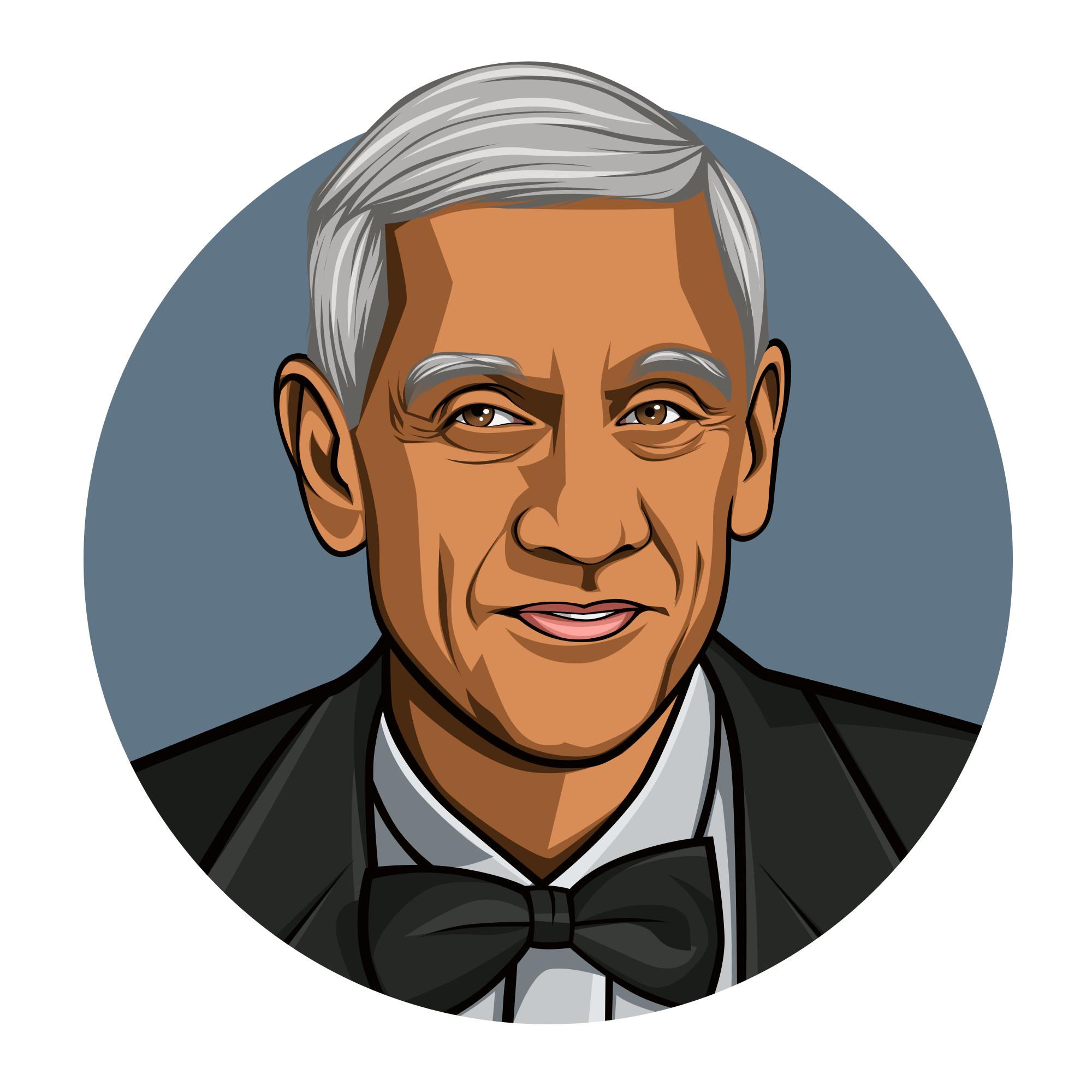
Vinod Khosla - Founder, Khosla Ventures Vinod Khosla is the founder of Khosla Ventures, a Silicon Valley venture capital firm. His firm invests in experimental technologies such as biomedicine and robotics. Khosla cofounded computer hardware firm Sun Microsystems in 1982 with Andy Bechtolsheim, Bill Joy and Scott McNealy. He spent 18 years at venture capital firm Kleiner Perkins Caufield & Byers (now called Kleiner Perkins) before launching his own fund. Would you say that you’re a venture capitalist? You’ll never find me saying that we’re venture capitalists. If you look at the tagline on our website, in fact, probably since the 80s, I’ve never called myself a venture capitalist, I always say, I’m a venture assistant. That’s what the tagline on our website says, since the day we started, because our focus is in trying to help with these kinds of issues, and the funding is incidental. We’re trying to figure out how much we are expected to discount from the listed price. What was your experience at Sun with this? Have you seen your Portfolio companies go through some of this? Sun was a long time ago, very different place. But there’s a few lessons from there. One lesson I haven’t mentioned, people always asked me how to maximize market. I had this discussion today with a couple of them. I said, don’t worry about marketing, what you want is to get the customer to love you, because most of the money you’ll get from them will come later in other negotiation. So the first negotiation is, you get in the door and they become dependent on you, love your technology. Even zero margin businesses are fine initially, if it reduces your cost of sales. So if making it attractive reduces the sales cycle from six or nine months to three months, do it every time, because you engage faster. You learn faster, what you think is a complete product is almost certainly very incomplete. The customer says, can you do that, can you do this. You’ve seen this. You want that learning to get incorporated into your product as quickly as possible. So that three or six-months delay in selling because you’re trying to keep up your price point is worse than just losing the margin. You are also learning to create a better product faster. So get that first product refined in use, and you will hear this repeatedly, I’m a total experimentalist. You can’t do a business plan, you can discover a business plan. You can’t define a product, you can discover product requirements by interacting and engaging. So I’m a total experimentalist on all these things. People have a tendency, especially when they don’t know an area and entrepreneurs generally don’t know the areas they’re going after, to rely on experts. I have watched a lot of my peers’ pitches. All the pitches seem like there’s a prisoner’s dilemma going on. They all get exaggerated to the point that they’re near uniform, and the VCs discount them all again, and there’s no signal happening, where everyone says, we have an amazing team and a huge market and this enormous promise of traction. What concrete things do you do to try to get signal out of that noise? Especially at the seed stage, there’s a lot that’s not knowable, as I was saying earlier. What’s most important to us is not the plan, but the quality of the thinking behind the plan, and judging because you can tell from the quality of thinking, how people approach a problem. When we ask for an answer, we’re not looking for an answer, we’re looking at how somebody thinks about the question. At least that’s what I did. If somebody is trying to, you can have a big number. If you go to YC day, if you’re talking about hair salons, it’s 10s of billions of dollars. If you’re talking about shoe laces, it’s exactly the same number. So those numbers aren’t really the issue. One of the things you realize if you’ve been in the venture business long enough, is that very few companies end up executing on their plans. Their plans three years later look very different. So you’re looking at how people think, how do they respond to things they don’t know, do they pretend they know, or, are they actually much better able to admit what they don’t know, and how fast do they learn. Sometimes we talk to companies for a long time, it can be two months. We’ll see what their learning is in those two months. When we talk to YCombinator or Alchemist Accelerator about, over the two months or three months, we look at how much has somebody changed. That’s maybe at the seed stage, the most important question I look for, because it tells me how fast they’ll keep learning in the next two years or three years. I’d rather have an athlete than somebody who knows the domain. Somebody may not be a great, wide receiver, to those of you who are football fans, but they had great zero to 40 times, they learn to be a wide receiver. It takes them six months longer. But over the course of five years of a startup they’re investing in, they’ll be far ahead of somebody who’s a better wide receiver, but not a great athlete. That, by the way is also thinks about who you should try to hire in any function. About the Alchemist Accelerator Alchemist is a venture-backed initiative focused on accelerating the development of seed-stage ventures that monetize from enterprises (not consumers). The accelerator’s primary screening criteria is on teams, with primacy placed on having distinctive technical co-founders. We give companies around $36K, and run them through a structured 6-month program heavily focused on sales, customer development, and fundraising. Our backers include many of the top corporate and VC funds in the Valley — including Khosla Ventures, DFJ, Cisco, and Salesforce, among others. CB Insights has rated Alchemist the top program based on median funding rates of its grads (YC was #2), and Alchemist is perennially in the top of various Accelerator rankings. The accelerator seeds around 75 enterprise-monetizing ventures / year. Learn more about applying today.
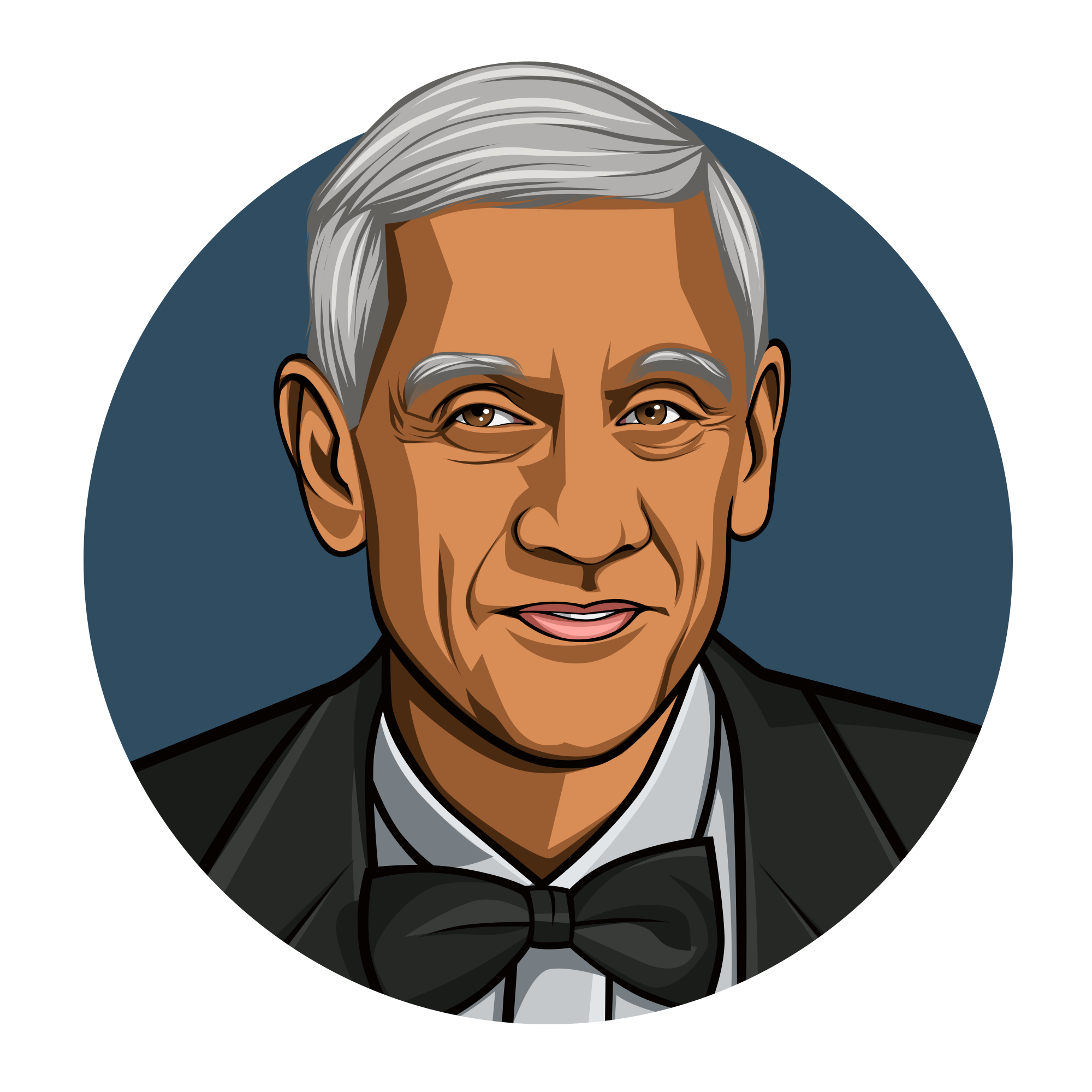
Vinod Khosla — Founder, Khosla Ventures Vinod Khosla is the founder of Khosla Ventures, a Silicon Valley venture capital firm. His firm invests in experimental technologies such as biomedicine and robotics. Khosla co-founded computer hardware firm Sun Microsystems in 1982 with Andy Bechtolsheim, Bill Joy and Scott McNealy. He spent 18 years at venture capital firm Kleiner Perkins Caufield & Byers (now called Kleiner Perkins) before launching his own fund. We have noticed that there is a really strong network effect when you adopt the strategy of only hiring really great people. What’s your take on this? An incredible network effect that’s seldom recognized. I’ll give you an example. I was talking about this particular company, the first four people they’ve hired, and we are talking about a really great person. I said, I’m not going to send him to them, because I look dumb in front of him, because I sent him to these tactical people. You wouldn’t want to be interviewed by those people. With that strong network effect, how do you bootstrap? Initial hiring is way more important than you think because of its multiplicative effect. So it’s worth taking a little longer when you hire those people. You may pay them more in equity.That might be fair.. When we hired Andy Bechtolsheim and Bill oy, they were magnets for all sorts of people. What’s your feelings about remote and distributed teams? Remote teams are hard to manage, but I don’t invest because people have distributed teams or remote teams. You have to be doubly committed to keep a uniform culture. What makes it really hard is if the remote team is all junior people. So if the leaders in the remote team don’t have credibility in the main team, then you’re going to have a very hard time making it work, or keep the best people in the remote team, because they won’t be motivated, because they don’t feel part of it. What are some of the irrational behaviors of investors, and how do you decide if you’re missing out? Investors really aren’t rational. When you say, if you’re missing out, that’s an emotion, not rational. I always say, keep in mind, investors only have two emotions; fear and greed. You know it. So confidence in the team that matters more than anything else in getting your money. A very important question I’ll ask is for the next three people or the three most important people you’re hiring in the next year. It’s not who they’re hiring, it’s how they’re thinking about what they need. What that will mean for years two, three and four in terms of the teams, is for me, a way more important question than your financial forecast. But you have to keep in mind that most investors are emotional. When they’re taking longer and longer and ask you more due diligence questions, the due diligence doesn’t matter, they’re just fearful. So you got to say, how do I get the confidence up, it’s not just answering their questions, which you’ll have to do. Typically, how long do you think it takes for most people before they feel like they know whether they’re in or out? There really isn’t an answer for that. It’s the dynamic you create. For really great teams, you really decide within hours whether you’re going to invest or not. The due diligence is largely irrelevant. If it’s really uncertain areas, there are many things. If Twitter was starting up today, how do you do diligence? How do you know what’s the market? You just say, what confidence do I have in this person, and how rich is this opportunity space. Those are the only questions you can answer. You’re not going to research the answers, use your best judgment. Others actually take serious diligence. At the seed stage, most things don’t take a lot of diligence. So it’s mostly in between, for most good investors. The people who are not that great as investors actually think they can diligence and don’t know what’s diligence and what’s not. On your side, when you’re writing, you’re doing your spreadsheets, you know you’re making shit. You know the answer and you just put the assumptions to be answered. Great thing about spreadsheets is you can hide all your assumptions. What do you think about solo founders versus co-founders? I actually don’t have a view one way or another. What matters is not what percentage you own, but the probability of success. If your expected value is ownership percentage in terms of probability of success, the far bigger variable to get far less attention is the probability of success. I always say, if you look at the risks in your business, adding more talent can increase the probability of success, then don’t worry about the ownership percentage. I’ll give you a very real example. When my son did his startup, I had him keep a 60% pool. Nobody heard about it. But then he called the VP of engineering of Quora, and said, do you want to be my co-founder? He said, no. To give you a sense, he was fresh graduate out of Stanford. But you’d never get somebody like that, as a co-founder, but because if he had this school, he was able to attract somebody and that guy Shavia, is a great guy. He was head of machine learning for Netflix, and then became VP of engineering of Quora. The first three people he hired were three really valuable people in AI, they were old men making seven digit salaries, and left to join a startup at 150K or whatever the salary was. Why? Because they got enough confidence. My son was able to give them 3–4%. So now they have. So they’re just battling for somebody, somebody who is a great machine learning guy from Apple. His other offers are like seven digit offers. He was one of the co-authors on the GAN paper with Ian Goodfellow. The guy called him and said, I looked at your team and I want to talk to you. Now, the other people all are offering really high salaries, so I don’t know whether he went with them. But you got a chance because people looked at who you have, and the best people want to join. You have to work harder to get it going, but that’s how I would answer the co-founder question. By the way, even at Sun, Bill Joy didn’t join initially. Six months later, we just called him a co-founder. Hey, you’re going to be an attractive enough magnet, let’s just call you co-founder. It doesn’t matter. This, I’m very proud of. Sun was very successful. But after the first 15 or 20 people that we hired, Eric Schmidt was in the first 15, became CEO of Google. Carol Bartz was in the first 15, she became CEO of Yahoo. At least a dozen companies worth more than a billion dollars were started by the first 15 people at Sun. I was 25 when we started. I only wanted to hire really smart people, who shouldn’t normally want to work with me. That’s the way to do it. But it paid off. About the Alchemist Accelerator Alchemist is a venture-backed initiative focused on accelerating the development of seed-stage ventures that monetize from enterprises (not consumers). The accelerator’s primary screening criteria is on teams, with primacy placed on having distinctive technical co-founders. We give companies around $36K, and run them through a structured 6-month program heavily focused on sales, customer development, and fundraising. Our backers include many of the top corporate and VC funds in the Valley — including Khosla Ventures, DFJ, Cisco, and Salesforce, among others. CB Insights has rated Alchemist the top program based on median funding rates of its grads (YC was #2), and Alchemist is perennially in the top of various Accelerator rankings. The accelerator seeds around 75 enterprise-monetizing ventures / year. Learn more about applying today.
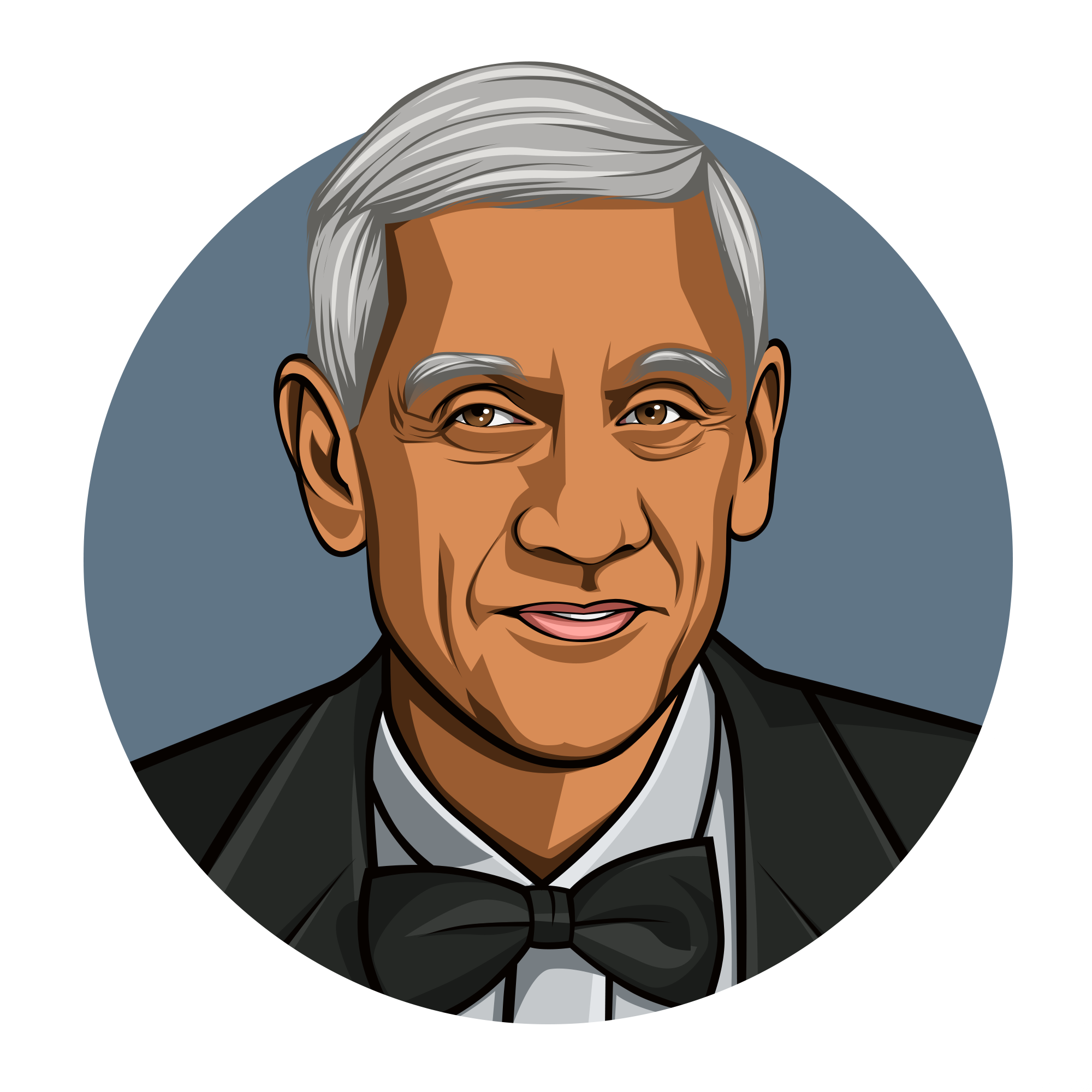
Vinod Khosla — Founder, Khosla Ventures Vinod Khosla is the founder of Khosla Ventures, a Silicon Valley venture capital firm. His firm invests in experimental technologies such as biomedicine and robotics. Khosla co-founded computer hardware firm Sun Microsystems in 1982 with Andy Bechtolsheim, Bill Joy and Scott McNealy. He spent 18 years at venture capital firm Kleiner Perkins Caufield & Byers (now called Kleiner Perkins) before launching his own fund. If you had to pick the single most common mistake that young startups make, what would it be? Let me explain the process of building a big company, assuming that’s the goal. It’s like you’re trying to climb Mount Everest, but nobody ever got to the top of Mount Everest without going to Basecamp first, and then camp one, camp two, camp three. The other thing you notice; you look at the route to Mount Everest and it is not a straight line. I always say “be obstinate about your wishes, be flexible about your tactics”. Tactics are about zigging and zagging, but vision is about where you want to get to. What if the vision is wrong? You can adjust the vision along the way. That happens often. Here’s the single biggest problem: a company doesn’t depend on the plan you make. A company becomes the people you’ve hired, not the plan you make. This is hard to believe, but almost always true. I think the first 10 or 15 people you hire dramatically changes the probability of what you become. People don’t think in these terms. The hard part, in this way related to Mount Everest, is getting to the base camp where the first few zigs and zags are very tactical. You might say, let me just hire a coder or somebody who can call customers and do sales. But once you have enough of those people, you may not have the team to go after the vision. So this split personality between worrying about the vision, worrying about the day to day tactics, and hiring for both is the single largest mistake I’ve seen. We were just talking about a company that started about six months ago. They have hired five or six people. The first five people they’ve hired are low-level technical people who are there just to get the tasks done. I actually don’t think they’ll be able to hire the people they need for the bigger vision because people on the outside look at who they will be joining. It’s really the hardest decision to make: how practical to be, how strategic to be. I always say, in hiring, be strategic with people who can be tactical because they can do a lot more when the time comes. It’s okay if they can just call for me, or do customer support for a while. After getting past the first few zig-zags, these are the people that will help build the company’s vision. The right personality is in people who know they can do a lot more, know the vision, are into the vision, but are willing to do everything. So all of you probably recognize that characteristic, but the implications of hiring the wrong, tactical-only people comes two years later, three years later, because you can’t hire the people you need for the life vision, and because you can’t scale. Everybody knows what to hire in a VP of engineering or a VP of marketing. The question I always ask is, this VP of engineering you’re hiring, will he or she make your VP of marketing better? Nobody asks that question, but it is the single most important question I ask. What kind of questions would you ask the marketing person? The VP of engineering may not know what makes a great marketing person, probably doesn’t, but knows the right kinds of questions to ask. He’ll tell you a lot about the VP of engineering operating outside their domain, and also how they might add to this evolution of strategy of the company, which is what we are referring to. Do you have some advice about how to build up a quality enterprise sales team? Yes. On our website, there are two documents I’d suggest companies at this stage absolutely look at One is called ‘’Team Building,’’ and the other one is called ‘’Gene pool engineering for entrepreneurs’’. Unlikely you’ll just be asked about hiring great people, which anybody can tell you, but it’s not actionable, because I don’t know of anybody who says they try and hire not-great people. It is specifically thinking about what your risks are and how your engineered gene pool is, who you’re hiring to go after your risks. Those two documents are worth looking at. Then I would say, hiring each functional person is very different. Actually, sales is much easier to hire and fire than marketing. Here’s the reason why. A salesperson is a very tactical person, and the best sales guys don’t want high salary, they want high commission. If they don’t meet their quota, you don’t pay them. If they do meet their quota, you’re happy to pay them a lot. In the early days of Sun, all the sales guys always made more money than anybody else in the company, because they were animals and you just want them to be that. If they weren’t, they left because they had very low base salaries. These people would do much better at IBM or DEC, because they had a high base and low commission. We purposefully made it very low base and high commission. The best guys had so much confidence in themselves. They’re just self-selected. Is it really that easy? You just change the comp and then suddenly you have a team full of winners? Yes, comp works for sales people. Marketing is different, we can’t do that, we need much more cerebral people, who think more deeply about the short term and the long term. That’s much harder. Marketing is harder than just about any other function. If you call somebody at Google, and say, ‘’Hey, you’re VP of Marketing for YouTube or something, help me recruit this person,’’ they don’t have a clue on how to hire a marketing person for a startup. Here’s why, what marketing people do mostly is make what I call maintenance marketing. You’re selling widgets, you’re selling trucks, you’re selling cars, you’re selling clothes. What marketing people do is incremental. Everything is defined. The marketing people are essentially doing maintenance marketing. An ad campaign here, a press release there. What startups have to do is figure out from scratch what’s a new way to sell, what’s the new positioning for them. It’s like starting from ground zero. So startup marketing people have to be almost experimentalists in every sense of the word, clever and out-of-the-box thinkers. Those are not the characteristics in bigger companies, where people have done marketing for an established product. It’s so different than marketing for a startup, where you’re trying to find leverage, you’re trying to find a new product market fit. In fact, that evolutionary product design, like, oh, we’re doing this, but this thing looks incredible, let’s just try that. That’s where products evolve in startups and good marketing people are that agile. They don’t have long term marketing plans; they don’t have PR agencies. Any startup that wants to hire an agency is generally a bad sign. I hate startups hiring agencies because it means they don’t understand their product. If not agencies, where do you find these mythical people? They’re usually in other startups. But sometimes, you’ll find engineers in your own organizations who are just asking great questions. I find really good startup marketing people are just people who think from first principles, as opposed to people who think from tradition, like this is how press releases are done, this is how ad campaigns are done. Good marketing people are first principles thinkers. Generally, one of the other mistakes is to say, if you’re selling retail, let’s find somebody from retail. When I have to choose between domain expertise and better thinking, I’ve always picked better thinking for that function. Interestingly for CFO, I picked domain expertise, because their job is much more linear. So my point is, sales is different than marketing is different than finance. Each one requires you to have this art of saying what’s the right way to think about this person. In these papers, I actually define if you’re hiring for a position that you’ve never worked in, how do you go about hiring. You should read this. They’re on our website for a reason. Meant to be a resource to all entrepreneurs, whether in our portfolio or not. About the Alchemist Accelerator Alchemist is a venture-backed initiative focused on accelerating the development of seed-stage ventures that monetize from enterprises (not consumers). The accelerator’s primary screening criteria is on teams, with primacy placed on having distinctive technical co-founders. We give companies around $36K, and run them through a structured 6-month program heavily focused on sales, customer development, and fundraising. Our backers include many of the top corporate and VC funds in the Valley — including Khosla Ventures, DFJ, Cisco, and Salesforce, among others. CB Insights has rated Alchemist the top program based on median funding rates of its grads (YC was #2), and Alchemist is perennially in the top of various Accelerator rankings. The accelerator seeds around 75 enterprise-monetizing ventures / year. Learn more about applying today.

Gabor Angeli - Co-Founder & CTO, Eloquent Labs Gabor graduated from UC Berkeley with a BS (with honors) in EECS. He then went on to pursue a Ph.D. at Stanford. During that time, he was the NLP Architect at Baarzo (acq by GOOG, 2014). He is also a core contributor to the popular Stanford CoreNLP toolkit. In 2016, he co-founded Eloquent Labs, a conversational AI company, with a fellow Stanford NLP researcher Keenon Werling. He Served as Eloquent Labs’ CTO until it was acquired by Square in 2019. He now leads the Conversations team at Square to bring cutting edge conversational AI to small businesses. What did Eloquent labs bring to the marketplace, that wasn’t already prevalent? What is the unique selling point of Eloquent labs as compared to other B2B NLP startups? One way to characterize our unique insight is that there are a bunch of ChatBots that either answer questions, like static question answering, or are otherwise integrated with a small set of APIs. From our experience, talking to customers and deploying our ChatBot, this was not how most query streams look. Take even something simple like a shipping company: tracking a package, everyone says, is the most common query that people have. But if you look through and figure out how a bot or human would solve all of these queries, it breaks down into 100 different smaller API endpoints or smaller things that you have to do. For example, questions such as “You’re stuck in customs, why do I have to pay duties?” “You delivered to the wrong address”, so on and so forth. They all show up in conversations that customer service categorizes as tracking the package. Eloquent Labs’ big contribution was a way to quickly incorporate new intents into the ChatBot in a way that didn’t require manual effort to integrate with the associated APIs. The end result was a ChatBot that took less time to program for a new intent than it would have for an agent to perform the task themselves. What was your motivation while building up Eloquent Labs? What was your drive that got you in the NLP space? What was pushing you forward? What caused me to do a startup in the NLP space is straightforward. I did my PhD in NLP. That was the unique set of skills that I could offer to the world. Why Eloquent labs and why ChatBots? I had just graduated from my PhD, and my co-founder had done research in the lab that I was in as well. What we were good at was building high performance, accurate NLP systems. We looked around in the market for a place where that would be an actual advantage, a place where the technology was hard enough that we have a competitive edge, but not so hard that it’s impossible. We created Eloquent out of that philosophy. What made you transition from research to entrepreneurship? Did you have other entrepreneurial experiences before starting Eloquent labs, or was it the first time you really went into this space? This was my first startup and first real experienced entrepreneurship. I worked as a fellow at XSeed capital, which was a wonderful experience and one that I’d recommend to anyone that has the time during their PhD. That gave me a bit of a sense of what the VC climate was like, what fundraising looks like, and how these people that have been involved in entrepreneurship and startups for decades look at the space and evaluate companies. How did you assign roles to each co-founder? How did you distribute the work amongst yourselves? We fought over who would get to be CTO, and I won. We’re both technical people. So in a sense, we’re both on the technical side. On the other hand, Keenon has much more of a talent for talking to people and communicating the vision for the company. What is the most challenging thing you faced at Eloquent Labs? There’s a bunch of little, medium, and large challenges that are very specific to us or businesses like ours, but I’ll answer broadly. The most useful answer I can give to someone thinking about starting a startup is the most challenging bit was operating under uncertainty. There’s a bunch of different types of uncertainty, but the one I’ll highlight is product uncertainty. Everyone gives the advice that you should talk to a lot of people, hundreds of people. What they don’t tell you is that you can talk to as many people as you want, you’re still not going to get a clear picture of the world. You get little snippets of truth; you get little ideas of what might be, but it’s very hard to run even just a single interview in a way that people give their honest impression, and aggregating on top of it is even harder. That leads to this perpetual challenge. In a startup, it’s never okay to sit still, because if you sit still, you’re just going to die. The default state, if you don’t do anything, you run out of money and collapse. So you have to go in some direction or another, and you just never know enough to be confident that that’s the right or the wrong decision. What constitutes success for you, personally? What drives you in the startup sense? Keenon has a lot of family friends that are in business and successful in business. He was asking for advice from some of them, and retelling the woes of Silicon Valley and all the weird perverse incentives of fundraising and hiring and so forth. He recounted advice he got from one of his family friends, ‘Look, businesses aren’t hard, you have one job, bring in more money than you spend.’’ That stuck with me throughout the remainder of the startup and even now, as very sensible criteria for a successful company. Success in the startup is you bring in more money than you spend. There’s many other ways to have strange, perverse Silicon Valley success. One of them is getting acquired. You can go after users and go after mega growth. But these are all anomalies in a sense. The core truth remains that if you’re looking at what makes a successful long term company either now or sometime in the future, you should be bringing in more money than you spend. What was the most valuable thing you learned from the Alchemist experience? At a high level, the role that Alchemist played in our particular startup venture was to get us exposed to the business side of things. We had very little experience about what the components of running the actual sales and marketing and business development side of the company is. Alchemist actually focuses a fair amount, in both their classes and their mentorship, on precisely this. It was useful to hear a bunch of different perspectives from the meetings and presentations that they gave. It was especially useful to get one on one mentoring from the various Alchemist mentors that they paired us up with. Do you have any advice for the next generation of Alchemist Accelerator founders? Don’t start a startup. It’s very painful. Most people aren’t going to listen to that and they’re going to do it anyways. That’s good. That shows some amount of determination. If there’s doubt there, and I can dissuade you, then you shouldn’t be doing a startup. I got the same advice once about getting a PhD. They told me, don’t do a PhD, and tried to persuade me otherwise. The motivation is the same. If someone can be persuaded out of it, then it’s not going to go well. It’s a very painful experience and much more painful than its portrayed in the media and by VCs and in the general culture of Silicon Valley. Do you have any plans of getting back into the startup space in the future? Or, would you like to continue developing your technology at Square? No, I’m not likely to return to the startup scene. That’s because of what you said; because it’s very painful? Or, is there some other reason? Mostly that. There are more interesting places to do interesting work than at a startup. As a technologist, startups are — contrary to my initial impression — not the most impactful way to bring new technology into the world. It’s a wonderful way to bring existing technology to a larger group of people. But if the interest is to build something new, to build something creative, to start something from scratch: startups, by virtue have all of these extra pressures being put on them, are not actually a particularly effective way to do this. If you had to do this entire startup journey once again, what would you do differently than you did the first time? What were the biggest mistakes you made while you were working on it? A ton of mistakes were made. A few things I could have done differently. It’s difficult to do a startup that is both developing new technology and trying to bring in substantial revenue. We tried to both develop something that was, in a sense, new to the world: conversational AI. At the same time, we were trying to monetize it and get actual customers and fulfill this criteria of success, of bringing in more money than you spend. Doing both at the same time at a high level is very difficult and adds extra burden to the startup. In practice, there are plenty of successful companies that develop new technology, and then wait to get absorbed into a big company to productize it. There are also plenty of successful companies that take the technology that’s new or underutilized or utilized in an adjacent field that can be applied to something else, productize it and become a self-sustaining company. Many of these actually go on to have research links or research and development engineering arms, that then develop new technology. However, to do both of these together was probably a high level strategic mistake in Eloquent. About the Alchemist Accelerator Alchemist is a venture-backed initiative focused on accelerating the development of seed-stage ventures that monetize from enterprises (not consumers). The accelerator’s primary screening criteria is on teams, with primacy placed on having distinctive technical co-founders. We give companies around $36K, and run them through a structured 6-month program heavily focused on sales, customer development, and fundraising. Our backers include many of the top corporate and VC funds in the Valley — including Khosla Ventures, DFJ, Cisco, and Salesforce, among others. CB Insights has rated Alchemist the top program based on median funding rates of its grads (YC was #2), and Alchemist is perennially in the top of various Accelerator rankings. The accelerator seeds around 75 enterprise-monetizing ventures / year. Learn more about applying today.
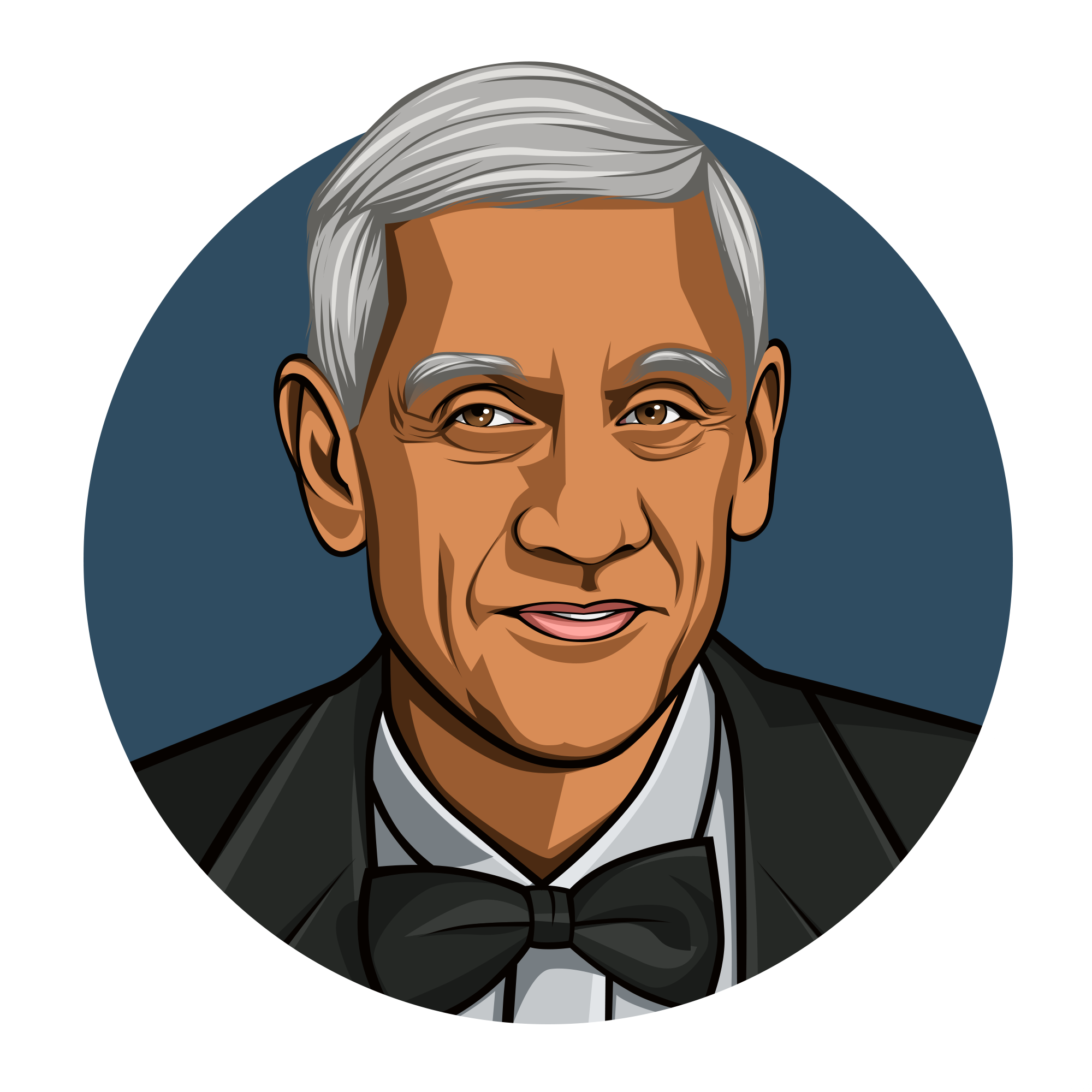
Vinod Khosla — Founder, Khosla Ventures Vinod Khosla is the founder of Khosla Ventures, a Silicon Valley venture capital firm. His firm invests in experimental technologies such as biomedicine and robotics. Khosla co-founded computer hardware firm Sun Microsystems in 1982 with Andy Bechtolsheim, Bill Joy and Scott McNealy. He spent 18 years at venture capital firm Kleiner Perkins Caufield & Byers (now called Kleiner Perkins) before launching his own fund. It’s been about a decade since the last big macro-economic crash. As startups, we’re incredibly sensitive to this, because budgets for especially enterprise sales can just disappear overnight. We need to be ready to batten down the hatches. How much time do you think we’ve gotten until the next big one? If you care to speculate, what will it be? I would say, I’m smart enough to know I don’t know. Here’s the way I would put it practically; so I always try and translate it from an entrepreneurial point of view. You can ask people for opinions, but they’re largely irrelevant because they’re largely random. So here’s what you do. There’s a great paper written by Professor at the Insead Business School in France, about what makes a great entrepreneur. This guy interviewed 400 successful entrepreneurs and tried to capture how they make decisions. The most consistent characteristic was entrepreneurs who are factual. They didn’t try and say, how do I get to the top of Mount Everest? They said, I am here, how can I collect more resources to get that to the next step? How can I collect more resources, depends on the markets. Are markets really high? Whatever the environment, you face all of those over the course of time. See what are the resources worth grabbing, and think not in terms of trying to predict the market because you can’t, but in how do you manage risk. The best way to manage risk is to minimize it, but it’s not always the smartest strategy because if you have product market fit, you want to hit the gas. We’re taking notes, so we really deeply appreciate technology, and every venture firm recognizes it. If something’s too hard to understand, they call us. Frankly, it doesn’t have to do with making more or less money. I don’t want to work on non-tech stuff, plain and simple. That’s why we get into hard technical questions. It’s not really relevant to how much money we make, but it’s more fun. Scalability will depend on that. We won’t invest in a company where the goal is to get acquired. It’s just not something we do. Even though your IRRs can be much higher, because you can build to a point, then sell to Google or Facebook or Cisco or Salesforce or pick your favorite, and do it over and over again. Some companies delight in that. We don’t. It is generally a better way to make IRR for an investor. But, you got to do what you enjoy. That’s not very common in venture firms, because they really have fiduciary responsibility to get the highest IRR. We also tend to be more patient, but because our view is we’d rather get a lower IRR over a longer period of time than a higher IRR, than over a shorter period of time. In fact the highest IRR’s coming in day trading, where you invest for a day. But that’s not our state. Some people are very good at it. We are terrible at it. You guys are an evergreen firm, right? We’re not an evergreen firm, but we behave like an evergreen firm. So there are lots of different investors, and I would say, your job is first to get funding because without funding, you don’t survive. But beyond funding, if you have options, pick somebody who’s compatible with your own personal goals. None of these goals I defined are right or wrong. They just match the investors of your personality. It’s perfectly okay to say, I want the most money. People say to me, Hey, I just want the first $10 million in my bank account. So I’ll build this to a point and get it sold to Google and now, I’m happy. That’s why you’re just not compatible with us, but it’s a perfectly laudable goal. Some people say, Well, I want to do this first time around and put $10 million in my bank account, then I can take a long term risk, and that’s fine too. So it’s not like any of these are right or wrong, but be clear that these things exist. About the Alchemist Accelerator Alchemist is a venture-backed initiative focused on accelerating the development of seed-stage ventures that monetize from enterprises (not consumers). The accelerator’s primary screening criteria is on teams, with primacy placed on having distinctive technical co-founders. We give companies around $36K, and run them through a structured 6-month program heavily focused on sales, customer development, and fundraising. Our backers include many of the top corporate and VC funds in the Valley — including Khosla Ventures, DFJ, Cisco, and Salesforce, among others. CB Insights has rated Alchemist the top program based on median funding rates of its grads (YC was #2), and Alchemist is perennially in the top of various Accelerator rankings. The accelerator seeds around 75 enterprise-monetizing ventures / year. Learn more about applying today.

Aaron Michel - Partner, 1984 Ventures Aaron Michel is a partner at 1984 Ventures, a seed stage venture capital firm in SF. Previously he was the CEO of PathSource, a career and life guidance company that’s created the #1 ranked career app in the US. In the past few years, Aaron and his companies have been featured in USA Today, SV Magazine, TechCrunch, Inc. Magazine and other outlets. A recipient of the Boston Business Journal and Mass High Tech’s Innovation All-Star award, Aaron graduated from Harvard Business School and the Harvard Kennedy School of Government. He was ranked as one of venture capital’s 40 Under 40 by the Venture Capital Journal. Can you tell me a little bit about your background? How you were prepared for the role in venture capital? I came to Silicon Valley about 12 years ago after attending Harvard Business School. When I got out here, I worked briefly in product management, and then started a couple of companies. The most recent of those was a company called PathSource. We enabled people to figure out what career they want to go into and showed them the school and the educational path to get there. I sold into K-12, a little bit of higher ed, adult ed, and eventually expanded into B2C. That got acquired by AcademixDirect back in March 2017. I came on board with 1984 Ventures as a partner shortly after that. To answer the second part of your question, people tend to have beliefs that validate their life decisions. I tend to have the belief that having been an entrepreneur in the past helps me be a better VC. Having gone through the highs and lows, our entrepreneurial experience helps us when it comes to evaluating both companies and founders. It also helps with the “founder therapy” side of our jobs. That is, once we invest, part of our job is to work with our portfolio company founders and help them through the tough spots, both from a strategic standpoint and from an emotional standpoint. Having been there, it gives us a better ability to empathize and do that. Can you tell me a little bit more about 1984 ventures? What is the approximate size of the fund and how much do you normally invest? It’s a $45 million fund. We invest in seed stage companies that are using software to tackle unsexy and antiquated industries. Our investment size tends to be around $500K, and we don’t take board seats. In your investment thesis, it said, ‘’We invest in seed stage companies using software to disrupt unsexy and antiquated industries,’’ and you also avoid high technologies, like Blockchain, AR, VR. What are the reasons behind it? We’re big believers in the idea that you can find and build great companies that don’t require taking enormous technology risks. There are two elements to this. One is that it’s unnecessary to invest in really bleeding edge technology because then you’re adding an additional layer of risk on top of your investment without necessarily getting anything in return. You can build a $10 billion company without going out and splitting the atom. At the same time, the other thing that we try to avoid is hype. A good way to think about how hype works is that you have somebody who is a big name investor who comes out and says, ‘’I’m going to make an investment in this company.’’ It’s a company in a space that no one was looking at, like VR and Magic Leap. And when a Sequoia, a Kleiner Perkins, etc. comes out and says, ‘’I’m going to invest in this space, I picked a company, this is going to be the next big thing,’’ all these other investors start piling in, and they choose the second, the fifth, the 11th, the 20th best companies to invest in. That drives up the valuations for these companies, so you’re getting poor valuations in companies that perhaps aren’t actually all that good. As all that capital is flowing in, other entrepreneurs see that this is becoming a hot space and say, ‘’Oh all this capital is coming into the space, I should start a company here.’’ So more companies start in that space. Now you have high valuations, plus lots and lots of competition. Ultimately, maybe that first company or the top two companies end up with reasonable exits, but the majority of the investors who invest in that space end up faring very poorly. If you invested in the fifth best company at a very high valuation, you’re not going to end up with a good outcome. So for both entrepreneurs and for investors — starting or investing in a hyped up area, like AR, VR, Blockchain, scooters — is not necessarily an optimal idea. How does KYTE compete in the ride sharing or the car sharing space? Wouldn’t you classify that as a pretty hyped space in today’s market? Not exactly. We don’t really think about KYTE that way. We think about KYTE as a company that is really disrupting how people rent cars. Car rental is an exceptionally painful, antiquated industry. The majority of the population has, at some point in time, sat in an endless line at Hertz, Avis, National or Dollar, and just said to themselves, ‘’Wow, this is miserable,’’ and then went over to the kiosks that those companies spent large sums of money on and realized that they don’t work. It’s a horrible process. Plus, the KYTE founders recognized that there was a very important shift happening in the way that people use cars. The level of car ownership, both in the US and internationally, is dropping precipitously. KYTE solves that problem for a lot of people, people who don’t want to own cars, but still, once, twice, three, four times a month, want to rent a car for a long distance. If you’re in the Bay Area, then want to go drive to Tahoe or go camping somewhere outside of San Francisco, you don’t want to take an Uber to do all of that. But if you get a KYTE, it solves that problem. It combines the car ownership trend with another major shift, towards convenience. The millennial generation now has cash and is willing to pay for convenience. The first time you get a KYTE, it’s a magical experience. Any time we’re considering investing in a B2C product, we actually try that consumer product. So both 1984’s managing partner Ramy and I are KYTE users, as well as investors. When we first tried it, having somebody show up at our door, give us the keys and disappear, and all of a sudden, we’ve got this car in front of us, and we never had to wait at a counter or walk anywhere, that was magical. What would you say is the biggest differentiator between 1984 and other venture capital funds? There are a few elements to it. We’ve built a brand as the folks who entrepreneurs go to when they are building a really unsexy company. If you’re building a virtual reality or a space tech company for example, don’t knock on our door, but word has gotten around that if you’re disrupting how residential real estate appraisals are done or if you’re changing the nature of warehousing, we are probably one of the first doors that you knock on. That’s one piece of it. A second piece is that we’ve built a reputation for honesty and transparency. When we pass on companies, we’re transparent about the reason why, which for some reason many VCs aren’t. We try to pass quickly and have honest conversations that add value when we’re engaging with any company. Finally, once we invest we really try to add a lot of value to the company in a couple of ways. One is guidance. We work closely with our portfolio company founders on a range of strategic issues as well as founder therapy. Two is we work hard to help get them not just to a Series A, but to a Series A with some of the best early stage firms in the world. We’re fortunate that we can get our portfolio companies in front of the top Series A firms. And we work closely with our portfolio companies to help them think about positioning, the story, deck iterations, and ultimately make the introductions that are going to be most useful. Having been entrepreneurs ourselves, we’ve always been of the opinion that VCs tend to overvalue their advice and undervalue their introductions. So we really try to optimize around making really valuable introductions to help our founders. Speaking about helping founders, can you give me some insight on how you make decisions in the investing process? How do you decide which company to invest in, and what exactly are you looking for? It’s actually relatively straightforward. At the highest level, we’re deciding if this company is solving a real problem. Then, we look at the team. Are these the very best people to solve this particular problem? Next is the market. Is this a multi-billion dollar market? If this is successful, how big of a success can it be? Then we look at product and product/market fit. Are the relevant KPIs going up and to the right? Then behind that are more secondary considerations such as is this a space that has significant headwinds or tailwinds? There are some industries where you can do everything right, and it’s still an uphill battle. Then there are some industries where no matter what you do, you’ve got a good shot at doing reasonably well. Those are all things that we take into account. Would you be more likely to fund a very experienced team with a mediocre idea? Or would you prefer an amateur team, but they have an amazing idea? The team is much more important than the idea. My assumption is that most of the time the company will make 1–2 pivots before they really nail the model. It’s only at Facebook where somebody comes up with an idea in their college dorm room, and then boom, that ends up being a $10 plus billion idea. The majority of the time, there are twists and turns along the way. So having a team that is able to execute and accommodate those twists and turns is first and foremost. That’s why it’s the number one filter that I mentioned. What’s the #1 red flag you see that makes you pass on a company? I wouldn’t say that there’s a number one red flag. Frankly, the company has to pass all those filters I previously mentioned in order for us to move forward. That’s relatively rare. The nature of the business is that we end up passing on far more companies than we move forward with. Some examples of red flags are teams that don’t come across as though they are prepared for the challenge or don’t know the space well. Or if they’re attacking a small market where even if the business succeeds, you can’t have a billion-dollar valuation. Those are the types of things that we look out for. How do you deal with cold calls and emails? Do you have any advice for entrepreneurs trying to reach out to venture capital? We try to be responsive to the cold emails that we get. An entrepreneur should expect that even if they get a response from a venture capital firm to a cold email or cold outreach, then the bar that they have to pass is much higher than if they came in through an introduction because the majority of the time, entrepreneurs should be able to network their way eventually to whoever they want to meet, within certain limits. For the most part, if somebody wants to reach us, they should be able to find somebody who knows us. So if they’re not able to do that, it’s a little bit of a yellow flag. When I was an entrepreneur, I was of the opinion that VCs should take cold emails, take cold calls, and look at them the same way that they would if the person came in through a warm introduction from somebody that they knew. So, as a VC, early on, I really tried to open the floodgates and take in a lot of cold outreach. What I found surprised me, which was that the people who I was getting connected to through warm introductions or through my own outbound direct outreach, as opposed to direct outreach by the entrepreneur, tended to be a much better fit for what we were looking for than the people who were reaching out cold. My experience has generally been that when somebody comes in without a warm introduction, the likelihood is that they’re less likely to be a good fit for us. Why do you think that is? Is that because of their inability to network or does that suggest that it’s like an auto filter? People you know would are more likely to recommend qualified entrepreneurs? It’s more the latter. The people who send us a lot of deal flow are people who we’ve had conversations with about the nature of our thesis, and the types of companies that we’re looking for. So they’re not likely to send us companies that are well outside of our scope. Whereas, if you’re an entrepreneur, and you’re reaching out to us for the first time, you may not have done the research to know that we’re not looking for the next big scooter company. You may have a great vision for the future of scooters and think that mobility qualifies as an antiquated industry, so we’ll probably like their idea. You might reach out to us directly, whereas somebody who knows us well would tell you, “No, don’t bother reaching out to 1984. That’s not their thing.” What do you find the most difficult part about seed stage investing? I’ll answer that in two ways. It’s hard to find great companies. There are not that many billion-dollar plus companies born every month, so you constantly have to be scouring America to find the companies that really fit what you’re looking for. The other piece is, frankly having been entrepreneurs ourselves, it sucks passing on a company. Saying no to somebody who is really promising, who’s looking for capital, who has the fire in their belly, that is a painful thing to do. The nature of the business is that you’re doing it all the time. So you have to get used to it, but it still sucks. What are the channels that you use to try and find these companies? Where do you think there’s the most potential to find these ideas and these people and these teams? Certainly, Alchemist is a great place to look. We’ve invested in a couple of companies that have come through Alchemist. We’ve invested in some companies out of YC. We have inbound from other venture capital firms who know us well and are familiar with how we add value to companies after we invest. We have friends at universities, accelerators etc., angel investors across the US who we work with, and who would like to have us sitting at the table when a seed stage company is going through the process of growing up and ultimately looking for their Series A. So all of them send us deal flow. We’re also very proactive, both in doing outbound research and outreach, as well as digitally knocking on doors. We’re constantly working to expand the top of our funnel. Is there any one piece of advice that you’d want to share with founders that doesn’t get shared enough in your opinion? Yes, to deeply diligence your market and test the core hypotheses around customer adoption as quickly as you can. Sometimes founders will look at their market with rose colored glasses and say that there aren’t any other serious competitors in their space. Often this is a sign that they don’t understand their competition or don’t take them seriously enough. Or, if other competitors in the space are not doing well, then there might be a reason that applies to your business. Founders are well served by understanding their market dynamics and competition today as well as by understanding what happened in their space in the past. You can learn a lot from reviewing startups in your space that failed. The takeaway here is that there’s frequently an assumption among entrepreneurs that you’re looking at a given industry or problem better than anybody else has, and you’re looking at it in a new way, in a way that no one has ever looked at that problem before. In reality, you really have to be very skeptical of your idea and vision before you decide to spend years of your life working on it. About the Alchemist Accelerator Alchemist is a venture-backed initiative focused on accelerating the development of seed-stage ventures that monetize from enterprises (not consumers). The accelerator’s primary screening criteria is on teams, with primacy placed on having distinctive technical co-founders. We give companies around $36K, and run them through a structured 6-month program heavily focused on sales, customer development, and fundraising. Our backers include many of the top corporate and VC funds in the Valley — including Khosla Ventures, DFJ, Cisco, and Salesforce, among others. CB Insights has rated Alchemist the top program based on median funding rates of its grads (YC was #2), and Alchemist is perennially in the top of various Accelerator rankings. The accelerator seeds around 75 enterprise-monetizing ventures / year. Learn more about applying today.
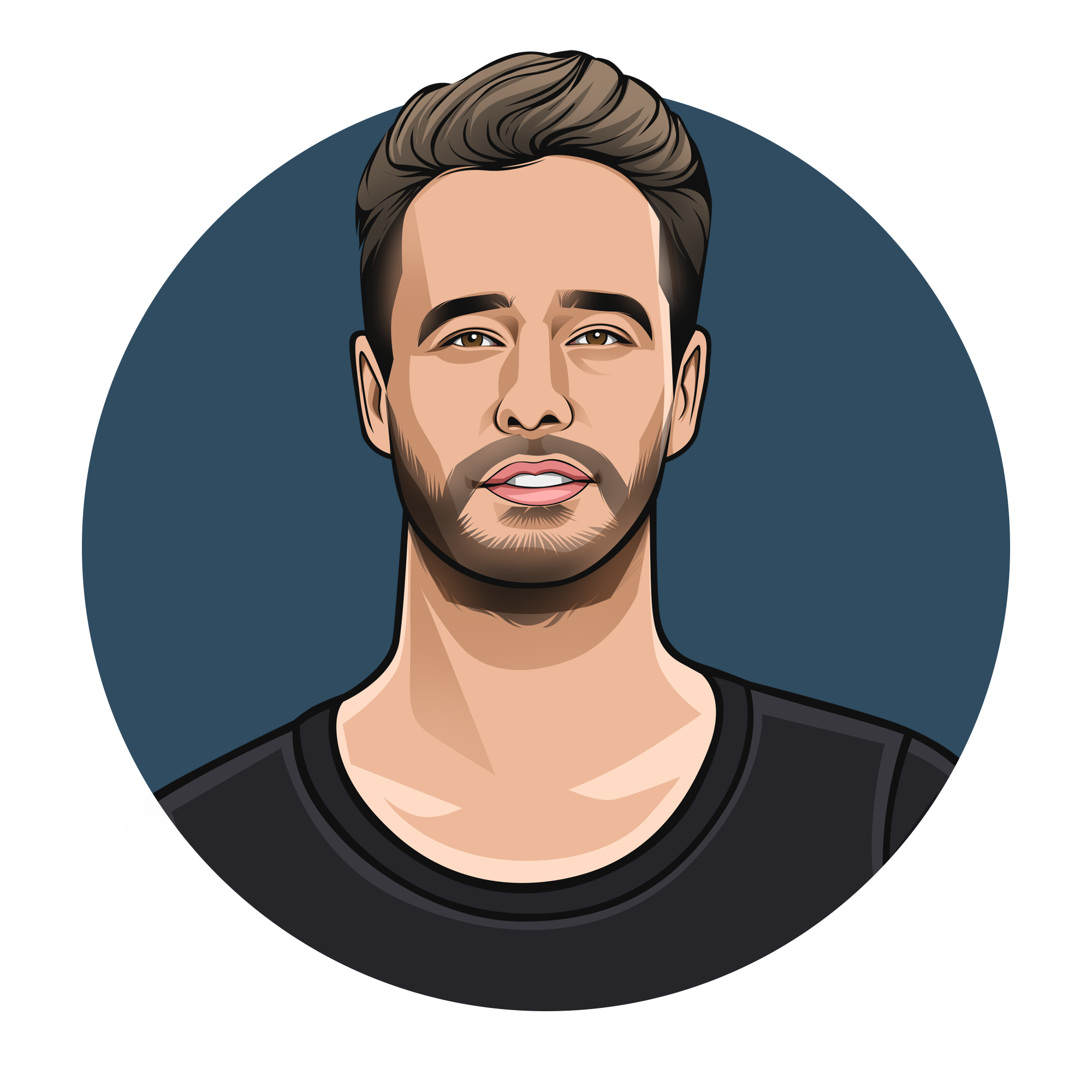
Nikolaus Volk - Co-Founder, KYTE Nikolaus graduated from Technische Universität München with a BSc. in Engineering Science. He then went on to pursue a MSc. in Engineering at Stanford University. He worked at Uber as a machine learning engineer, where he built large scale (ML) systems and infrastructure on top of sensor and location data. In 2019, he co-founded KYTE with Francesco Wiedemann and Ludwig Schoenack, where he serves as the Technical Leader. What does KYTE bring to the marketplace that wasn’t already prevalent? We allow customers to rent a car for a day, a couple of days or weeks. We’re completely redefining the experience of how people rent vehicles. For our customers, we make renting a car as easy as ordering an Uber just with the press of a button because the car comes straight to your door. KYTE doesn’t really define itself as a car-sharing or car-rental company, since you don’t own the cars. How does your model work? Yes, that’s correct. We are a technology and logistics platform. We virtualize the supply from car-rental companies, dealerships or directly from auto manufacturers. We work with these fleet professionals because they are really good in what they are doing with respect to buying and selling vehicles. And we are building what we are good at: customer experience, distribution, technology, product etc. For our suppliers we are building what we call cloud-fleet infrastructure to make these vehicles then easily deployable to any demand. Can you tell us about your journey before starting KYTE? What was your motivation for building up KYTE? We have been observing a lot of what’s going on in this space. The three of us realized that ride-hailing has developed over the last couple of years, scooters have transformed micro-mobility, and the car-rental space, in our opinion, was the last missing piece of the entire mobility landscape, where we identified a large gap in terms of a) user and product experience and b) supplier needs. Personally, I used to work for Uber as a machine learning engineer for a couple of years. I was always really fascinated in dealing with the physical and the digital world, how to basically make the physical world smarter, more intelligent and more efficient. At Uber we called that working with “Bits and Atoms”. And my two co-founders were also in the transportation space: Francesco on the product side for BMW, he was developing mobility experiences for the end consumer. And Ludwig developed large automotive strategies as a consultant for McKinsey. How did you meet your other co-founders? Francesco and I met during undergrad study together. We have known each other for more than 10 years now. Ludwig and I met through his (now) wife a couple of years ago in San Francisco and pretty quickly concluded we can (and should) build a company in this space together. The three of us are all German, so that’s another common factor I guess. How did you assign roles to each co-founder? How did you distribute the work amongst yourselves? We are very lucky that we all have very different and complementing skill sets while shill sharing the same traits and principles for running and building a company — I think this is very rare. In general, when building a team and assigning roles, it always comes down to maximizing value for the company and ensuring that everyone can bring in their best side to the table. It is important to have very clear functional titles, not in terms of C-level or hierarchy, but more in terms of ownership or responsibilities. All three of us have very different skills and backgrounds. Francesco has great product intuition and understands the user’s perspective. He is the natural product lead. I am much more a tech person with a focus on software, backend, optimization and analytics. I love running highly efficient technology teams. Ludwig, given his consulting background, his MBA, his ability to understand people and find best possible business outcomes is the perfect fit to run both the operational side of the business and to deal with all of our suppliers, which are essentially the engine of our business. What do you think, out of all your experiences, has prepared you the best for your current role in the company? The high speed at Uber is definitely one of the biggest influencers for me, and also for us. What I mean by that is the capability or drive and push the needle and move incredibly fast and aggressive. Just by having this mindset in terms of how to build things and how to scale, we think we can actually capture market share very quickly. But for obvious reasons we all bring very unique and valuable skill sets and experiences to the table that in sum define how we run the company. What is the most challenging thing you’ve faced at KYTE so far? I think it’s keeping the focus on a few things to work on. It’s so easy to get distracted because there are always 500,000 things that we could work on all the time. We have tons of ideas, and there are all these different directions that we could explore, and that could all make sense, but given limited resources and limited capital, we really need to keep the focus. It’s by far the most challenging thing, but I think in probably any startup and this is not particular to us. What do you think is going to be the biggest challenge for you at KYTE? What is the one bottleneck that you’re trying to fix right now to get to your maximum potential? At scale, in order to ensure scalable and massive vehicle supply will require hard work, really hard Business Development and superior technology and excellent performance. On the other side, for right now, we’re a consumer facing company, which means there’s an entire consumer marketing side to it. Really nailing the product-channel-market fit, i.e. which customers we acquire via which channels with what specific messages and value propositions, and the specific channel mix that is scalable is hard, but probably for any consumer startup. What made you transition from an engineering role or from other roles that you could have gotten straight out of academia to build a startup? I was always somebody who wanted to build and ship things very quickly. Kyte gives me the chance to actually have real impact, ship tangible products and go with a pace which is impossible in a bigger organization. What would be the most valuable thing you learned at Alchemist? How was your experience there generally? The most fruitful experiences always had to do with the people at Alchemist. Looking back, the level of how Ravi, Ash, Danielle and the rest of the crew helped us push through the tough times. They also had a lot of patience with us. We essentially created the company within Alchemist. They were amongst the first believers and amongst the people who motivated us, gave us energy and spread the love for Kyte. Another thing to highlight is the advisors there. I am sure they did a great job with all the companies, but I feel like particularly for us, a bunch of the Alchemist advisors had a very significant impact on the company. We are very grateful for them. For future Alchemist accelerator batches, what would you have done differently in order to maximize what you’ve gained out of Alchemist? We definitely gained a lot. However, if we could do something differently we’d probably be even more thoughtful about how we choose advisors and how we worked with them. We could have tried to better understand how they could have an impact, and then how to best utilize them to get the most value from our time with them. What entrepreneurial lesson took you the longest to learn or you’re still learning? What would you say is the best advice you’ve gotten regarding entrepreneurship that you’ve taken and implemented? It goes back to what I said before, you always have to force yourself to keep the focus and not get distracted. This is across the board. I would say this is something which I still need to remind myself of every day. Another thing that is important is to learn to communicate the confidence in yourself, the team, your company, and your product when you go out there and pitch advisors, investors or candidates. It takes some time to be good in switching quickly from “problem solving” mode (when you need to be critical, challenge your assumptions and reflect) to “selling mode” as we always call it, but it’s very necessary. One more thing to add is the power of story. That probably gets underrated or undervalued a lot. The story is such a powerful thing in general. The story needs to be something that you really believe in and then you need to go out and convince others that you can make this story happen. The best stories are the ones where people first don’t believe it’s possible but then you convince them that you are the one that is gonna make it actually happen. What constitutes success for you in the center of the startup? What would you consider to be a successful outcome and how would you determine that? First of all, the center of the startup are obviously the people, the entire team. I strongly believe in the people first, then products, then profits hierarchy. And for us as a team, success means creating value in some way. A successful outcome is building a massive company (or at least having the continuous ambition to do so and building something that has the potential to be massive). Do you have any insights that you want to share to the next generation of founders? First, focus on the problem and then build a business out of that. Do not put too much focus on fundraising early on. That will come naturally if you put the right attention on the problem, the product and team at the beginning. If you do join Alchemist, make sure to involve the Alchemist crew to a fair degree early on as that definitely helped us tremendously. Also mingle and spend time with the broader Alchemist community, your current batch and other batches. It’s quite a powerful family and network when you know you are going through this together and help each other out. Do you have any insights regarding the mobility landscape? It’s an all-or-nothing kind of market. It’s highly competitive, and has gotten very hyped over the last couple of years. However, the beautiful thing about that market, about transportation in general, is still: if you get it right, it can be really massive. About the Alchemist Accelerator Alchemist is a venture-backed initiative focused on accelerating the development of seed-stage ventures that monetize from enterprises (not consumers). The accelerator’s primary screening criteria is on teams, with primacy placed on having distinctive technical co-founders. We give companies around $36K, and run them through a structured 6-month program heavily focused on sales, customer development, and fundraising. Our backers include many of the top corporate and VC funds in the Valley — including Khosla Ventures, DFJ, Cisco, and Salesforce, among others. CB Insights has rated Alchemist the top program based on median funding rates of its grads (YC was #2), and Alchemist is perennially in the top of various Accelerator rankings. The accelerator seeds around 75 enterprise-monetizing ventures / year. Learn more about applying today.