
Insights

08 August 2017

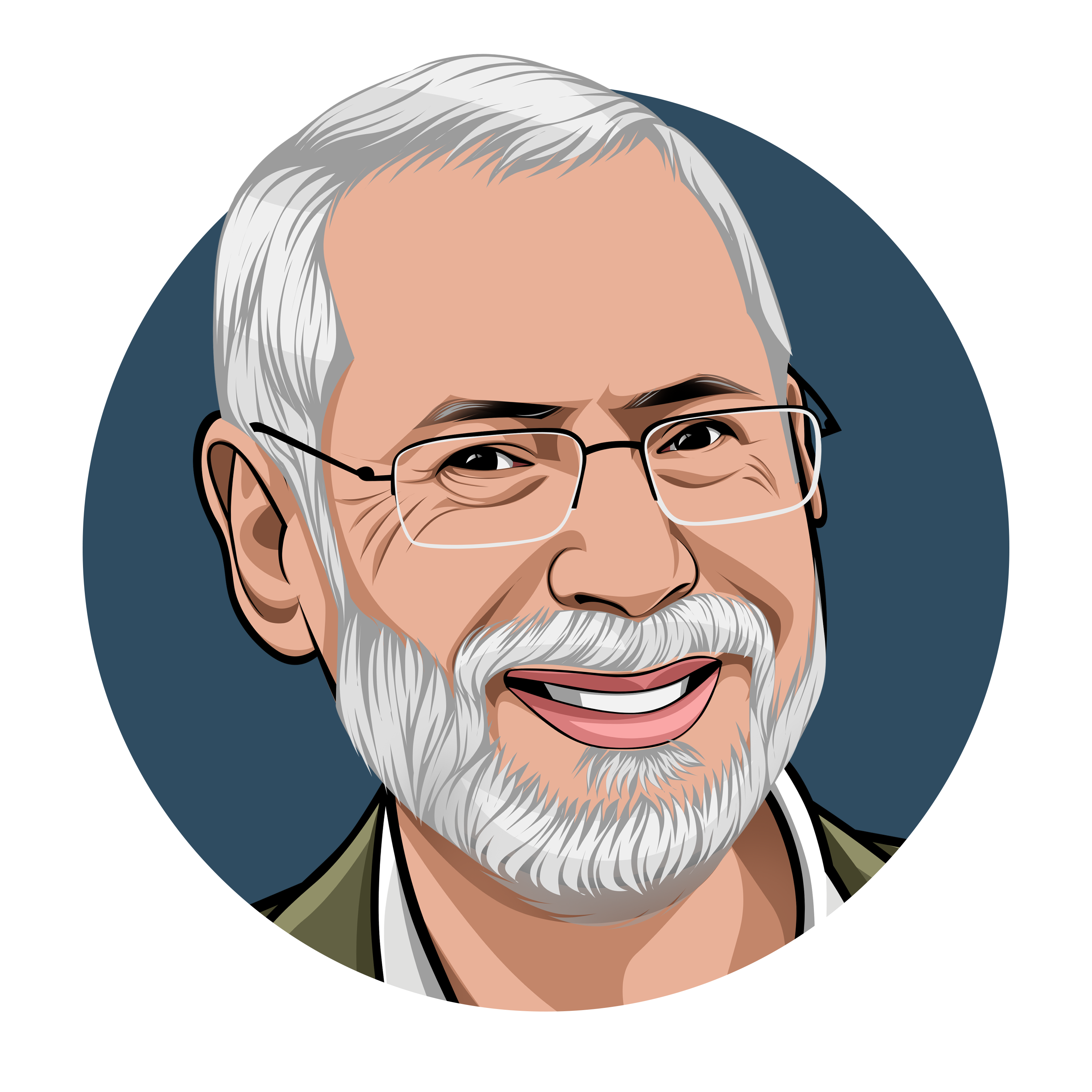
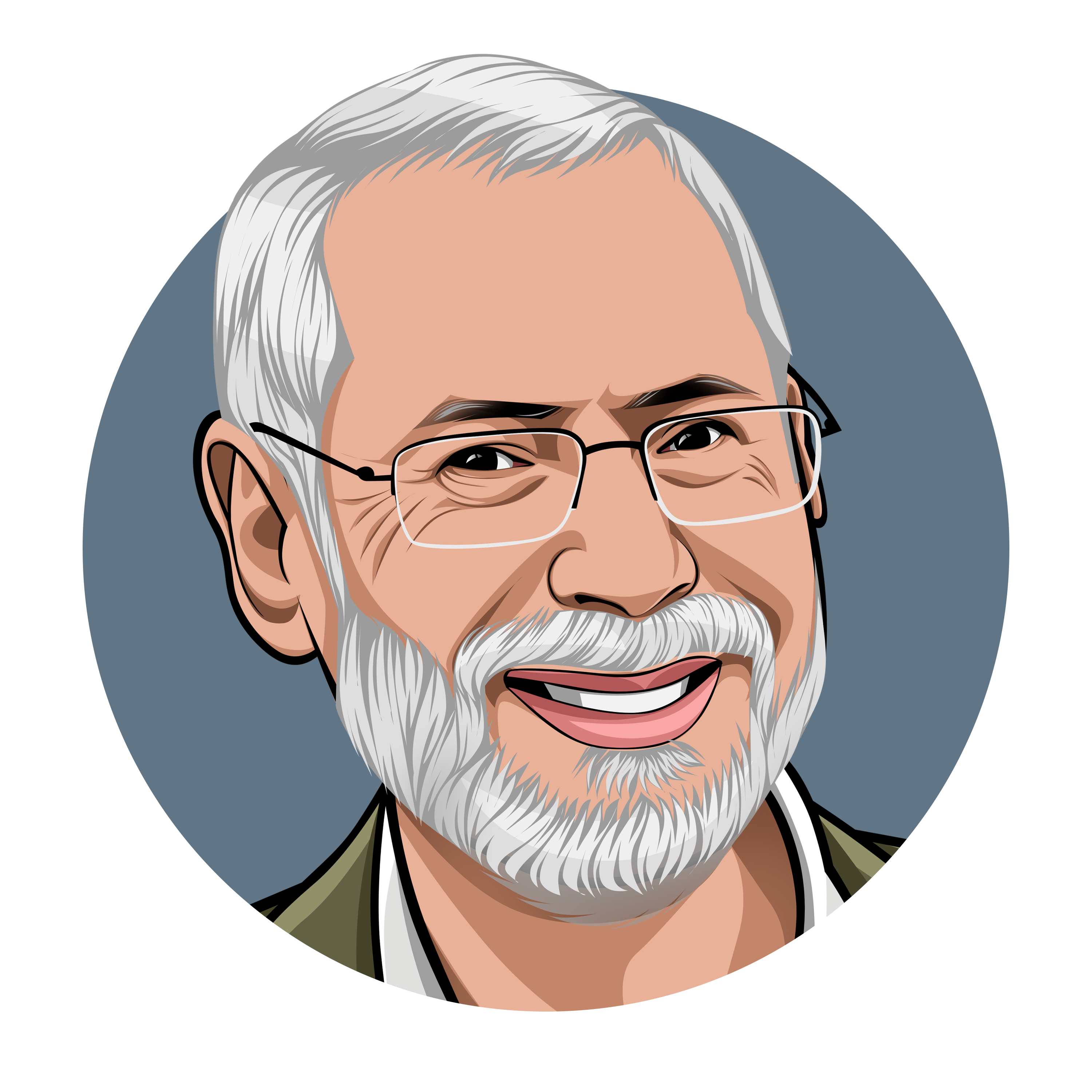
Ahryun Moon - CEO and Co-founder, GoodTime.io ‍Ahryun Moon is CEO and Co-founder at GoodTime.io, a recruiting enablement platform that automates interview scheduling for companies like Airbnb, Stripe, Yelp, Thumbtack and more. She is a financial professional turned engineer! She taught herself how to code while building her first enterprise software at Freescale Semiconductor, Inc., at which time she was a financial analyst. The software got adopted company wide. Some interesting things about her: 1. She caught a thief using Twitter (check out http://bit.ly/2gmr5P4) - gone viral on Hacker News, Reddit, Facebook, Twitter and Youtube 2. Her team at GoodTime.io won 3 hackathons - Salesforce $1M, Toyota and Launch hackathons 3. Her team built Etch Keyboard which was featured on the App Store for 3 weeks. 4. She still has a CPA license in good standing The Convo Interviewer (ZP): What was the size of your first check? Ahryun Moon (AM): $100 was the first check. What happened was right before Alchemist, I was down and depressed and going to a bunch of people asking for advice and feedback and money. I then went to Edith and she, after hearing me out, said, “Hey I'll be your first investor, here's your hundred dollar check. You can put me on Angel list.” With investors the very first check is important so you can put someone's name on your angellist. That’s hard to get. The very first person that wants to be on your investor roster is always challenging. She said to just use her name she’d give us the one hundred dollars. I have kept our hundred dollars even today. So that $100 is still on my cap table, as I really love the fact that she believed in me when no one did. So my first check was $100, and then the second check was 10k. ZP: What about the first check over 25k or more? AM: Oh 25k or more. The first time that a check was larger than 25K was 50k. ZP: And when was the closing date you received it. AM: We closed the check on the day of the demo day. ZP: And it was just that simple?. AM: He came up to me and said he was just ready to write the check. ZP: What industry is your company in. AM: HR and Recruiting. ZP: Tell me about the process of closing that check and from start to finish. How you were introduced all the way through to actually having a check in hand or money in the bank. AM: For the 50k check, he was in the audience at the demo day. He loved it. He came up to us and he was literally ready to write the check. I think we got the check within a few days or a week or so. He didn't have any other references. He just saw us at demo day and liked us. Sometimes you can really run into someone that just believes in you and gives you unconditional love for the product that you're making. So I am lucky with that. But I think you just get lucky sometimes. ZP: So what was it like doing that to the first 10k check. AM: The 10k check was when we were going negative, negative, negative, and we were about to break our 401k. It was one of the Alchemist Mentors and he liked our product from the beginning. We were so afraid of asking for money at the time. ZP: How did you meet him? AM: He was one of the mentors that we paired up with at one of the events, the CEO mentor event. We did speed dating, he was one of the three people there we met. He liked the idea and we never asked for money. We didn't know to ask for money at the time. We invited him over to our office and we talked for another hour or so after the event. That was after a month or two after we met for the first time. And then we mentioned, “Hey we are looking for investors”. And he simply said “How much”. We told him we were looking for 10k. And he's said, “OK. I don't have a check with me. I'll wire you the money as soon as I get back to my office.” He wired it within a few days. ZP: Wow. Was there any back and forth between you or was it pretty straightforward? AM: It was really straightforward. People who argue with you and nitpick on this or that and say “I want to see more proof”, they never work out. Investors that ended up giving us money, you can tell from the first meeting that they believe in you and will give you support. So I'll say my advice is this: it's the ones that give you bullshit excuses and say you’re too early, you're too late in the stage, you're pre-revenue you or your team is too small, move on to the next person. They will not give you money. They never gave me any money. People who said those things never gave me money. ZP: Those things were just an afterthought when they just believe you. AM: Yes. I think I took them extremely personally in the beginning and that made me really, really depressed. Whenever I get that kind of excuse next time I wouldn't too depressed. I will just say, “Ok fine. Next person.” ZP: Is there anything else you'd like to share? Maybe something that stuck out with a new kind of angel fundraising process in general or specifically with all the checks that you're trying to close. AM: Yeah. Everyone told me not to cold email. Everyone told me not to cold call investors. But I did. I closed our last 100k check with a cold call. So I wouldn't say cold calling is the worst thing you can do. Once you run out of referrals you have to cold call and sometimes you really meet the right person while doing that. So I would not advise against cold calling. ZP: That's good advice. cold call. OK. Well that's really good thank you. ‍

23 May 2017

Contact: Danielle D’Agostaro RELEASE: May 23, 2017

06 March 2017

Contact: Danielle D’Agostaro RELEASE: DATE March 3, 2017

31 October 2016

Maciej Kranz - VP of Corporate Strategic Innovation, Cisco Systems “The only constant is change.” It’s an adage that goes back 2500 years to the Greek philosopher Heraclitus. But never has it been as true as it is today. Technology adoption is growing exponentially, driving change at a dizzying pace. Billions of devices are connecting to networks — most of them the sensors, controllers, and machines that power the Internet of Things (IoT). You probably see the rapid growth of connected devices in your own organization: on the manufacturing floor, in your logistics system, hospital or retail store. But are you seeing the corresponding business impact generated by connected processes and business models enabled by IoT? Over the last 25 years, organizations have had to reinvent themselves every three to seven years to keep up with the pace of change. Companies that missed one technology transition might scramble to catch up, but missing two meant a slow fade to obscurity, irrelevance, and death. Just think about the rapid evolution from records, to cassettes, to CDs — with each transition creating new winners and losers. Today, the evolution has come full circle as digital streaming services have made any kind of physical media obsolete. That kind of relentless change threatens the survival of many businesses. According to The Boston Consulting Group, only 19 percent of S&P 500 companies from 50 years ago are still in existence today. How can you ensure the survival of your business? A new generation of leaders, makers, thinkers, and doers is meeting that change with flexibility and optimism, and transforming it into opportunity. In my upcoming book, Building the Internet of Things, I call these pioneers “Generation IoT.” These are the people who see the transformational power of IoT-driven processes, business models and new revenue streams. They are eager to champion and drive these opportunities in their organizations. These people know that IoT is not just one project, one training session, one change. They know that in order to succeed they and their organizations need to adjust and re-learn, over and over again. Generation IoT is first defined by openness — open standards, open collaboration, open communications, and open, flexible business models. Members of Generation IoT can be found in IT or operational technology (OT). They can run the plant, or be part of the supply chain. They can be vendors, contractors, or CXOs. They can be young or old. All are willing to learn and take risks, and are good at building virtual teams internally and partnering externally. You can recognize these new winners not by their age or their titles — but by their ability to build and deploy agile, flexible business solutions. Here’s an example: a decade ago, visionaries talked about mass customization — building mass-produced products to each individual buyer’s specifications. But it was difficult to implement efficiently and proved to be an idea ahead of its time. Today, IoT makes this concept much more practical and cost-effective because information can be shared in real time between every element in the supply chain. Buyers can click on the components they want. Suppliers and logistics providers can see what is being ordered and adjust their scheduling accordingly. Production systems can be retooled as needed. With the information flowing up and down the supply chain, all the necessary materials are at the production line when that customer’s order is being assembled, whether it’s a car or a three-piece suit. With IoT, mass customization is not just a future possibility — it’s starting to happen. Daihatsu Motor Company is already using 3D printers to offer car buyers 10 colors and 15 base patterns to create their own “effect skins” for car exteriors. Each car rolls off the line customized for that individual buyer. The key question — and it’s the focus of both my book and this blog series — is how it’s all supposed to happen. Yes, vision is important. Pointing your organization toward where and how it needs to transform itself is key. But the road to realizing such vision is a multi-year, multi-phased journey and it starts with you successfully tackling one of today’s business problems. A low-risk, small project based on a well-established use-case is all that is needed to get going. Armed with the initial success, you can then pick a more complex problem and an IoT solution that will also have a bigger impact. IoT is a journey. Along the way, you will break down silos and build understanding and cooperation among IT, OT, supply chain and finance. You will also bring in an ecosystem of partners for a complete, converged solution. The good news is that thousands of your peers have already started on the IoT journey. Based on their experiences, a set of best practices has emerged: • Have a big vision, but start with a small project using one of the four fast payback scenarios I outline in my book: connected operations, remote operations, predictive analytics, and predictive maintenance. • Build you own business case by comparing industry benchmarks with your own total cost of ownership data. • Get a C-suite sponsor, because you are not implementing one IoT project, you are starting on the journey that will transform your organization, your industry, and your career. • Build a cross-functional team; you need complementary skills, so maximize the chances of success by building support and buy-in across your entire organization. Finally, recognize that we’re all relatively new at this. None of us have spent our careers on IoT — not yet. You can be an extremely valuable member of this transformation with the skills you have today. Whether you’re in Generation X, Y, or Z, you can be part of Generation IoT. Stay tuned for my next blog, where I’ll take a closer look at the four fast-payback paths to IoT. - Maciej Kranz, VP, Corporate Strategic Innovation, Cisco Systems

20 September 2016

The most powerful tool you have in closing an investor is fear of missing out (FOMO). FOMO only occurs when you have momentum in the round. Once you get that momentum, you start closing investors and a virtuous circle begins, increasing FOMO and carrying you to a great round. Here’s three ways to build momentum when you’re fundraising for your startup.

08 July 2016

Timothy Chou, Ph.D. - Lecturer, Stanford University In 2004 I published my first book, The End of Software. At the time I was the President of Oracle On Demand, so many people found it a curious title. In the book I discussed the fundamental economic reasons software should be delivered as a service. As an example of new startups in the field I highlighted four companies: VMWare, salesforce.com, Netsuite and OpenHarbor, which were all pre-IPO companies at the time. While I didn’t get all four correct, three of the four have gone on to be major companies driving the second generation of enterprise software. When I left Oracle, I started to wonder what was next for enterprise software. We’ve built CRM, ERP, HR, supply chain and purchasing software for on premises deployment and now all are being delivered as a cloud service. While delivery as a cloud service provides both lower cost and higher quality, the functionality has remained largely the same. So, are we at the end of innovation for enterprise software? In 2010 I started a cloud computing class at Tsinghua University in Beijing. The Amazon team was kind enough to give me $3000 worth of AWS time for the students to use. I showed up in class and told them it would buy a small server in Northern California, Virginia or Ireland for 3 ½ years. They looked bored; after all, they could also get a server in China for 3 ½ years. Or, I said, $3000 will buy you 10,000 servers for 30 minutes. So, what could you do with 10,000 servers for 30 minutes? Like you, I’ve heard the buzzword IoT for quite a few years. I mostly ignored it because I wasn’t sure why my toaster should talk to my coffee maker. But a few years ago I invited Bill Ruh, CEO of GE Digital, to deliver a guest lecture at my Stanford class and his talk raised my curiosity; so a year ago I decided I needed to learn what was going on in industrial IoT, or some would call enterprise IoT. With the help of a crowd of at least a hundred experts, I documented nearly twenty different case studies spanning all of the major industries: power, water, oil & gas, agriculture, healthcare, construction and transportation. Mid way through building all of these cases the answer to my two questions became obvious. While second generation enterprise software has helped reduce the cost and improve the efficiency of some enterprises it has done little to transform our physical world. With the decreasing costs of sensors, compute and storage we now have the ability to create a more precise planet. And unless we all move to Mars, we’re going to need to produce energy, water, healthcare and food more efficiently, more precisely. And if you consider that all developing economies require fundamental infrastructure, shouldn't we engineer next generation healthcare, power, and agriculture using powerful new IoT software? In the developing economies we skipped land line telephony, will it not be possible to skip ahead in these other critical infrastructure areas? A few weeks ago we launched my new book: Precision: Principals, Practices and Solutions for the Internet of Things in London on the River Thames. The book is written for anyone who wants to be a student of the subject, whether you're a focused on technology or business. The first part of the book divides the technology principals into five major areas. We discuss the things or machines themselves, how they are connected, what is done to collect information, how you can learn from things and finally what can be done with what we’ve learned. While many are implementing IoT solutions using current technology, it should be recognized most of the technology to date has been built for Internet of People (IoP) applications. But things are not people. For instance, there are many more things than people, things can be where people aren’t they have more to say, things talk much more frequently and things can be programmed, people can’t. While there are numerous technology challenges and opportunities within successfully implementing industrial IoT solutions, this distinction has great relevance to those enterprises that build machines (e.g., gene sequencers, combine harvesters, wind turbines) and finally on those that use these machines (e.g. hospitals, farms and utilities). The second part of the book contains fourteen case studies that span the major industries of power, water, healthcare, transportation, oil & gas, construction and agriculture. You'll meet Nick August, who is a farmer on the Cotswalds, learn about how an autonomous train will run from the north of Australia to Perth this year and how you can use machine learning to predict electric grid failure. Some companies have already begun to make the investments in industrial IoT. GE Software, for instance, was founded in 2011 with a $1B investment. CEO Jeff Immelt has declared that GE needed to evolve into a software-and-analytics company lest its machines become commodities. Immelt has set an ambitious target of $15B in software revenue by 2020. PTC has taken an M&A path and invested over $500M in a series of companies, including ThingWorx, ColdLight and Axeda. On the venture side, you may not have noticed but Uptake, a Chicago-based IoT startup, beat Slack and Uber to become Forbes 2015's Hottest Startup. They raised $45M at a $1B post funding valuation. I’ll let you be the judge of whether it’s time to invest in IoT. But whether you’re a student at Berkeley, someone who works for an enterprise tech company, a venture capitalist, a CEO of a textile machine company, or the Chief Innovation Officer of a hospital, I’d encourage you to make Precision: Principals, Practices and Solutions for the Internet of Things part of your summer reading list and start exploring how you’ll be part of creating a more precision planet. - Timothy Chou, Lecturer at Stanford University; Chairman, Alchemist IoT Accelerator; Former President of Oracle on Demand ‍

05 July 2016

Hacker News can be a great source of finding engineering talent for your company. Here are few ways I have found on HN to source great talent for my own startup:

24 May 2016

“90% of startups fail.” You’ve probably heard that before. But what does it mean?

Subscribe for Blog Updates