
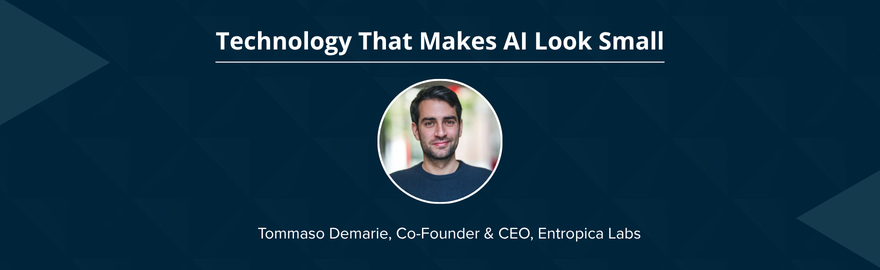
From breakthroughs in error correction to emerging opportunities across the quantum stack, this conversation unpacks how quantum is evolving from research labs into commercial reality.

The Influencer Series is an intimate, invite-only gathering of influential, good-energy leaders. The intent is to have fun, high-impact, “dinner table” conversations with people you don't know but should. The Influencer Series has connected over 4,000 participants and 15,000 influencers in our community over the last decade.
These roundtable conversations provide a space for prominent VC funds, corporate leaders, start-up founders, academics, and other influencers to explore new ideas through an authentic and connective experience.
The Quantum Moment Is Coming. Here's What Founders Need to Know Before It Does.
We're standing at the edge of quantum computing's breakout moment. After decades of theoretical promise, the convergence of error-correction breakthroughs and infrastructure maturation suggests we're approaching a transformation similar to AI's recent explosion into mainstream consciousness and mirroring the rise of classic computation.
At Alchemist Accelerator, we've watched this evolution unfold from a unique vantage point. Our legacy of supporting quantum pioneers like Rigetti has given us front-row seats to an industry moving from science project to commercial reality.
This conversation with Tommaso Demarie, Co-Founder and CEO of Entropica Labs, explores the current state of quantum computing, the investment landscape, and emerging opportunities across industries ranging from pharmaceuticals to climate science.
Key takeaways
-
Error correction breakthroughs are driving quantum computing toward commercial viability, creating opportunities across hardware, software, and applications.
-
Government funding and infrastructure development mirror the early days of classical computing, preceding widespread commercial adoption.
-
Industries from pharmaceuticals to climate modeling await quantum disruption, requiring founders with cross-domain expertise.
-
Building quantum-ready businesses now positions founders to capture value as technology crosses the fault-tolerant threshold.
Understanding Quantum Computing for Founders
At its core, quantum computing does exactly what classical computing does: it encodes and processes information using physical systems. The difference lies in the rulebook.
Classical computers follow Boolean logic, processing bits that are either 0 or 1. Quantum computers operate on quantum-mechanical principles, using qubits that can exist in multiple states simultaneously. To understand this difference, consider quantum computing not as learning a different human language, but as encountering an alien language with fundamentally different logical structures—one that processes information according to rules that unlock computational pathways impossible for classical systems.
The skepticism surrounding quantum computing often misses this point. Critics argue that the technology is too complex for humanity to successfully engineer at scale. But history suggests otherwise. In 1940, computers were used for cryptography and physics simulations. Today, if you ask quantum skeptics what quantum computers are good for, you'll hear the same answer: cryptography, physics simulations, and nothing's changed—except we now have the computational tools to accelerate development beyond anything available to the pioneers of classical computing.
What matters isn't the complexity of quantum rules, but recognizing that we're simply adding more powerful pieces to our computational toolkit. Rather than replacing classical logic, quantum computing augments it with capabilities that expand what's computationally possible.
Rigetti's Legacy in Quantum Computing
Chad Rigetti walked into Alchemist Accelerator in 2012 with what most people dismissed as a science project. At the time, quantum computing existed primarily in physics labs and theoretical papers, not business plans and pitch decks.
He was the only quantum founder in the program. The only one in the room talking about qubits while everyone else focused on SaaS metrics and user acquisition. What seemed like an outlier then became a blueprint for how deep tech startups can evolve from theoretical physics into market-transforming enterprises. Rigetti Computing eventually went public, reaching a multi-billion dollar market capitalization and establishing quantum computing as a legitimate industry rather than an academic curiosity.
As a testament to innovation, this founder's journey demonstrates how mission-driven approaches can transform theoretical concepts into commercial reality. The groundwork laid by Rigetti and other early pioneers has fundamentally changed what's possible for quantum founders today. Instead of needing to build everything from scratch—hardware, software, applications, and the entire vertical stack—today's founders can specialize. They can focus on specific layers, specific problems, and specific components. The foundation exists. Now comes the opportunity to build upon it.
Quantum Developments and Challenges
Quantum computing has crossed the threshold from theoretical physics into engineering reality. IBM, Google, Rigetti, and others now demonstrate increasingly powerful quantum systems with regular cadence, each generation representing measurable improvements over the last.
The pace of advancement follows multiple exponential curves, some exceeding Moore's Law for classical computing. Various metrics quantifying quantum computational power show dramatic year-over-year growth, suggesting we're in a period of accelerated development rather than incremental refinement.
But let's be clear—commercially viable applications remain frustratingly out of reach. Quantum systems are fundamentally unstable—they interact with their environment, quickly lose coherence, and produce errors that compound as calculations grow more complex. This instability currently restricts computational reliability to the point where classical computers still outperform quantum systems for virtually all practical applications.
The adoption pattern, however, follows a familiar trajectory. Governments and research institutions are the primary customers, funding quantum development for national security applications, cryptography, and physics simulations. Military and scientific use cases drive the initial infrastructure development, just as they did for classical computing 70 years ago. The difference is speed—everything's happening faster because we've done this before, and because classical supercomputers now accelerate quantum development in ways that create positive feedback loops.
Perhaps most significantly, the quantum stack is fragmenting. Early systems were monolithic, with single companies controlling everything from hardware to applications. Economic realities are forcing specialization. More companies now focus on specific layers—control electronics, cooling systems, error-correction middleware, quantum algorithms, and cloud-access platforms. This fragmentation signals industry maturation and creates entry points for founders who don't need to build entire quantum computers to capture value.
Quantum Breakthrough in Error Correction
Error correction is the fundamental roadblock preventing quantum computing from reaching commercial utility. Without solving this problem, quantum systems simply won't work reliably enough to build applications upon.
Quantum systems are inherently fragile. They interact with the environment in ways that corrupt calculations, introducing errors that cascade through computations. Just assembling quantum components together produces an unstable system that loses signal too quickly to perform useful work. This isn't a minor engineering challenge—it's the defining constraint that separates laboratory demonstrations from production systems.
Companies like Entropic Labs are tackling this challenge by building infrastructure layers that ensure error correction across quantum platforms. Their approach focuses on coordinating all the processes within a quantum computer to make systems fault-tolerant—stable enough to maintain quantum states long enough for meaningful computation.
Crossing this "fault-tolerant chasm" will trigger a development cascade similar to that which occurred when classical computing achieved reliability. Once you can trust the machine to execute instructions accurately, you can start building applications with confidence. You can create development tools, establish programming paradigms, train developers, and build an ecosystem. Error correction is the gateway. Everything else waits on the other side.
Exploring the Quantum Investment Landscape
Hardware dominates current quantum investment, capturing the majority of capital flowing into the space. This mirrors classical computing's evolution, where infrastructure necessarily preceded applications—you need stable machines before you can write software worth running on them.
Government commitments to quantum research run into the billions globally. Nations recognize quantum computing as strategically important, creating funding pathways for startups addressing national security priorities, scientific research capabilities, and technological sovereignty. These government programs provide patient capital that supports longer development timelines than typical venture funding allows.
The deep tech investment ecosystem has matured significantly since Rigetti's early days. Specialized investors now understand quantum technology's potential and timeline, bringing both capital and relevant expertise to portfolio companies. At Alchemist Accelerator, we've built connections between quantum founders and this specialized investor base—relationships that recognize deep tech requires different evaluation criteria, support structures, and capital than software startups. Visit alchemistaccelerator.com to learn how our program connects founders with the resources, community, and capital needed to build quantum ventures.
The Quantum Stack and Opportunities for Founders
Hardware innovations remain critical. Quantum computing requires breakthroughs in exotic materials, near-absolute-zero cooling systems, and precision control electronics. Each of these represents distinct technical challenges where specialized engineering startups can deliver value by solving specific problems rather than building complete quantum computers.
Middleware and quantum operating systems represent emerging opportunities as the industry matures. These systems need specialized software to translate raw quantum capabilities into resources developers can actually use—scheduling quantum operations, managing qubit allocation, optimizing circuit compilation, and interfacing with classical computing infrastructure.
Quantum algorithm development remains relatively nascent. Most quantum algorithms exist as academic proofs of concept rather than production-ready code. Founders who can develop industry-specific algorithms that demonstrably outperform classical alternatives on near-term quantum hardware will capture significant value as systems become more accessible.
Simulation and testing tools will grow increasingly valuable. As more developers seek to create quantum applications, they'll need ways to prototype and test without constant access to expensive quantum hardware. Classical simulation of quantum systems has fundamental limits, but within those constraints, sophisticated tools can accelerate development cycles.
Integration services bridging classical and quantum computing represent substantial business opportunities. Enterprises won't replace their existing infrastructure—they'll augment it. Quantum computing will exist as a specialized resource called when needed, requiring sophisticated integration layers that manage hybrid workflows spanning both computational paradigms.
Cloud quantum computing access platforms could democratize quantum resources the way AWS democratized classical computing. Rather than organizations building or buying quantum computers, they'll rent quantum processing time as needed. The companies that build accessible, reliable, and platforms for this access'll capture substantial value as quantum systems mature toward commercial viability.
Industries Primed for Quantum
Disruption
Pharmaceutical research could see revolutionary acceleration through quantum computing's ability to simulate molecular interactions at unprecedented scales. Drug discovery currently requires years of trial-and-error experimentation because we can't accurately predict how complex molecules will behave. Quantum simulation could compress those timelines dramatically while improving the effectiveness of discovered compounds.
Financial modeling—risk assessment, portfolio optimization, and fraud detection—involves processing complex probability scenarios that overwhelm classical computers. Quantum algorithms designed for these applications could provide dramatic improvements in both speed and accuracy, potentially preventing financial crises by identifying systemic risks invisible to current analytical methods.
Materials science research will leverage quantum systems to design materials with specific properties rather than discover them through experimentation. This capability could accelerate innovation across batteries, semiconductors, catalysts, and structural materials—essentially any domain where material properties determine performance.
Supply chain optimization at a global scale involves combinatorial problems that grow impossibly complex for classical computers. Quantum approaches could make previously intractable optimization problems computationally feasible, creating massive efficiency improvements across manufacturing, logistics, and distribution networks.
Climate modeling and energy grid optimization represent applications where quantum computing could address urgent societal challenges. More accurate climate simulations could improve our understanding of environmental systems and intervention strategies. Optimized energy grids could reduce waste and facilitate the integration of renewable energy. While valuable as business ventures, these applications primarily represent chances to deploy quantum computing for meaningful global impact.
Positioning Your Startup for the Quantum Era
Waiting for perfect quantum systems misses the opportunity. Forward-thinking founders are developing "quantum-ready" approaches now—building classical solutions designed to transition to quantum as capabilities mature. This strategy lets you capture immediate market value while positioning for the quantum transition.
Building expertise in quantum-adjacent fields creates valuable positioning even before quantum computers reach commercial viability. Deep knowledge of advanced mathematics, physics simulations, or specialized algorithm development makes your team credible when quantum capabilities do arrive. You're not pivoting to quantum—you're extending existing expertise into a new computational substrate.
Partnerships with quantum hardware providers offer dual benefits: early access to quantum resources for experimentation and development, plus credibility within the emerging quantum ecosystem. These relationships signal to investors, customers, and potential hires that you're serious about quantum applications and have pathways to real quantum resources as they become available.
Clear use cases with demonstrable quantum advantage matter significantly for attracting investment. Vague claims about quantum's potential no longer impress seasoned investors who've heard countless pitches about quantum disruption. You need specific problems where quantum approaches offer measurable advantages over classical alternatives, with realistic timelines for when quantum hardware will achieve the necessary reliability and scale.
Seizing the Coming Quantum Moment
We're living through quantum computing's formative years—the period that will look obvious in retrospect but feels uncertain in the present. The patterns mirror classical computing's evolution so clearly that those who recognize them can position strategically to help shape an industry that will eventually be worth trillions.
Five years ago, quantum computing barely registered in startup conversations. Today, it's approaching its OpenAI moment—the breakthrough that shifts perception from "interesting research" to "competitive necessity." The founders who enter this space now and build the infrastructure, applications, and services that make quantum computing accessible and useful will define how this technology develops and who benefits from it.
The quantum computing community is at a critical inflection point. Those who understand both the technological challenges and the market opportunities will be best positioned to lead this revolution, as Damaso Di Maria stated in our Alchemist Influencer Series: "Knowledge is for the best." Quantum computing represents humanity's next great leap in computational knowledge, and knowledge—properly deployed—creates more good than harm. The quantum moment is coming, and the question isn't whether to prepare, but how quickly you can position yourself to capture the opportunities it creates.
Follow Alchemist's Influencer Series on:
Thank You to Our Notable Partners
BASF Venture Capital
Investing globally since 2001, BASF Venture Capital backs startups in Decarbonization, Circular Economy, AgTech, New Materials, Digitization, and more. Backed by BASF’s R&D and customer network, BVC plays an active role in scaling disruptive solutions.
WilmerHale
A premier international law firm with deep expertise in Corporate Venture Capital, WilmerHale operates at the nexus of government and business. Contact whlaunch@wilmerhale.com to explore how they can support your CVC strategy.
FinStrat Management is a premier outsourced financial operations firm specializing in accounting, finance, and reporting solutions for early-stage and investor-backed companies, family offices, high-net-worth individuals, and venture funds.
The firm’s core offerings include fractional CFO-led accounting + finance services, fund accounting and administration, and portfolio company monitoring + reporting. Through hands-on financial leadership, FinStrat helps clients with strategic forecasting, board reporting, investor communications, capital markets planning, and performance dashboards. The company's fund services provide end-to-end back-office support for venture capital firms, including accounting, investor reporting, and equity management.
In addition to financial operations, FinStrat deploys capital on behalf of investors through a model it calls venture assistance, targeting high-growth companies where FinStrat also serves as an end-to-end outsourced business process strategic partner. Clients benefit from improved financial insight, streamlined operations, and enhanced stakeholder confidence — all at a fraction of the cost of building an in-house team.
FinStrat also produces The Innovators & Investors Podcast, a platform that showcases conversations with leading founders, VCs, and ecosystem builders. The podcast is designed to surface real-world insights from early-stage operators and investors, with the goal of demystifying what drives successful startups and funds. By amplifying these voices, FSM supports the broader early-stage ecosystem, encouraging knowledge-sharing, connectivity, and more efficient founder-investor alignment.
Alchemist connects a global network of enterprise founders, investors, corporations, and mentors to the Silicon Valley community.
Alchemist Accelerator is a global venture-backed accelerator focused on accelerating seed-stage ventures that monetize from enterprises (not consumers). The accelerator invests in enterprise companies with distinctive technical founders and provides founders a structured path to traction, fundraising, mentorship, and community during the 6-month program.
AlchemistX partners with forward-thinking corporations and governments to deliver innovation programs worldwide. These specialized programs leverage the expertise and tools that have fueled Alchemist startups’ success since 2012. Our mission is to transform innovation challenges into opportunities.
Join our community of founders, mentors, and investors.